
The most lucrative senior care investments in California are intentionally invisible. While novice buyers fight over scraps on public real estate portals, savvy professionals understand that a public “For Sale” sign is often a death knell for a facility’s goodwill. With Southern California projected to face a 45% shortfall in licensed care beds by the end of 2026, the demand for stable assets has reached a fever pitch. If you’re wondering how to find off-market RCFE listings California experts use to build their portfolios, you aren’t alone. You know that public exposure often triggers staff anxiety and resident turnover, which can erode the very cash flow you’re trying to acquire.
It’s understandable to feel locked out of the best deals when the highest-quality inventory stays behind closed doors. This guide provides a strategic roadmap for uncovering confidential, turnkey opportunities that offer immediate operational continuity. You’ll learn the specific methods for navigating Title 22 relicensing hurdles and accessing exclusive Southern California inventory that never hits the open market. By the end of this article, you’ll have the seasoned expertise required to move from a state of curiosity to a state of conviction in your next acquisition.
Key Takeaways
- Learn why the most stable RCFE assets in California are never publicly advertised to protect operational continuity and resident trust.
- Discover exactly how to find off-market RCFE listings California experts use to bypass public bidding wars and secure turnkey acquisitions.
- Understand the critical impact of Title 22 compliance on your acquisition timeline and why public exposure can derail the DSS relicensing process.
- Identify the specific strategic channels, including specialized healthcare lenders and DSS data analysis, that reveal high-performing, confidential inventory.
- Recognize why an expert gatekeeper is essential for vetting complex financials and maintaining the clinical integrity of a facility during a sale.
The Hidden Market: Why California RCFEs Benefit from Off-Market Sales
In the California senior care sector, the most resilient assets don’t appear on public search engines. These off-market RCFE listings are confidential transactions conducted between pre-vetted parties to ensure the business’s clinical and financial integrity. Learning how to find off-market RCFE listings California professionals rely on is the first step to avoiding the bidding wars of public portals. By 2026, California’s demographic shift has created a fragmented market of family-owned facilities that value privacy over broad exposure. With the state’s senior population projected to grow by four million by 2030, the competition for these beds has reached a fever pitch. Southern California faces a projected 45% shortfall in licensed care beds for adults aged 65-85 by the end of 2026, making these hidden assets even more valuable.
High-performing 6-bed and 30+ bed facilities in counties like Los Angeles, Orange, and San Diego intentionally avoid sites like LoopNet. Public listings often signal a “fixer-upper” or a distressed asset. In contrast, the most profitable, turnkey operations circulate through private networks where the quality of financials is vetted before an investor ever sees the address. This exclusivity ensures that only serious, qualified buyers enter the fold, maintaining the high standards of the California care industry.
The “Silent Sale” Phenomenon in Senior Care
Sellers in the RCFE space prioritize discretion for one primary reason: stability. If resident families or staff members see a public listing, it can trigger immediate anxiety. This often leads to resident “flight” to competitors, which instantly erodes the business’s value. To prevent this, specialized brokers use a Confidential Information Memorandum (CIM). This document allows you to review granular financial data and operational history without alerting the public. By keeping the transaction quiet, you preserve the “Going Concern” value of the business, ensuring you inherit a full house and a loyal staff on day one.
Regulatory Barriers and Asset Exclusivity
Strict California zoning laws and “NIMBY” factors make it incredibly difficult to develop new care homes from the ground up. Existing, licensed facilities are the most sought-after assets because they’ve already cleared these hurdles. Finding a quality RCFE for sale that is already compliant with Title 22 regulations provides a massive head start. An Assisted living facility (ALF) with an established track record and a clean record with the Community Care Licensing Division (CCLD) represents a high-barrier-to-entry market position. In a state where how to find off-market RCFE listings California is the primary question for investors, these established assets offer a level of security that new builds simply can’t match.
The Confidentiality Factor: Protecting Title 22 Compliance and Operations
Confidentiality isn’t just a preference for sellers; it’s a regulatory necessity. When a facility is listed on public business-for-sale websites, it often alerts the California Department of Social Services (CDSS) prematurely. This can trigger unscheduled inspections or heightened scrutiny before a buyer is even identified. Understanding how to find off-market RCFE listings California investors prefer requires a deep dive into the regulatory risks of public sales. Under Title 22 regulations, an RCFE license is strictly non-transferable. Every transaction is legally a Change of Ownership (CHOW), requiring the buyer to undergo a full relicensing process that typically takes 60 to 120 days. If the public or the CDSS perceives instability during this window, the licensing timeline can face significant delays.
Public “For Sale” signs also poison the well of resident trust. Families choose a facility based on the promise of consistent care. When they sense a change is coming without a clear, professional plan, they often move their loved ones to competitors. This exodus destroys the very cash flow you’re trying to purchase. Maintaining a quiet, professional transition is the only way to protect the facility’s referral pipelines and long-term viability. If you’re ready to explore these protected assets, you can view our exclusive California inventory to see how we manage these sensitive transitions.
Preserving the Statement of Deficiencies History
A chaotic public sale often leads to operational lapses as management becomes distracted. In the 2026 market, a facility’s value is directly tied to its clinical record. Any new DSS citations during the sale process can lower the valuation or even derail the acquisition. It’s vital to remember that RCFE licensing California requires a stable operational environment during the CHOW to ensure the new license is issued without complications. A “clean” clinical history is a premium asset that only off-market transactions can reliably preserve.
Staff and Resident Stability
Staff retention is the #1 risk during a California care facility transition. Caregivers are the backbone of the business; if they fear for their jobs, they’ll seek employment elsewhere. Off-market deals allow sellers to communicate the transition to staff only after a qualified buyer is secured and a transition plan is in place. This prevents a “referral freeze” from local Southern California hospitals, which often stop sending residents to facilities they deem unstable. A seamless, confidential transition provides the psychological safety elderly residents need to remain in place, ensuring the business stays profitable throughout the change of hands.
Public Portals vs. Specialized Networks: A 2026 Comparison
Public portals like LoopNet often create a “bidding war” environment that inflates prices for subpar assets. By the time a facility reaches the second page of a generic portal in Los Angeles or Orange County, it’s usually a “stale listing” that has been rejected by seasoned investors. These properties are frequently “fixer-uppers” burdened with deferred maintenance or clinical compliance issues. In contrast, private networks facilitate negotiated terms for turnkey operations with stable cash flow and established staff. If you want to know how to find off-market RCFE listings California investors actually want, you must look beyond the public eye. Private transactions prioritize the business’s clinical integrity over raw exposure.
Time is a critical metric in healthcare M&A. Specialized networks significantly speed up the Part A and Part B licensing process because the sellers are already prepared for the Change of Ownership (CHOW) requirements. A generic broker often doesn’t understand that a delay in licensing can stall an acquisition’s momentum. While public listings leave you guessing about the facility’s compliance readiness, a confidential sale through a specialized partner ensures the regulatory paperwork is as turnkey as the physical asset itself.
The Limitations of Generic Real Estate Software
AI-driven lead tools like BatchLeads are excellent for residential flipping, but they miss the intrinsic “business value” of a licensed care home. Cold-calling RCFE owners without a Title 22-literate approach is a recipe for failure. Owners of high-performing facilities only speak to professionals who understand the nuances of the California Department of Social Services (CDSS) environment. Specialized healthcare brokerage remains the gold standard for these high-barrier-to-entry transactions because it bridges the gap between real estate and operational excellence.
Accessing the “Pocket Listing” Culture
Southern California’s most successful operators maintain relationships with a small circle of specialized brokers. These “pocket listings” are never advertised. To gain access, you need a professional “Buyer Profile” that proves your financial capability and operational readiness. You can learn more about this preparation in our Ultimate Guide to Buying an RCFE Facility in California. This culture of exclusivity ensures that the best assets in the state transition between competent hands without disrupting care or resident safety.
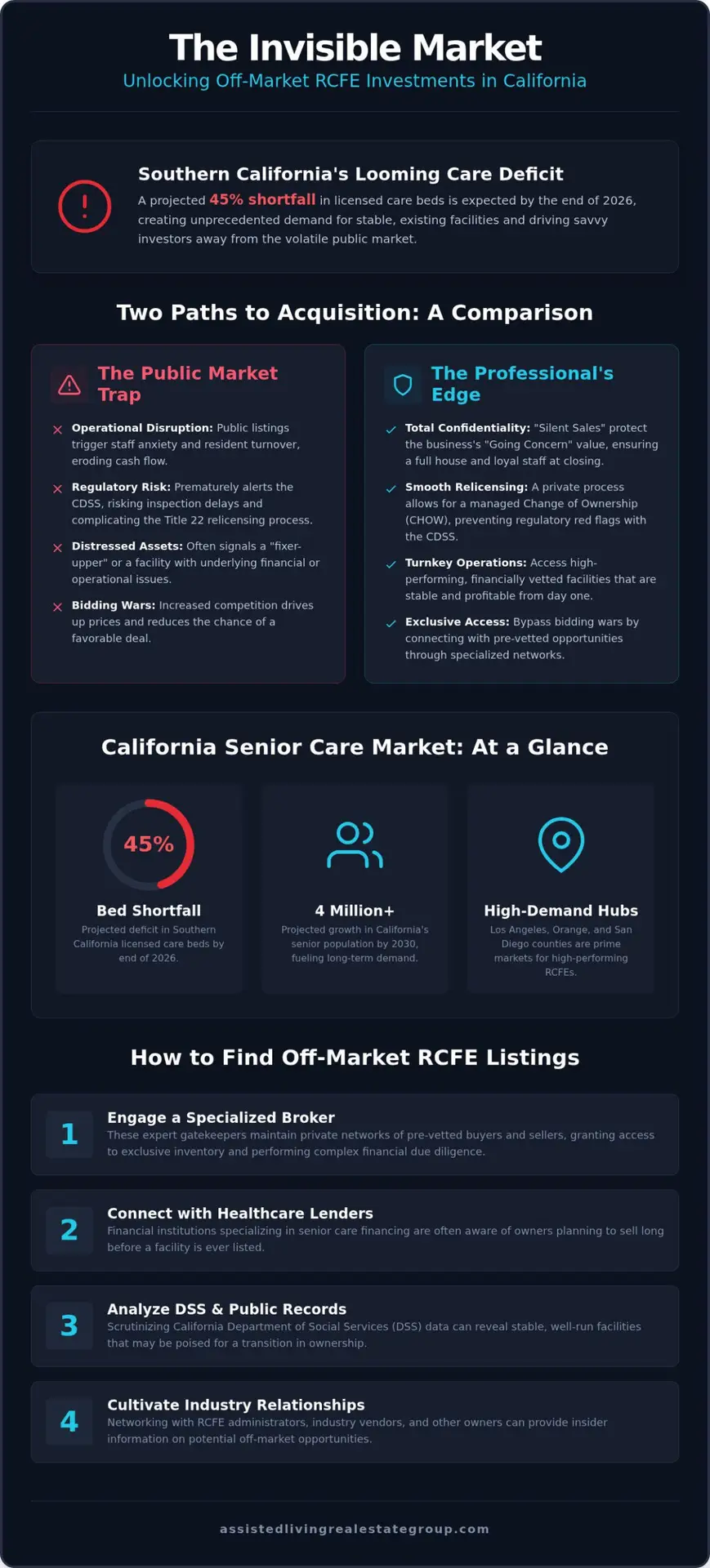
4 Strategic Ways to Uncover Off-Market RCFE Opportunities
Unlocking the vault to California’s private care market requires more than just capital; it requires a sophisticated strategy. While generic real estate investors rely on automation, the strategic professional utilizes a blend of data analysis and human networking. If you are learning how to find off-market RCFE listings California experts rely on, you must start with the source of all licensing data: the California Department of Social Services. By analyzing the Community Care Licensing Division (CCLD) database, you can identify facilities that have been under the same ownership for decades. These legacy assets are often owned by administrators ready for retirement who haven’t yet considered the public market.
Beyond raw data, your strongest leads often come from the professionals who handle the financial and legal underpinnings of these businesses. SBA 504 specialists and dedicated healthcare lenders are often the first to know when an owner is preparing for an exit. These lenders prefer to see their clients sell to qualified successors rather than risk a default, making them invaluable allies in your search for turnkey acquisitions. Engaging with industry associations and Administrator Certification programs also places you at the center of the dialogue, where word-of-mouth opportunities frequently circulate before a formal sale process even begins.
Targeted Outreach and Licensing Lists
Using CCLD data allows you to filter for “Administrator-Operated” homes. These facilities are often the most stable because the owner is deeply involved in daily care. However, reaching out requires an “Ethical Direct Mail” approach. You must ensure your communication is professional and discreet to avoid alarming staff or residents. A well-crafted, private inquiry addressed directly to the licensee can often spark a conversation about a future transition without causing the operational ripples a public listing would. This targeted method identifies owners whose primary motivator is a graceful exit into retirement.
The Professional Referral Loop
Probate attorneys and estate planners, particularly in high-demand areas like Orange County, are frequently tasked with liquidating business assets following a licensee’s passing. These are prime off-market opportunities that require a quick, professional closing. Additionally, facility placement agencies often have their pulse on homes with declining occupancy or changing management. Partnering with rcfe license california consultants can provide early access to facilities currently in the pre-sale phase. To start your journey with a pre-vetted list of opportunities, contact our team for current off-market inventory.
Securing Your Turnkey Investment: The Specialized Broker Advantage
General commercial brokers often fail the Title 22 “due diligence” test because they treat care facilities like standard retail or office space. In the California care market, the physical structure is merely the shell; the licensed operation is the heartbeat. Understanding how to find off-market RCFE listings California professionals trust involves partnering with a guide who can audit clinical history as thoroughly as the financial ledger. Teri Szoke and the Assisted Living Real Estate Group bring over 25 years of combined experience to this process, vetting off-market financials to ensure the “turnkey” promise is backed by reality. We manage the delicate balance between buyer transparency and seller confidentiality, ensuring that sensitive data is shared only when the time is right.
Post-closing success is never guaranteed without a proper transition plan. A specialized broker doesn’t just hand over the keys; they ensure the new owner is set up for DSS success from day one. This involves aligning the previous owner’s operational style with your new management vision while maintaining the clinical standards the state requires. By focusing on the intersection of ethics and profitability, we help you acquire an asset that delivers both financial returns and meaningful social impact.
Vetting the Off-Market Deal
Due diligence in an off-market transaction extends far beyond a standard building inspection. You must audit resident files, medication logs, and staffing patterns to ensure the business is in full compliance with the California Department of Social Services (CDSS). In Southern California’s high-value market, reviewing the “Statement of Cash Flow” against the “Real Estate Appraisal” is vital to ensure you aren’t overpaying for the property while ignoring operational risks. A well-structured Letter of Intent (LOI) is your primary shield. It must include specific contingencies that protect your deposit during the statutory 60 to 120-day licensing wait, ensuring the transaction only proceeds if the facility maintains its clinical integrity and resident census.
Your Strategic Roadmap to Ownership
Establishing your financial credibility with RCFE-specific lenders is the first step toward becoming a preferred buyer. These specialized lenders understand the dual-asset nature of care homes and prioritize transitions involving expert brokers. By positioning yourself as a serious, “Title 22-literate” investor, you can gain access to our exclusive “First Look” list for upcoming Southern California inventory. This roadmap moves you from the uncertainty of public bidding into the clarity of a strategic, private acquisition. To begin your journey, partner with Teri Szoke for a confidential RCFE acquisition strategy and secure your position in this high-barrier-to-entry market.
Mastering the Confidential California Care Market
The path to a successful senior care acquisition in 2026 requires moving beyond the noise of public bidding wars. You’ve seen how public exposure can compromise resident trust and trigger staff turnover; protecting your investment means prioritizing confidentiality from the first inquiry. By focusing on private networks and specialized vetting, you ensure that the clinical integrity and cash flow of the facility remain intact during the sensitive Change of Ownership process. Navigating the complexities of Title 22 and DSS regulations is simplified when you understand how to find off-market RCFE listings California professionals use to scale their portfolios.
Led by Teri Szoke with 25+ years of California care facility expertise, the Assisted Living Real Estate Group serves as your strategic partner for these high-barrier-to-entry assets. We specialize in confidential Southern California RCFE and ARF transactions that prioritize both financial gain and ethical care. Access Exclusive Off-Market California RCFE Listings and take the first step toward securing a turnkey asset with lasting social impact. The opportunity is massive. With the right roadmap, your success is within reach.
Frequently Asked Questions
How do I find RCFE facilities for sale that are not listed on LoopNet?
Accessing non-public inventory requires networking with specialized healthcare brokers who maintain private pocket listings. These professionals have direct connections with owners in Southern California who prefer private transitions to protect their business value. You can also monitor California Department of Social Services (CDSS) licensing data to identify long-term operators who may be approaching retirement. Building a professional buyer profile ensures you are the first person called when a confidential opportunity arises.
Why are the best RCFE deals in California sold off-market?
High-performing facilities prioritize off-market sales to maintain operational continuity and resident stability. A public listing can trigger anxiety among staff and families, leading to occupancy drops that instantly devalue the business. By keeping the sale confidential, sellers protect their referral pipelines and clinical reputation. This approach ensures that the “going concern” value remains high, allowing for a seamless transition between the buyer and the seller without disrupting daily care.
Is it legal to buy an RCFE business without the real estate in California?
Yes, it is entirely legal to acquire RCFE business operations while leasing the underlying real estate. These are often called business-only acquisitions. In such cases, you purchase the goodwill, resident contracts, and equipment while entering into a long-term commercial lease with the property owner. This model allows for a lower entry cost while still securing a high-performing, cash-flowing asset in Southern California, provided the lease terms meet Title 22 requirements.
How does confidentiality protect the buyer of a care facility?
Confidentiality ensures the buyer inherits a stable business with a full census and a loyal caregiving team. If a sale is leaked, staff may seek more secure employment, and hospitals might freeze referrals to the facility. By keeping the transaction private, the buyer avoids the stigma of an uncertain transition. This protection is critical for maintaining Title 22 compliance and ensuring the revenue stream remains uninterrupted during the Change of Ownership process.
What is the difference between an off-market and a pocket listing?
While often used interchangeably, a pocket listing typically refers to a property held exclusively by one broker who hasn’t shared it with the wider brokerage community. An off-market listing is a broader term for any transaction not advertised on public portals. Understanding how to find off-market RCFE listings California investors rely on involves tapping into these private circles. Both methods prioritize discretion to prevent operational disruptions and protect the facility’s clinical record from public scrutiny.
How can I verify the financials of a confidential RCFE listing?
Financial verification occurs through a structured due diligence process after a non-disclosure agreement is signed. You should audit the last three years of profit and loss statements, federal tax returns, and resident ledgers. It’s equally important to cross-reference these figures with the facility’s staffing patterns and supply costs. A specialized broker will help you analyze the Statement of Cash Flow to ensure the reported earnings reflect the true operational reality of the business.
Do I need a specialized broker to find off-market care homes in Southern California?
Yes, a specialized broker is essential because they act as the gatekeeper to the state’s most exclusive inventory. General commercial agents often lack the deep understanding of Title 22 regulations and the sensitive nature of care facility transitions. Specialized firms have spent decades building trust with Southern California operators, giving them access to silent sales that never hit the open market. They ensure your acquisition is truly turnkey and regulatory compliant.
What are the risks of buying a publicly listed RCFE facility?
Publicly listed facilities are often stale or burdened with clinical deficiencies that have scared off seasoned investors. The biggest risk is the potential for high staff turnover and resident flight caused by the public status of the sale. Additionally, these properties often face bidding wars that drive prices beyond the actual business value. You may find yourself overpaying for a distressed asset that requires extensive remediation to meet current CDSS standards.