
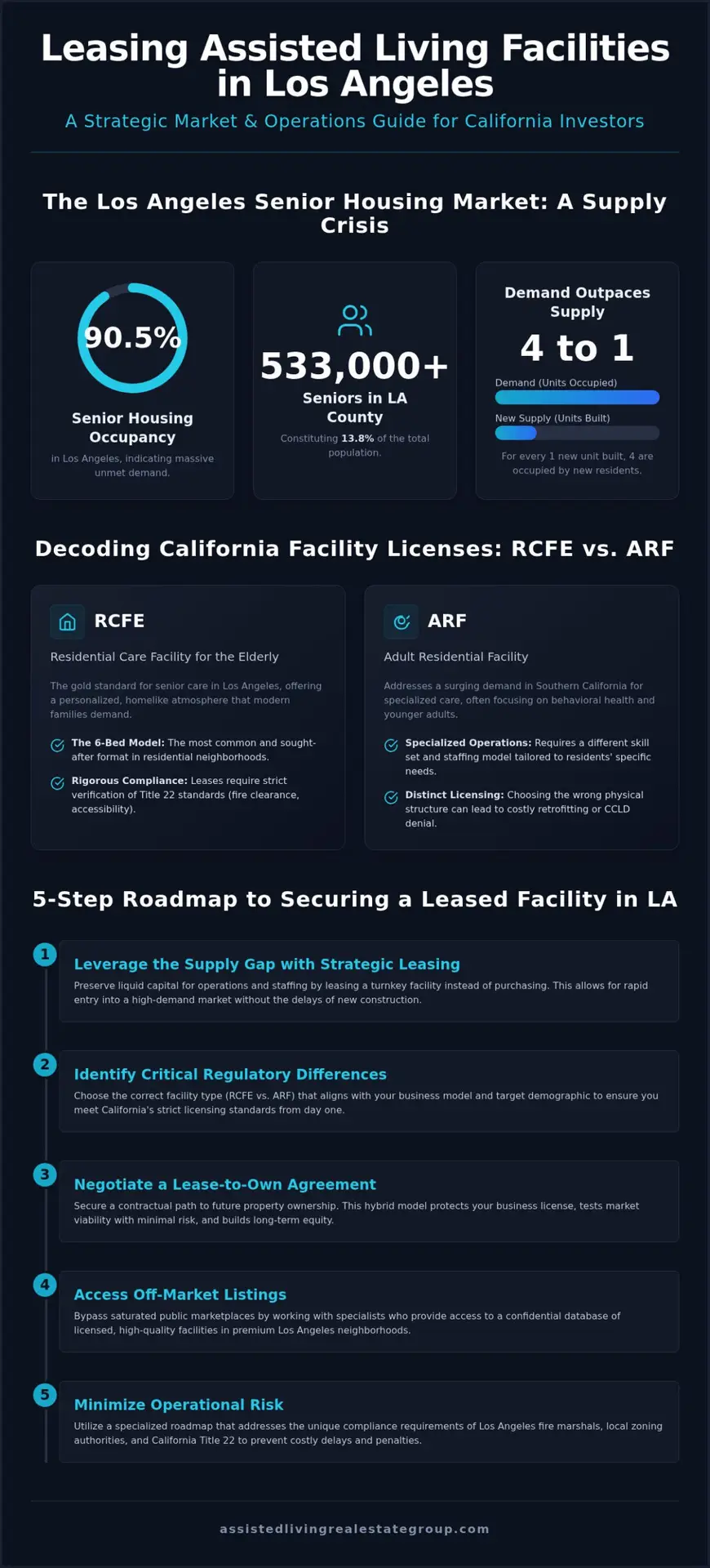
With Los Angeles senior housing occupancy reaching 90.5% and demand for beds currently outpacing new construction by nearly four to one, the local market represents a rare intersection of massive financial potential and urgent social need. You likely recognize that securing a viable assisted living facility for lease los angeles is no longer about browsing public listings. It’s about navigating a high-barrier-to-entry landscape where California Title 22 compliance dictates your entire ROI. In this competitive environment, one oversight during a lease transition can jeopardize your business license before you even welcome your first resident.
We’ll provide the roadmap you need to master these strategic nuances, ensuring you secure a turnkey operation that balances predictable overhead with premium care standards. You’ll learn how to identify exclusive off-market facilities in a saturated market and decode the hidden costs of NNN leases that often catch investors off guard. This guide previews the essential steps for 2026, from managing aggressive state enforcement to leveraging demographic shifts as a catalyst for long-term growth and meaningful social impact.
Key Takeaways
- Scale your operations rapidly by leveraging the current supply gap in the Los Angeles senior housing market through strategic leasing that preserves your liquid capital.
- Identify the critical regulatory differences between RCFE and ARF models to ensure your facility meets California’s strict licensing standards for your target demographic.
- Secure a competitive assisted living facility for lease los angeles by negotiating lease-to-own provisions that protect your business license while building future property equity.
- Bypass saturated public marketplaces by accessing a confidential database of off-market listings that meet premium service standards in high-demand neighborhoods.
- Minimize operational risk by utilizing a specialized roadmap that addresses the unique requirements of Los Angeles fire marshals and local zoning authorities.
Strategic Benefits of LA Assisted Living Leases in 2026
A Residential Care Facility for the Elderly (RCFE) serves as a vital bridge in the California continuum of care. Unlike institutional settings, these facilities offer a personalized environment that modern families demand. By securing a lease, you position your business to provide this essential service while maintaining the agility to scale your portfolio as demand continues to outpace supply. Recent data shows that since mid-2021, 13,500 occupied units were added in California, while only 3,600 new units were built. This supply gap is your competitive advantage.
Los Angeles Demographic Trends for 2026
Demand is particularly acute in geographic hotspots like the San Fernando Valley and the Westside. In these neighborhoods, the over-65 population is growing at a rate that local infrastructure struggles to match. Los Angeles zoning laws are notoriously complex, often making the development of a new Assisted living facility (ALF) cost-prohibitive for many. Leasing an existing, licensed facility bypasses these regulatory hurdles. This approach allows you to focus on operational excellence and resident care rather than battling municipal red tape and construction inflation.
Capital Preservation and Portfolio Scaling
In a high-interest environment, capital preservation is the hallmark of a sophisticated investor. Leasing a facility requires significantly less upfront liquidity than a traditional purchase. This allows you to deploy your resources into high-quality staffing and specialized care programs that drive higher monthly rates. We often recommend lease-to-own care home opportunities for operators who want the best of both worlds. This model allows you to:
- Test the viability of a specific Los Angeles sub-market with minimal risk.
- Secure a contractual path to property ownership and long-term equity growth.
- Acquire a turnkey operation with existing licensing foundations.
- Maintain predictable overhead while scaling to multiple locations across Southern California.
Strategic professionals don’t just look for real estate; they look for operational platforms. A leased facility in a high-demand area like Santa Monica or the San Gabriel Valley provides a ready-made stage for your mission-driven business to thrive.
Understanding Facility Types: RCFE vs. ARF Leases in California
Licensing isn’t just paperwork; it’s the architectural blueprint of your business. When searching for an assisted living facility for lease los angeles, you must match your operational goals with the specific license type. The Community Care Licensing Division (CCLD) enforces distinct standards for Residential Care Facilities for the Elderly (RCFE) and Adult Residential Facilities (ARF). Choosing the wrong physical structure can lead to costly retrofitting or licensing denials during the transition.
The 6-Bed RCFE: The Backbone of the LA Market
Residential-style homes in quiet Los Angeles neighborhoods remain the gold standard for many operators. These 6-bed facilities offer a homelike atmosphere that larger institutions can’t replicate. However, Title 22 compliance for a leased residential property is rigorous. You’ll need to verify fire clearance, grab bar placements, and bedroom square footage before signing the lease. If you’re considering expanding beyond a lease, reviewing our guide on RCFE for sale provides a deeper look at the long-term acquisition strategy.
Specialized Facilities: ARF and Behavioral Health
The demand for Adult Residential Facilities (ARF) is surging in Southern California, particularly for those serving the 18 to 59 age demographic with specialized behavioral health or developmental needs. ARF lease terms often reflect higher operational risks or the need for specialized safety features. Securing a specialized assisted living facility for lease los angeles requires a deep understanding of how physical space impacts your ability to obtain a license from the state. You should also look for “grandfathered” use in older LA facilities, which may allow for higher bed counts than modern zoning would permit. Finding these niche opportunities requires a confidential marketing strategy to identify properties that aren’t visible on public listing sites.
Intermediate Care Facilities (ICF/DD) represent another distinct leasing opportunity within the LA metro area. These facilities serve individuals with developmental disabilities and require higher levels of medical oversight and specific physical modifications that differ from standard senior housing. Regardless of the model you choose, the physical infrastructure of the building you lease must strictly align with the intended license type. You don’t want to sign a long-term agreement only to discover the fire sprinkler system doesn’t meet the specific requirements for non-ambulatory residents or that the zoning doesn’t support your intended bed count.
Key Considerations for Negotiating a Care Facility Lease
Negotiating an assisted living facility for lease los angeles requires a sophisticated understanding of how real estate law intersects with California assisted living regulations. Most commercial landlords use a Triple Net (NNN) lease structure. While standard in retail, NNN leases in senior care mean you’re responsible for property taxes, insurance, and all maintenance. In a high-tax environment like Los Angeles, these costs can fluctuate, directly impacting your operational ROI. You must negotiate caps on these pass-through expenses or seek a modified gross lease to maintain predictable overhead in a high-demand area.
Lease-to-own care home opportunities represent a premium path for operators who want to bridge the gap between financial investment and compassionate care. This provision allows you to stabilize your business operations while building a contractual path to property equity. It’s a strategic move that transforms a monthly expense into a long-term asset, ensuring your hard work benefits your own balance sheet rather than just the landlord’s.
Protecting Operational Continuity
Your lease must serve as a shield for your business license. A critical provision is the “Right to Assign.” Without it, you can’t sell your business to a new operator in the future because the landlord could block the transfer of the physical site. You should also advocate for tenant improvement (TI) allowances. These funds are essential for regulatory compliance upgrades, such as installing commercial-grade fire sprinklers or widening doorways for ADA access. If you’re looking for a long-term strategy, investing in senior housing through a lease-to-own model allows you to build equity while you focus on resident outcomes.
Common Pitfalls in LA Care Facility Leases
One of the most dangerous mistakes is signing a generic “office” or “residential” lease. The State of California requires specific language regarding facility access and resident rights within the lease document. Failure to include these can lead to an immediate licensing denial. Additionally, older Los Angeles properties often hide structural issues. You must verify that the electrical load can handle modern medical equipment and that the plumbing meets high-occupancy standards. We often see operators overlook licensing contingencies. Your rent shouldn’t hit full market rate while you’re waiting for CCLD approval, which can take four to eighteen months. Negotiating a tiered rent schedule ensures your capital stays focused on growth rather than paying for an empty building. This strategic approach is why finding an assisted living facility for lease los angeles requires an expert guide who understands the niche, high-barrier-to-entry market.
The 5-Step Process to Securing a Licensed Facility for Lease
Success in the Los Angeles care market isn’t found in a frantic search; it’s built through a disciplined, five-step sequence. When you seek an assisted living facility for lease los angeles, you aren’t just renting square footage. You’re acquiring the physical foundation for a highly regulated service business. This roadmap ensures you move from initial curiosity to a state of conviction with your investment.
- Step 1: Define your target demographic. Determine if your model fits a 6-bed RCFE in a residential pocket or a larger community within LA County’s high-density corridors.
- Step 2: Access confidential listings. Partner with a specialized broker to enter “The Vault” of off-market properties that never reach public marketplaces.
- Step 3: Conduct physical plant due diligence. Verify that the structure meets Title 22 requirements and specific Los Angeles fire safety mandates.
- Step 4: Negotiate with contingencies. Secure a lease that protects your capital if licensing timelines shift or unexpected repairs arise.
- Step 5: File with the CCLD. Submit your comprehensive application to the California Community Care Licensing Division to activate your operational rights.
Due Diligence Beyond the Building
You must look past the fresh paint and staging. Checking a facility’s compliance history is vital, even for a new operator taking over a vacant site. Los Angeles fire and life safety codes are among the strictest in California, and verifying that the building meets 2026 standards is non-negotiable. If the previous operator had recurring citations for physical plant issues, you may inherit those headaches. For a deeper dive into the regulatory framework, see our guide on RCFE Licensing California.
The Licensing Hand-off
Managing the transition period between the previous operator’s departure and your own license approval is a strategic art. Your Administrator must be certified and prepared to implement operational protocols the moment the state gives the green light. This individual acts as the pivot point between your financial goals and the compassionate care required by law. As of 2026, the CCLD application process typically spans four to eighteen months, requiring meticulous documentation and proof that you have three times your monthly operating costs accessible. To navigate this complex transition with seasoned expertise, consult with our specialized RCFE brokers to secure your next assisted living facility for lease los angeles.
Why Partner with a Specialized RCFE Broker in Los Angeles?
Securing a premium assisted living facility for lease los angeles isn’t a matter of luck; it’s a matter of access. The high-barrier-to-entry nature of the Los Angeles market means the most profitable, compliant, and well-located properties never see the light of day on public listing platforms. General commercial sites simply can’t account for the intricate regulatory layers of Title 22 or the local nuances of LA fire marshals. This is where 25 years of specialized expertise becomes your most valuable asset. We don’t just find buildings; we identify operational platforms that are ready for immediate scaling.
Confidentiality is the cornerstone of a successful transition in the care industry. Landlords and current operators are often protective of their reputations and their residents’ peace of mind. A public listing can cause unnecessary panic among families and staff, potentially devaluing the business before a lease is even signed. We act as the discreet bridge, ensuring that the reputation of the facility remains intact while you prepare to take the helm. This professional discretion is what separates a standard real estate agent from a seasoned industry mentor.
The Advantage of a Confidential Database
Landlords in Southern California prefer working with experienced RCFE brokers because we vet every potential tenant for financial stability and operational readiness. Our proprietary database, known as “The Vault,” matches qualified operators with landlords who understand the unique needs of senior care. If you’re looking to sell your adult residential facility California or transition your current lease, this database provides a direct line to serious, pre-screened professionals. This exclusive matching process eliminates the “looky-loos” and focuses on high-level strategic partnerships.
Your Roadmap to a Successful LA Operation
Secure Your Operational Future in the Los Angeles Care Market
The 2026 landscape for senior housing in Southern California is defined by high occupancy and a critical supply gap. By choosing to secure an assisted living facility for lease los angeles, you bypass the friction of new construction and enter the market with speed and strategic focus. You’ve seen how mastering Title 22 compliance and negotiating lease-to-own provisions can transform a simple real estate contract into a powerful engine for both financial return and social contribution.
Navigating this niche, high-barrier-to-entry market requires more than just general real estate knowledge; it demands a specialized roadmap. With over 25 years of combined industry experience and a confidential marketing strategy designed to protect your business reputation, we provide the seasoned expertise you need to succeed. Our team offers expert guidance on California Title 22 compliance to ensure your transition is seamless and legally sound.
Don’t leave your investment to chance in a saturated marketplace. Take the first step toward a turnkey acquisition today. View Our Confidential Los Angeles Care Facility Listings and discover the untapped potential waiting for your leadership. Your journey toward high-level impact and significant returns starts with the right partner.
Frequently Asked Questions
How long does it take to lease and license an assisted living facility in Los Angeles?
Obtaining a license from the California Community Care Licensing Division typically takes between four and eighteen months. This timeline includes administrator certification, background checks, and physical plant inspections. While the lease itself can be signed quickly, your operational start date depends entirely on state approval. We recommend negotiating rent-free periods or tiered rent schedules to account for this regulatory gap during your transition.
Can I lease a residential home and turn it into a 6-bed RCFE?
Yes, you can lease a residential property for this purpose, provided it meets strict California Title 22 standards. The building must comply with specific fire safety codes, ADA accessibility requirements, and square footage mandates for bedrooms. It’s vital to ensure the property is properly zoned and that your lease explicitly allows for commercial care operations. This prevents landlord disputes and ensures your application isn’t rejected by state officials.
What is the typical lease term for a Southern California care facility?
Most Southern California care facility leases carry a term of three to five years, though ten-year agreements are common for larger communities. Landlords in this niche market prefer longer commitments because of the high cost of regulatory modifications and the specialized nature of the business. You should always include options to renew and a right of first refusal to protect your operational longevity and secure your long-term investment.
Do I need a special business license to operate a leased facility in LA?
Beyond the mandatory RCFE or ARF license from the state, you’ll need a local business tax certificate from the City or County of Los Angeles. Some unincorporated areas of LA County may have additional oversight. It’s crucial to distinguish between the real estate lease and the operational license. Your lease doesn’t grant you the right to provide care without explicit state authorization and a certified administrator on record.
What happens to the residents if the landlord sells the building I am leasing?
Your lease should include a Right to Assign and a Non-Disturbance clause to protect your residents and business continuity if the property changes hands. Standard California commercial leases typically transfer to the new owner, meaning your operational rights remain intact. Having these protections in writing ensures that a sale doesn’t disrupt the refined service you provide. It maintains the stability that your residents and their families expect from a professional operator.
Who is responsible for repairs in a leased RCFE, the landlord or the tenant?
In a standard Triple Net (NNN) lease for an assisted living facility for lease los angeles, the tenant is responsible for nearly all repairs. This includes HVAC, plumbing, and roof maintenance. This differs from residential renting where landlords handle major fixes. You must budget for these expenses as part of your predictable overhead. This ensures the physical environment always meets the high standards required by California’s aggressive statewide enforcement.
Can I lease-to-own an assisted living facility in California?
Yes, lease-to-own care home opportunities are a strategic way to build equity while operating the business. This model allows you to stabilize your cash flow and test the local market before committing to a full purchase. It’s an excellent path for visionary professionals who want to transition from being a tenant to a property owner. This approach secures your long-term financial significance while making a tangible social impact in Southern California.
Are there specific zoning requirements for RCFEs in Los Angeles County?
California state law generally requires that RCFEs serving six or fewer residents be treated as a residential use for zoning purposes. However, facilities in Los Angeles County with seven or more residents face much stricter local zoning ordinances and often require a Conditional Use Permit. Finding a compliant assisted living facility for lease los angeles requires verifying these local mandates. You must ensure the property’s physical plant aligns with both state and municipal codes.