
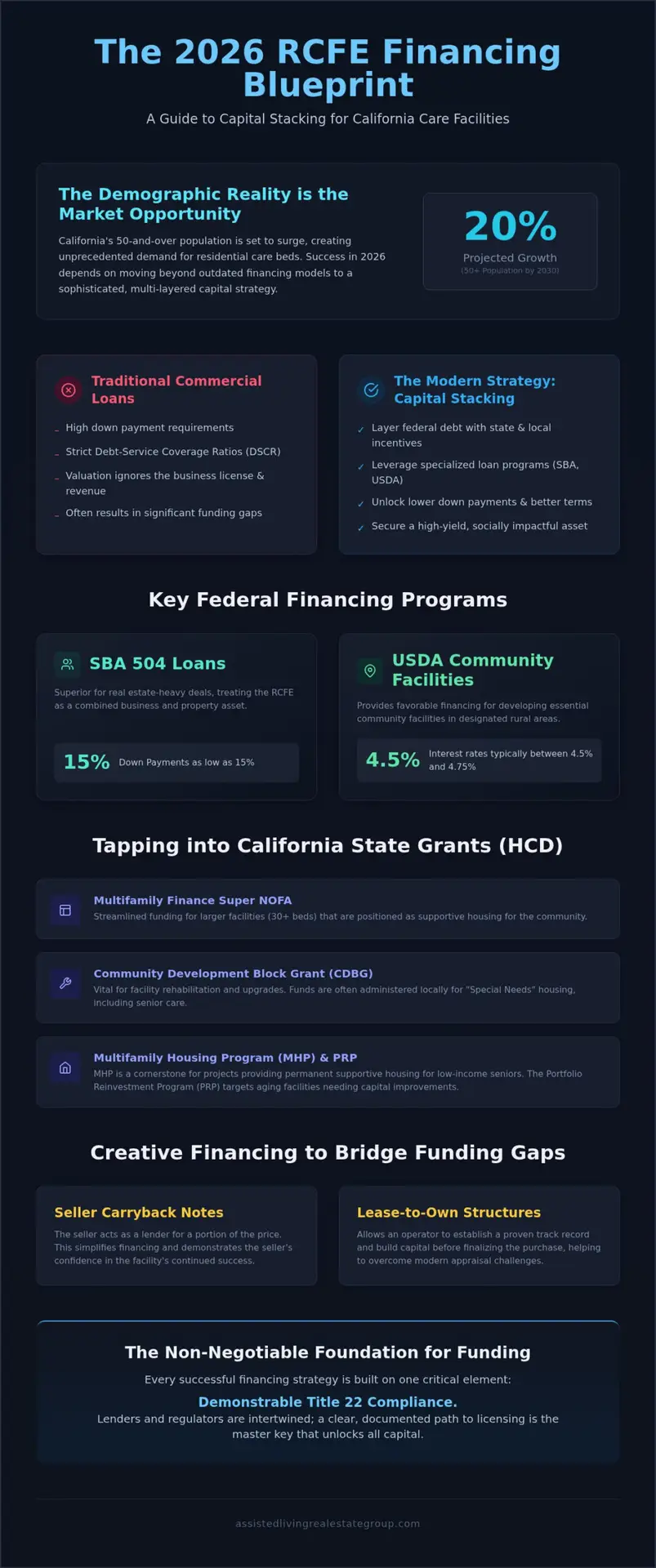
The most successful California care providers in 2026 have stopped chasing traditional commercial mortgages and started stacking specialized federal debt with state-level incentives. It’s no longer enough to simply find a lender. You need a capital strategy that accounts for the unique regulatory hurdles of Title 22 while capitalizing on the massive demographic shift as our 50-and-over population grows by 20 percent. We understand that high interest rates and rigid lending criteria can make expanding your residential care facility feel like an uphill battle.
This guide reveals the exact new financing options grants loans for rcfe california 2025 2026 that savvy investors are using to secure their market position. You’ll learn how to leverage SBA 504 loans with down payments as low as 15% and tap into USDA Community Facilities programs offering rates between 4.5% and 4.75% for rural projects. We’ll break down the critical differences between federal SBA programs and California HCD grants, providing you with a clear roadmap to assemble a loan package that commands attention. From managing ADA renovation costs to securing working capital, this is your blueprint for turning social impact into a sophisticated financial legacy.
Key Takeaways
- Master the 2026 RCFE financing landscape by treating your acquisition as a sophisticated hybrid of commercial real estate and specialized business debt.
- Identify state-backed incentives through the California Department of Housing and Community Development Multifamily Finance Super NOFA for larger facility developments.
- Evaluate the SBA 504 program as a superior vehicle for real estate-heavy deals, offering lower down payments compared to traditional commercial options.
- Utilize the most current new financing options grants loans for rcfe california 2025 2026, such as seller carryback notes and lease-to-own structures, to overcome modern appraisal challenges.
- Secure your ROI by partnering with an expert guide who understands the Southern California market and the intricacies of the Title 22 relicensing process.
The 2026 RCFE Financing Landscape in California
RCFE financing in 2026 requires a fundamental shift in perspective. It’s not a standard home loan. It’s a sophisticated hybrid of commercial real estate and business acquisition debt. Traditional banks often struggle to categorize these assets, creating a friction point for investors. However, for those who understand the Southern California market, this friction is an opportunity. Your ability to bridge the gap between financial investment and compassionate care starts with understanding how lenders view your project.
Lender confidence is currently anchored in demographic reality. The 50-and-over population is projected to increase by 20 percent by 2030, creating a massive demand for beds that simply doesn’t exist yet. While traditional lenders have tightened their belts, niche programs are expanding to fill the void. Accessing new financing options grants loans for rcfe california 2025 2026 depends on your ability to prove Title 22 compliance from day one. Without a clear path to licensing, capital remains out of reach. We’ve seen that regulators and lenders are now more intertwined than ever before.
Why Traditional Commercial Loans Fall Short
Standard commercial lenders often view RCFEs through the wrong lens. They see a residential house but don’t account for the high-intensity labor model required for senior care. In the 2026 economic climate, strict debt-service coverage ratio (DSCR) requirements make it difficult for new operators to qualify. Most banks only value the physical structure. They ignore the intangible value of the business license and the recurring revenue it generates. This valuation gap often leaves a significant hole in the funding package. Understanding the broader context of U.S. Nursing Home Care Financing helps illustrate why specialized lenders are better equipped to handle these complexities than local retail banks.
The 2026 Investor Opportunity
Smart investors view the aging population as a strategic market gap rather than a crisis. In Southern California, the barriers to entry are high, but the rewards are higher for those who can navigate the red tape. Specialized financing allows for leverage that traditional real estate wouldn’t touch. We’re seeing a rise in “capital stacking,” which involves layering federal debt with state incentives and private equity. It’s a methodical process that requires a mentor who has navigated these waters for 25 years. By utilizing new financing options grants loans for rcfe california 2025 2026, you aren’t just buying a building. You’re securing a high-yield asset with a profound social impact. This dual-layered approach ensures your project appeals to both the analytical mind of the lender and the moral compass of the community.
California State Grants and Federal Funding for Senior Care
Navigating the California Department of Housing and Community Development (HCD) requires a strategic eye for opportunity. The 2026 NOFA (Notice of Funding Availability) calendar isn’t just for traditional apartments; it’s a potential goldmine for RCFE operators who know how to position their projects as supportive housing. Specifically, the Multifamily Finance Super NOFA offers a streamlined application process for larger facilities with 30 or more beds. By aligning your care model with the state’s 2026 housing goals, you can unlock capital that traditional lenders simply won’t offer. We’ve seen that success in this niche depends on your ability to frame demographic shifts as an untapped market potential for strategic professionals.
For existing operators in Southern California, the Community Development Block Grant (CDBG) serves as a vital tool for facility rehabilitation. These funds are often administered at the local level to improve “Special Needs” housing, a category that includes senior care components. If you’re looking for turnkey business acquisitions, understanding these grant layers is essential for your financial roadmap. It’s about bridging the gap between high-level investment and the human values that define our industry.
HCD Grant Programs Relevant to Care Facilities
The Multifamily Housing Program (MHP) remains a cornerstone for projects providing permanent supportive housing. It’s particularly useful for RCFEs that cater to low-income seniors or those with chronic health conditions. Additionally, the Portfolio Reinvestment Program (PRP) is designed for aging facilities that need significant capital improvements to maintain Title 22 compliance. Winning these grants requires more than just a good business plan. You need a narrative that emphasizes long-term significance and the intersection of ethics and profitability.
Federal HUD and USDA Opportunities
Federal programs provide the backbone for many new financing options grants loans for rcfe california 2025 2026. HUD Section 232 is specifically engineered for residential care and assisted living, providing mortgage insurance for both for-profit and non-profit entities. For those looking at rural California markets with populations under 20,000, the USDA Community Facilities Direct Loan & Grant Program is an exceptional choice. As of September 2026, USDA interest rates are highly competitive, with a poverty rate of 4.500% and a market rate of 4.750%. These federal tools often require a higher level of documentation, but they offer the stability and lower interest rates needed for large-scale strategic investments in the California care market.
SBA Loan Programs: Navigating Specialized Debt in 2026
The Small Business Administration remains the most potent ally for care facility investors in 2026. While traditional commercial banks have retreated into more conservative positions, the SBA provides the stability needed to navigate the high-barrier-to-entry California market. Understanding the nuances between the 7(a) and 504 programs is no longer optional; it’s the difference between a stalled project and a successful acquisition. These new financing options grants loans for rcfe california 2025 2026 are specifically engineered to bridge the gap between high California property values and the operational reality of senior care.
SBA 7(a): The Versatile Business Loan
The 7(a) program is the primary workhorse for business-centric acquisitions. It’s particularly effective for business-only purchases where the real estate is leased, or for covering leasehold improvements and essential working capital. In 2026, many 6-bed residential care home operators utilize this program because it allows for a mix of real estate, equipment, and intangible business value. Maximum loan amounts generally reach $5 million, covering the vast majority of mid-sized California facilities. However, investors must be disciplined, as 7(a) loans often carry variable interest rates that require careful cash flow forecasting to maintain profitability.
SBA 504: The Real Estate Powerhouse
For real estate-heavy deals, the SBA 504 program is often the superior choice for long-term significance. It utilizes a 50-40-10 structure where a conventional lender provides 50%, a Certified Development Company (CDC) covers 40%, and the borrower brings as little as 10% to 15% as a down payment. As of September 2026, 25-year fixed rates are holding at 6.27%, providing a level of predictability that variable products can’t match. To qualify, your RCFE must be a for-profit entity and occupy at least 51% of the building. This program is a cornerstone for those following The Ultimate Guide to Buying an RCFE Facility in California.
Southern California lenders are looking for more than just a high credit score in the current environment. They demand a “Lender-Ready” package that demonstrates your mastery of Title 22 compliance and operational efficiency. Your package must include a robust business plan, proof of adequate working capital after closing, and evidence of your experience in the care sector. Lenders in 2026 are increasingly focused on business valuation metrics rather than just simple property appraisals. By aligning your application with these new financing options grants loans for rcfe california 2025 2026, you position yourself as a strategic professional capable of achieving significant financial returns while making a tangible social impact. Success in this niche requires a specific roadmap, and the SBA provides the capital momentum to move from curiosity to conviction.
Creative Financing: Lease-to-Own and Seller Carryback
Southern California’s 2026 market presents a unique challenge: high property values often outpace conservative bank appraisals. This gap shouldn’t stop a strategic acquisition. Creative structures like seller carrybacks and lease-to-own agreements have emerged as essential new financing options grants loans for rcfe california 2025 2026. These tools allow investors to move from curiosity to conviction without being sidelined by rigid institutional lending. By utilizing these private arrangements, you can bridge the gap between financial investment and compassionate care while securing a high-barrier-to-entry asset.
A seller carryback note is a powerful instrument in the current economic climate. It allows the seller to act as the lender for a portion of the purchase price, often covering the difference between the bank’s loan-to-value limit and the actual sale price. In 2026, we see these notes used to satisfy SBA equity requirements, provided they are structured correctly on standby. This protects the buyer’s liquid capital while ensuring the seller achieves their desired exit value. For those needing immediate momentum, short-term private equity or “hard money” can serve as a bridge during the Title 22 relicensing period before refinancing into permanent debt.
Structuring the Seller Carryback
Negotiating a carryback requires a delicate balance of technical financial metrics and human trust. You must ensure the debt service on the secondary note doesn’t choke the facility’s operational budget during the critical first year. If you’re on the other side of the transaction, understanding How to Sell Your Assisted Living Facility in California is vital. It helps you structure a deal that attracts high-caliber buyers while securing your long-term significance and financial legacy.
Lease-to-Own: A Low-Entry Entry Strategy
For new operators or those looking to scale without a massive immediate down payment, lease-to-own opportunities provide a pathway to property ownership through “sweat equity.” This model matches property owners with experienced tenants who manage the facility while building a purchase credit through monthly rent. It’s a methodical process that allows you to prove the RCFE business model’s profitability before committing to a full mortgage. You define the purchase option price and rent credits upfront, creating a predictable roadmap for future ownership.
Trust is the underlying currency in these private deals. Unlike a standard real estate transaction, an RCFE sale involves sensitive regulatory compliance and resident care continuity. Specialized brokers act as the bridge, maintaining confidentiality while identifying off-market new financing options grants loans for rcfe california 2025 2026. If you’re ready to explore these exclusive paths, our team can help you identify Lease-to-Own Care Home Opportunities that align with your strategic investment goals.
Securing Your RCFE Investment with Expert Guidance
Identifying the right new financing options grants loans for rcfe california 2025 2026 requires more than a simple search; it requires a strategic partner who holds the keys to this high-barrier-to-entry market. In the 2026 Southern California landscape, the most lucrative opportunities often exist off-market, accessible only through specialized brokerage networks. A general real estate agent doesn’t understand the technical financial metrics or the Title 22 regulatory hurdles that define a successful care facility acquisition. You need an expert guide who can bridge the gap between financial investment and compassionate care, ensuring your capital is deployed with precision.
Assisted Living Real Estate Group provides the seasoned expertise necessary to navigate the intersection of ethics and profitability. We recognize that the demographic shift is an untapped market potential for strategic professionals. Our role is to act as a high-level mentor, guiding you through the complex relicensing process and connecting you with qualified lenders who actually understand the RCFE business model. This methodical approach transforms a massive market opportunity into a predictable roadmap for long-term significance. Before you commit your capital, follow this essential checklist to ensure your project is lender-ready.
Final Checklist: 5 Steps to Take Before Applying for RCFE Financing
- Confirm Title 22 Compliance: Audit the physical plant to ensure it meets all current California regulatory standards for elderly care.
- Analyze Local Demographics: Target Southern California zip codes where the 50-and-over population is hitting the projected 20 percent growth mark.
- Audit Financial Strength: Ensure you have adequate working capital reserves to sustain operations during the relicensing transition.
- Validate Licensing Status: Understand the specific timeline for turnkey business acquisitions to avoid operational gaps.
- Secure Specialized Debt: Align your project with lenders who recognize the value of the RCFE license rather than just the physical real estate.
Professional Mentorship for Investors
Leveraging 25 years of specialized care facility experience allows you to sidestep the common licensing and financial pitfalls that sink novice investors. We don’t just find a property; we provide a roadmap for acquisitions that protect your financial legacy. Our confidential marketing strategies ensure that the facility’s value remains intact throughout the transition, maintaining the delicate balance between high-level investment and compassionate service. For a deeper dive into the regulatory side, see our RCFE License California: The 2026 Southern California Guide. This resource is essential for any professional looking to master the new financing options grants loans for rcfe california 2025 2026.
Next Steps for 2026
The opportunity in the 2026 California care market is exclusive and massive. It’s time to move from curiosity to conviction by securing a specialized roadmap for your next project. Schedule a confidential consultation to value a potential acquisition or review our current Southern California listings for RCFE and ARF opportunities. To begin your journey toward achieving significant financial returns with a tangible social impact, Contact the Assisted Living Real Estate Group today.
Mastering the 2026 California Care Market
The shift in demographic demand is an untapped market potential for strategic professionals ready to bridge the gap between financial investment and compassionate care. By leveraging new financing options grants loans for rcfe california 2025 2026, you move from curiosity to conviction. Stacking specialized federal debt with California-specific incentives is the most effective way to navigate today’s rigid lending environment. Success requires a specific roadmap that accounts for Title 22 compliance and operational efficiency from the first day.
With 25 years of specialized care facility experience and a proven track record in confidential RCFE transactions, our team holds the keys to this high-barrier-to-entry market. Our direct expertise in Southern California market dynamics ensures you aren’t just buying a property; you’re securing a high-yield asset with long-term significance. Secure your RCFE investment strategy with a confidential consultation and turn these industry trends into granular operational success. Your vision for a premium care facility is within reach.
Frequently Asked Questions
Are there specific grants for 6-bed RCFEs in California for 2026?
Yes, state programs like the Community Development Block Grant (CDBG) and the Portfolio Reinvestment Program (PRP) are viable options for 6-bed facilities. These funds focus on rehabilitation and capital improvements to ensure aging properties meet modern Title 22 standards. In Southern California, these grants are often administered at the local level to support “Special Needs” housing. Securing these funds requires a narrative that emphasizes long-term significance and the intersection of ethics and profitability.
Can I use an SBA loan to buy an RCFE business without the real estate?
You can certainly use the SBA 7(a) program for business-only acquisitions. This versatile loan is ideal for purchasing a turnkey operation where the real estate is leased rather than owned. It covers the business license, equipment, and intangible goodwill of the facility. This structure allows strategic professionals to enter the high-barrier-to-entry California market with less capital tied up in real estate, focusing instead on operational excellence and immediate cash flow.
What is the minimum down payment required for an assisted living facility in California?
While conventional commercial loans often demand up to 40% down, SBA 504 loans for special-purpose projects like RCFEs can require as little as 15%. This lower entry point is a cornerstone for investors following a specific roadmap to maximize ROI. By preserving your liquid capital, you ensure adequate working capital is available after closing. This is critical for navigating the first few months of operation while the California licensing transition is finalized.
Do California HCD grants require the facility to serve low-income seniors?
Most HCD grant programs, including the Multifamily Housing Program (MHP), do require a commitment to serving low-income or special needs populations. Aligning your facility’s mission with California’s 2026 housing goals significantly increases your grant eligibility. These programs aren’t just for traditional apartments; they’re for care providers who want to achieve significant financial returns while making a tangible social impact. This dual-layered approach is highly valued by state regulators and mission-driven lenders.
How does the RCFE licensing process affect my loan approval timing?
Licensing is the primary hurdle for any financing approval in 2026. Lenders typically won’t release funds until the California Department of Social Services (CDSS) provides a provisional license or a clear path to relicensing. This process can take several months, so it’s essential to coordinate your loan closing with the regulatory timeline. Expert guidance from a specialized broker ensures you avoid common licensing pitfalls that could otherwise stall your capital momentum and delay your acquisition.
What is a ‘Seller Carryback’ and is it common in California care home sales?
A seller carryback is a private note where the seller acts as the lender for a portion of the purchase price. In the 2026 Southern California market, these are increasingly common to bridge appraisal gaps. This creative structure can often satisfy SBA equity requirements if handled correctly. It builds a foundation of trust between the buyer and seller, allowing the transaction to move forward even when traditional bank valuations fall short of the market reality.
Are there financing options for upgrading an existing facility to meet 2026 Title 22 standards?
Yes, the SBA 504 program and the state’s Portfolio Reinvestment Program (PRP) are specifically designed for these types of capital improvements. Upgrading an RCFE to meet 2026 Title 22 standards often involves significant ADA renovations or fire sprinkler system installations. These projects can cost between $40,000 and $90,000 for a sprinkler system alone. Utilizing these specialized loans allows you to maintain a premium market position without depleting your facility’s operational reserves.
Can I get financing for a turnkey RCFE business acquisition?
Absolutely, turnkey acquisitions are a primary target for the SBA 7(a) program. This allows you to step into an existing operation with established residents and staff. By utilizing new financing options grants loans for rcfe california 2025 2026, you can secure the business goodwill and equipment needed for immediate revenue. Partnering with a mentor who understands Southern California market dynamics is the most effective way to identify these off-market opportunities and secure a successful loan package.