
Most investors looking for a group home for sale California make the fatal mistake of treating the transaction like a standard residential real estate flip. In reality, you aren’t just buying a property; you’re acquiring a high-stakes healthcare enterprise where the real value lies in the license and the continuity of care. You understand that the demographic shift in the Golden State is creating an urgent need for quality residential care, but the path to entry is fraught with regulatory hurdles and a notorious CDSS licensing backlog. It’s a high-barrier market that demands a sophisticated, business-first approach to ensure your capital is protected and your impact is meaningful.
This guide provides the roadmap you need to navigate the complexities of RCFE and ARF acquisitions with the precision of a seasoned pro. We’ll help you distinguish between a simple house and a profitable care business, ensuring you secure a turnkey operation with stable cash flow from day one. You’ll learn how to identify high-growth Southern California markets, manage the latest Title 22 compliance standards enforced in 2026, and execute a confidential acquisition that keeps operations running smoothly. From understanding the $990 initial fee for a six-bed facility to meeting the mandatory three-month operating fund requirement, we’re laying out the strategic roadmap for your next successful investment.
Key Takeaways
- Master the Three-Pillar valuation method to accurately price a facility based on the intersection of real estate, business operations, and licensing.
- Understand why the most lucrative group home for sale California opportunities are held in confidential listings to protect resident stability and staff retention.
- Manage the complexities of Title 22 to ensure a seamless transition of ownership without suffering from operational downtime or licensing delays.
- Identify the core differences between RCFE and ARF models to align your investment with the specific California demographic you intend to serve.
- Discover why the six-bed residential model remains the most resilient and scalable asset class for private investors in the 2026 care market.
The Strategic Landscape of Group Homes for Sale in California (2026)
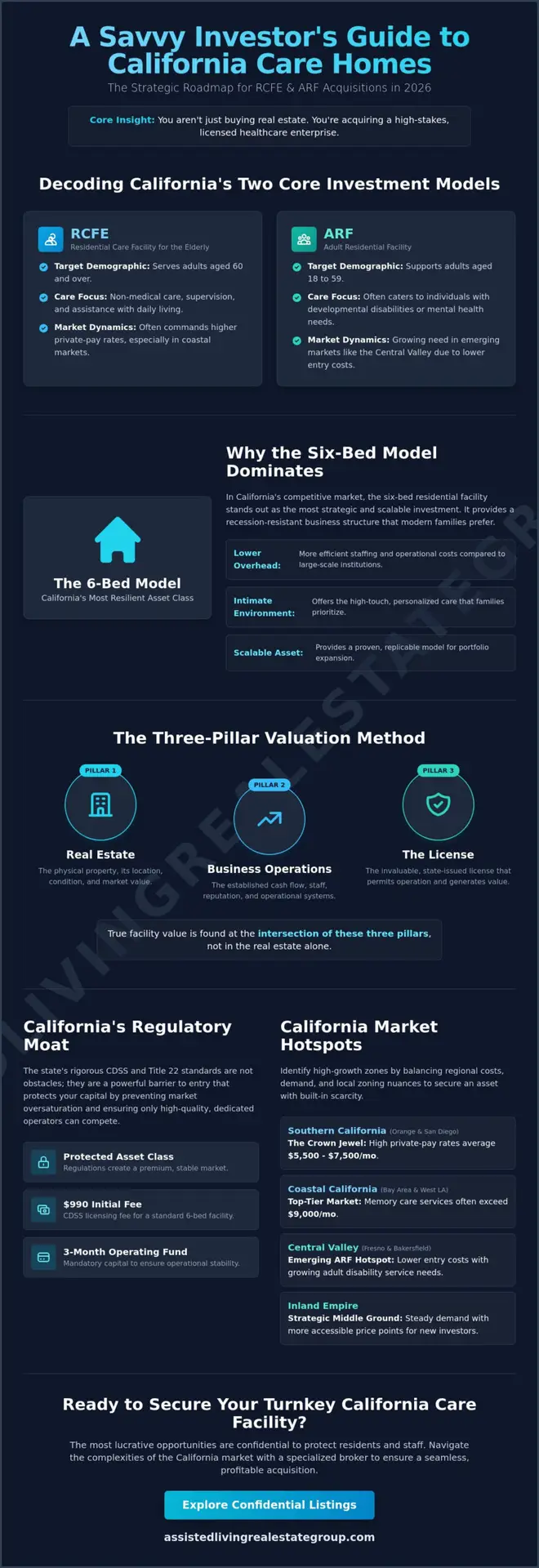
The 2026 outlook for the California care market is defined by a widening supply-demand gap that favors the strategic professional. As the state’s population continues to age, the demand for specialized housing has outpaced new construction, creating a significant opportunity for those looking to acquire existing facilities. When you evaluate a group home for sale California, you’re looking at a recession-resistant asset class that provides essential services. The six-bed residential model remains the most resilient investment in this sector. It offers a lower overhead structure than large-scale institutional facilities while providing the intimate, high-touch environment that modern families prioritize for their loved ones.
In the California regulatory context, a “group home” typically refers to either a Residential Care Facility for the Elderly (RCFE) or an Adult Residential Facility (ARF). These are not merely pieces of real estate; they are licensed healthcare businesses. By investing in Residential care, you’re participating in a model of compassionate capitalism where financial returns are directly tied to the quality of life provided to residents. This dual-purpose investment strategy is what separates the visionary investor from the traditional landlord.
Why California’s Regulatory Barrier is Your Best Friend
High entry barriers are the ultimate protection for your capital. The California Department of Social Services (CDSS) enforces rigorous standards that prevent the market from becoming oversaturated with low-quality operators. These regulations ensure market stability and maintain high valuation floors for compliant facilities. While the licensing process is demanding, it serves as a powerful moat, ensuring that only dedicated professionals can compete. This regulatory environment transforms a standard business into a premium, protected asset.
Market Hotspots: From Fresno to San Diego
Demand shifts across the state reveal distinct opportunities for growth. Southern California remains the crown jewel of RCFE investments, particularly in coastal Orange County and San Diego, where median assisted living costs average between $5,500 and $7,500 per month as of May 2026. These markets offer high private-pay potential and strong appreciation.
- The Central Valley: Markets like Fresno and Bakersfield are emerging as hotspots for ARF acquisitions due to lower entry costs and a growing need for adult disability services.
- Coastal California: High-net-worth enclaves in the Bay Area and West Los Angeles continue to command top-tier rates, often exceeding $9,000 per month for memory care services.
- Inland Empire: This region offers a strategic middle ground, with steady demand and more accessible price points for first-time facility buyers.
Identifying a group home for sale California in these high-growth zones requires a roadmap that accounts for regional labor costs and local zoning nuances. By focusing on areas with a high density of aging residents and limited new facility permits, you can secure an asset with built-in scarcity and long-term significance.
RCFE vs. ARF: Decoding the Right Group Home Investment
Choosing a group home for sale California requires more than a preference for a specific zip code; it demands a deep understanding of the resident populations defined by California’s official definitions. Residential Care Facilities for the Elderly (RCFE) cater to those aged 60 and over, focusing on non-medical care and supervision. Conversely, Adult Residential Facilities (ARF) serve the 18 to 59 demographic, often supporting individuals with developmental disabilities or mental health challenges. These aren’t just semantic differences. They dictate your staffing ratios, your daily rate potential, and the specific regulatory oversight you’ll face under the Community Care Licensing Division.
Your choice should align with your operational strengths and financial goals. RCFEs often command higher private-pay rates, especially when offering memory care, while ARFs may rely more on state-funded reimbursement models. Investors must account for the fact that 2026 Medi-Cal rates include adjustments for the statewide minimum wage hike and the expansion of paid sick leave from three to five days. These rising labor costs make efficient staffing models essential for maintaining healthy EBITDAR margins. Success in this niche depends on balancing these technical financial metrics with a genuine commitment to resident well-being.
The 6-Bed RCFE: The Entry-Level Gold Standard
The 6-bed model is the preferred entry point for savvy investors because of its unique zoning protections. In California, a residential care facility serving six or fewer residents is considered a residential use of property. You don’t need a conditional use permit to operate in a single-family neighborhood. This protection allows you to scale a portfolio by acquiring a regional cluster of homes, creating operational efficiencies across a single management team. If you’re ready to explore these opportunities, our team can help you identify turnkey business acquisitions that are already cash-flowing.
Specialized Facilities: Memory Care and Behavioral Health
Investors seeking higher returns often look toward facilities with specialized endorsements. Adding a dementia or hospice waiver to an RCFE license can significantly increase the monthly rate per bed. Statewide memory care averages have reached approximately $8,500 to $9,085 in 2026, reflecting the high demand for expert care. For those interested in the 18-59 sector, you can find detailed insights in our guide on Investing in an Adult Residential Facility in California. Beyond traditional care, Southern California is a prime market for Drug and Alcohol Recovery facility sales, where behavioral health expertise meets high-demand service niches. This diversification allows you to build a portfolio that is both profitable and socially significant.
Valuing a California Group Home: Real Estate vs. Operational Cash Flow
When you evaluate a group home for sale California, you must abandon the traditional residential appraisal mindset. A standard Zestimate or neighborhood comparable won’t capture the true worth of a care facility. Instead, we utilize the Three-Pillar valuation method. This approach weighs the physical real estate, the operational business entity, and the intrinsic value of the license itself. In this specialized market, value is driven by EBITDAR; Earnings Before Interest, Taxes, Depreciation, Amortization, and Rent. This metric allows you to see the core profitability of the care operation regardless of how the property is financed or owned.
Cap rates in the care sector behave differently than in multi-family housing. While an apartment complex might trade on a 5% cap rate based on rent, a residential care facility is valued on a multiple of its cash flow. The composition of that cash flow is vital. Facilities with a high percentage of private-pay residents command a premium because they aren’t subject to the reimbursement ceilings of SSI or Medi-Cal. However, with the 2026 adjustments to Medi-Cal rates, state-funded facilities are seeing more predictable revenue streams. Every valuation must be grounded in compliance with Title 22 regulations for RCFEs, as a facility with a history of citations carries a higher risk profile and a lower valuation multiple.
Due Diligence: Beyond the Physical Inspection
Due diligence requires a deep dive into the regulatory history of the business. You must review the last three years of California Department of Social Services (CDSS) inspection reports, commonly known as LPA visits. These documents reveal the operational health of the facility. A group home for sale California is only as strong as its resident census and referral sources. Analyze the stability of the current residents and ensure the “turnkey” status includes all essential furniture, fixtures, and, most importantly, a trained staff that intends to stay through the transition.
The Hidden Value of the ‘Facility Manager’
A seasoned administrator is often the most valuable asset you’ll acquire. They serve as the bridge between regulatory compliance and resident satisfaction. You must verify that the staff credentials meet all current California labor laws, especially given the expansion of paid sick leave and minimum wage requirements in 2026. A facility that maintains a high-occupancy history under a skilled manager creates a powerful multiplier effect on the business value; it proves the model is sustainable and the reputation is secure. This operational excellence is what transforms a simple house into a high-yield investment vehicle.
The Path to Ownership: Navigating Title 22 and Licensing Hurdles
Securing a group home for sale California is a race against regulatory timelines. Unlike standard commercial real estate, you cannot simply transfer a license from the seller to the buyer. The California Department of Social Services (CDSS) issues licenses to specific legal entities for specific locations. This means every acquisition requires a fresh application process. You must begin with the mandatory online orientation, which carries a $54.85 fee, followed by the rigorous administrator certification. This certification involves a $100 exam fee and a $140 application fee paid to the state. The facility license application itself, which costs $990 for a standard 4-6 bed home, is the final hurdle before you can legally take the operational reins.
The transition creates a delicate “Gap Period” between the close of escrow and the issuance of your new license. To maintain continuity of care and protect your cash flow, a Management Agreement is essential. This legal framework allows the seller to remain the licensee of record while you manage the daily operations under their supervision. It prevents the operational downtime that can decimate a facility’s reputation and resident census. Professional investors use this period to align the facility with the latest RCFE License California: The 2026 Guide standards, ensuring a seamless handoff that satisfies both the state and the families you serve.
Title 22 Compliance: The Investor’s Bible
Title 22 is your operational blueprint. It dictates everything from mandatory fire sprinkler systems and ADA-compliant access to specific exit path widths. In 2026, the Community Care Licensing Division is strictly enforcing facility-wide dementia care standards and revised resident reappraisal requirements. You must ensure the physical plant meets these evolving codes before the final pre-licensing inspection. If the property requires upgrades, these should be factored into your initial offer to preserve your margins. Only a compliant facility can sustain the premium market position you seek.
Financing the Acquisition in California
Funding a care facility requires specialized knowledge of SBA products. SBA 7(a) loans are the workhorse of the industry, offering flexibility for both the real estate and the business acquisition with rates typically ranging from 5.25% to 8.75% as of May 2026. Alternatively, the SBA 504 loan provides long-term, fixed-rate financing for the property itself, which is ideal for investors looking to lock in stability. You must demonstrate significant liquidity; CDSS requires applicants to prove they have three months of operating funds set aside in a bank account. For many, lease-to-own care home opportunities provide a strategic entry point when traditional financing timelines don’t align with market opportunities. Seller financing often serves as the final bridge, aligning the seller’s interests with your successful licensing and long-term success.
Securing Your Investment with a Specialized California Care Broker
The most lucrative opportunities in the California care market rarely appear on public real estate portals. If you’re searching for a group home for sale California on Zillow or LoopNet, you’re likely seeing the leftovers of the market or facilities with significant operational distress. A specialized care broker operates in a world of whispers and non-disclosure agreements. This exclusivity isn’t just about prestige; it’s a fundamental requirement for protecting the business’s most fragile assets: the residents and the care team. Leveraging a 25-year advantage in industry relationships allows a specialized broker to provide access to off-market inventory that has been pre-vetted for both financial health and regulatory compliance.
A generalist broker might understand square footage, but they often lack the depth required to navigate a confidential RCFE acquisition. They don’t see the “red flags” that a specialist identifies instantly, such as unresolved CDSS citations or a census that relies too heavily on low-reimbursement SSI residents. By focusing on a business-first strategy, a specialized broker ensures you aren’t just buying a building, but a high-performing healthcare enterprise. This level of expertise is what separates a standard real estate transaction from a successful turnkey business acquisition.
Confidentiality: The Core of a Successful Care Sale
Publicly listing a care home is often a death knell for its valuation. When staff members discover a facility is for sale through a public site, the resulting uncertainty leads to immediate turnover. Families, fearing a disruption in care, may move their loved ones to competing facilities. This flight of residents and staff can decimate your EBITDAR before you even close escrow. We mitigate this risk through a rigorous Confidential Marketing Strategy. Every potential buyer is vetted for financial capability and operational intent before a single detail about the facility’s location or identity is disclosed. This ethical approach maintains the stability of the home and protects the long-term value of your investment.
Your Next Steps in the California Market
Acquiring a care business is a strategic team sport. Your “Care Acquisition Team” should include a specialized broker, a CPA familiar with healthcare accounting, and a consultant who understands the nuances of Title 22. This collaborative approach ensures that your transition into the California market is both profitable and ethically sound. For a deeper dive into the mechanics of the transaction, consult The Ultimate Guide to Buying an RCFE Facility in California.
The window of opportunity in the 2026 California market is narrow but deep. If you’re ready to move from curiosity to conviction, it’s time to secure a roadmap tailored to your financial goals. We invite you to reach out for a confidential consultation to explore our current inventory of RCFE and ARF opportunities. Whether you’re interested in lease-to-own care home opportunities or a direct purchase, our expert guidance ensures you navigate the high-barrier California market with precision and purpose.
Your Strategic Roadmap to California Care Acquisition
Acquiring a group home for sale California is a sophisticated endeavor that successfully bridges the gap between financial precision and compassionate service. You’ve seen that long-term success requires more than just capital; it demands a deep mastery of EBITDAR valuation, a commitment to Title 22 compliance, and a strategic plan to bridge the licensing gap. By focusing on high-growth markets and specialized care niches, you can build a portfolio that offers both significant financial returns and tangible social significance.
The complexity of the 2026 regulatory environment means you shouldn’t walk this path alone. With 25+ years of specialized care facility experience, our team provides the seasoned expertise you need to identify high-value opportunities before they reach the public market. We offer exclusive access to off-market RCFE and ARF listings and possess the technical depth to navigate CDSS licensing hurdles with confidence. Your vision for a successful care enterprise deserves a partner who understands the intersection of ethics and profitability.
Secure your confidential consultation with California’s premier RCFE brokerage. It’s time to transform demographic shifts into your most impactful investment yet.
Frequently Asked Questions
Can I buy a group home in California without a license?
Yes, you can purchase the real estate and the business entity without being a licensed administrator, but you cannot legally operate or provide care until a license is issued to your specific legal entity. Most investors hire a certified administrator to manage daily operations and meet CDSS requirements while they focus on the strategic investment side. This allows you to own a group home for sale California asset class while delegating the regulatory oversight to a qualified professional.
How long does it take to transfer an RCFE license in California?
The licensing process for a new owner typically takes four to six months, as California does not allow for a direct license transfer between individuals. You must submit a Change of Licensee application to the CDSS. During this period, savvy buyers use a Management Agreement to keep the facility operational under the seller’s existing license, ensuring that resident care and cash flow remain uninterrupted while the state processes the new application.
What is the difference between a 6-bed and a 15-bed RCFE in terms of zoning?
A 6-bed RCFE is legally classified as a residential use of property under California law, meaning it is generally exempt from local business taxes and conditional use permits in single-family zones. A 15-bed facility is often categorized as a commercial use. This larger scale requires compliance with stricter local zoning ordinances, potentially including public hearings and specific parking requirements, which can add significant time and cost to the acquisition process.
How much experience do I need to buy an Adult Residential Facility (ARF)?
You don’t need direct care experience to own an ARF, but the facility must be managed by a certified administrator who has completed the state-mandated 35-hour initial certification program. While the owner provides the capital and strategic direction, the administrator ensures compliance with Title 22. If you plan to be a hands-on operator, you’ll need to pass the state exam and demonstrate a thorough understanding of behavioral health or developmental disability support.
Are there specific zoning requirements for group homes in Southern California?
Yes, while state law protects small facilities, local municipalities in Southern California may enforce specific building codes and fire safety standards that exceed general state requirements. Cities like Los Angeles or San Diego have high densities of care homes, making it essential to verify over-concentration rules that might limit new licenses within 300 feet of an existing facility. Always conduct a thorough parcel search to ensure the location supports your intended resident capacity.
Can I live in the group home I purchase?
You can live in your care facility, but your presence must not interfere with the required resident space or the quality of care provided. Any live-in staff or owners must be included in the facility’s disaster plan and meet all background clearance requirements, including fingerprinting through the Department of Justice. Living on-site can reduce labor costs, but it requires a strict boundary between your personal life and the professional care environment.
What happens if the CDSS denies my license application after I buy the property?
A license denial can be catastrophic, which is why most purchase agreements for a group home for sale California are contingent upon licensing approval or include a robust Management Agreement. If denied, you may have to appeal the decision through an administrative hearing or sell the asset to a qualified operator. Working with a specialized broker ensures that your application is vetted for common pitfalls before you commit significant capital to the purchase.
What is the average profit margin for a 6-bed RCFE in California?
Profit margins for 6-bed facilities typically range from 20% to 35% after all operating expenses and labor costs are deducted. These margins depend heavily on your resident mix; private-pay residents in high-demand areas like Orange County or the Bay Area yield much higher returns than those on state-funded reimbursement. Efficient management of labor, which remains the largest expense in any care setting, is the primary driver of your final EBITDAR.