
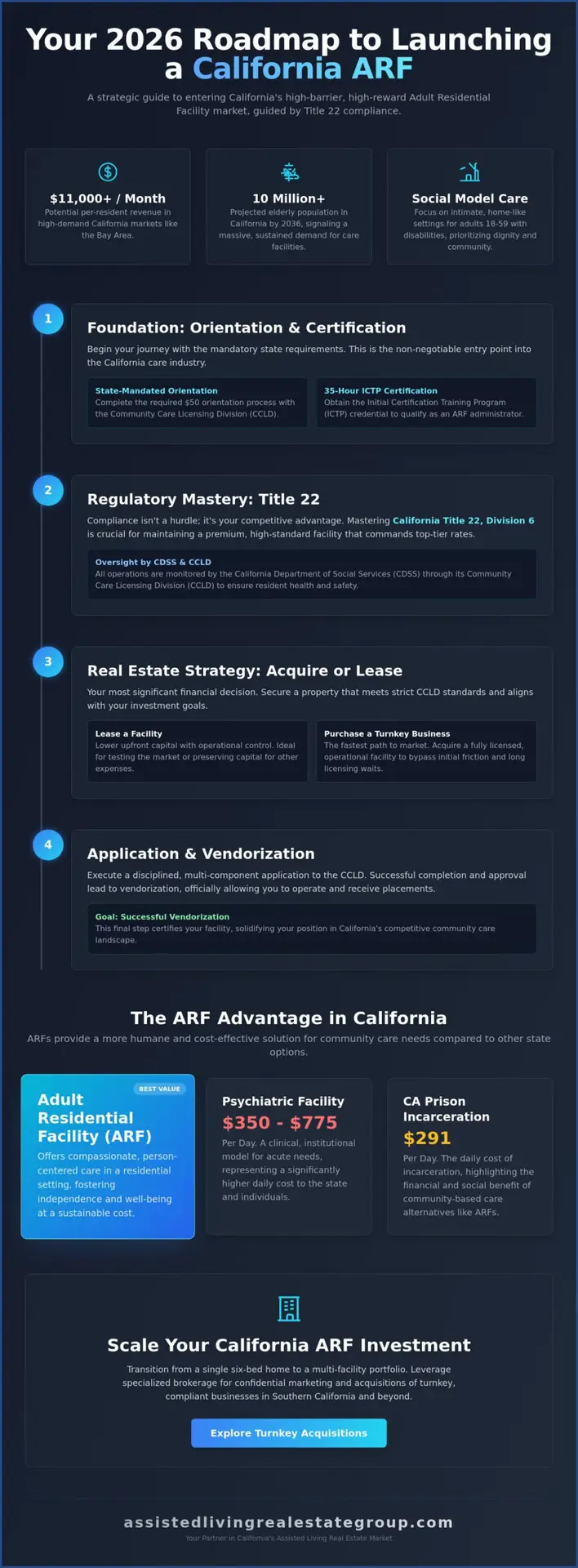
What if the most resilient real estate play of 2026 isn’t found in traditional multi-family units, but in the surging demand for specialized care that commands upwards of $11,000 per month in markets like the Bay Area? Understanding how to start an adult residential facility in California is no longer just a career choice; it’s a sophisticated entry into a high-barrier market where the state’s elderly population is projected to exceed 10 million by 2036. You’re likely already aware that the path to entry is paved with Title 22 complexities and the daunting task of finding real estate that meets strict Community Care Licensing Division standards.
It’s natural to feel overwhelmed by the prospect of long licensing wait times or the nuance of person-first regulatory updates. We promise to strip away that uncertainty by providing a strategic roadmap that balances fiscal returns with high-standard care. This guide explores the essential 35-hour ICTP certification, the $50 orientation process, and the critical financial choice between leasing or purchasing a turnkey facility. You’ll gain the clarity needed to move from initial curiosity to successful vendorization in California’s competitive landscape.
Key Takeaways
- Master the nuances of California Title 22 and CDSS oversight to ensure your facility maintains a premium market position through impeccable regulatory compliance.
- Evaluate high-value real estate strategies in Southern California, weighing the benefits of strategic acquisitions versus lease-to-own opportunities to maximize your investment footprint.
- Follow a precise 2026 roadmap on how to start an adult residential facility in California, covering everything from the 35-hour ICTP administrator certification to final vendorization.
- Discover how to transition from a single six-bed home to a multi-facility portfolio by leveraging specialized brokerage for turnkey business acquisitions and confidential marketing.
Understanding the Adult Residential Facility (ARF) Model in California
Investors seeking a high-barrier, high-reward entry into the care sector often find their answer in the Adult Residential Facility (ARF). An ARF provides 24-hour non-medical care to adults aged 18 through 59 who have physical, mental, or developmental disabilities. Unlike the more commonly discussed Residential Care Facilities for the Elderly (RCFE), which serve those 60 and older, the ARF model addresses a distinct and underserved demographic. This isn’t just about housing; it’s about the “Social Model” of care. We’ve moved away from the sterile, institutional environments of the past toward intimate, residential settings that prioritize dignity and personal growth.
This model emphasizes community living over clinical isolation. It requires a commitment to human values and long-term significance. For the strategic professional, this shift represents a premium market position where refined service justifies higher investment returns. By focusing on a residential setting, providers can offer a level of individualized attention that large institutions simply cannot replicate.
The Core Purpose of an ARF
The mission is simple yet profound. Residents receive essential assistance with activities of daily living (ADLs) within a home-like environment. This includes medication management, social engagement, and deep community integration. Within the broader assisted living model, the ARF serves as a vital bridge in California’s community care continuum. It allows individuals to thrive in a setting that mirrors a standard household rather than a clinical ward. Residents aren’t just patients; they’re active participants in a social environment designed to foster independence and well-being.
Why Investors are Turning to ARFs in 2026
The demand for specialized adult care in Southern California is reaching a fever pitch. Strategic professionals recognize that learning how to start an adult residential facility in California is a gateway to a recession-resistant asset class. It’s the perfect intersection of stable cash flow and tangible social contribution. While traditional real estate sectors face volatility, the need for compassionate, compliant care homes remains constant.
The financial logic is compelling. Compared to the daily cost of psychiatric facilities, which can range from $350 to $775, or the $291 daily cost of prison incarceration in California, ARFs provide a more humane and cost-effective solution for the state’s community care needs. In 2026, the focus has shifted toward person-centered care, as mandated by Title 22 updates. These regulations now emphasize person-first language and individualized assessments rather than diagnosis-based restrictions. This evolution requires a sophisticated operator who can navigate the regulatory landscape. When you understand how to start an adult residential facility in California, you aren’t just opening a business; you’re securing a niche position in a high-barrier market that offers both financial longevity and social impact.
Navigating California Title 22: The Regulatory Foundation
Regulatory compliance is often viewed as a hurdle. For the strategic investor, it’s actually the ultimate safeguard. In California, the “owner’s manual” for your business is Title 22, Division 6. This set of regulations dictates every operational facet, from staffing ratios to resident rights. Oversight is provided by the California Department of Social Services (CDSS) through its Community Care Licensing Division (CCLD). This body doesn’t just issue licenses; it monitors facilities to ensure the health and safety of every resident. Mastering these rules provides a significant competitive advantage. It ensures your facility operates at a premium standard that justifies higher service fees and attracts long-term placements.
The complexity of these mandates acts as a natural barrier to entry. This keeps the market from becoming oversaturated with low-quality providers. If the prospect of building a compliance framework from scratch feels daunting, many investors choose to bypass the initial friction by exploring turnkey business acquisitions that already have these systems in place.
The CCLD Application Process
Securing a license requires a disciplined, three-component approach. It begins with Component I, which involves attending a mandatory orientation. As of 2026, the orientation fee is $50 per person. This initial step provides the foundational knowledge required to submit a viable application. Component II is the most rigorous phase. You must submit a formal application and a detailed “Plan of Operation.” This document is the blueprint for your business, covering everything from your admission policies to your disaster response strategies. Finally, Component III involves a physical site inspection. The CCLD will conduct a pre-licensing visit to verify that your property meets all health and safety codes, including specific California requirements for fire clearances and bedroom dimensions.
Administrator Certification Requirements
Success starts with specialized education. To learn how to start an adult residential facility in California, you or your designated administrator must complete a 35-hour Initial Administrator Training Program (ICTP). This is distinct from the 80-hour requirement for elderly care facilities. Once the training is complete, you have 60 days to pass the California state ARF administrator exam. This 100-question test requires a minimum score of 70% to pass. Maintaining this license requires ongoing commitment. You’ll need to complete 40 hours of Continuing Education Units (CEUs) every two years. This rigorous process ensures that the leaders in this niche remain at the forefront of the latest care standards and Title 22 updates, such as the 2025 mandate for person-first language and individualized resident assessments.
Navigating these steps is the first true test for any professional entering the space. Those who approach the licensing process with precision and respect for the regulations are the ones who ultimately build the most sustainable and profitable portfolios. Understanding the mechanics of how to start an adult residential facility in California is a journey of moving from regulatory curiosity to operational conviction.
Strategic Real Estate Acquisition: Buy vs. Lease vs. Build
Real estate is the most significant capital expenditure and the highest barrier to entry in the care industry. Sourcing compliant property in Southern California’s competitive market requires a specialized lens. You aren’t just looking for a house; you’re looking for a compliant clinical footprint within a residential shell. When investors ask how to start an adult residential facility in California, the answer begins with the physical plant. The property must meet strict Title 19 fire safety clearances and ADA accessibility standards before a single resident can move in. This includes specific requirements for widened hallways, ramp gradients, and fire sprinkler systems that many standard residential homes lack.
Zoning remains a critical factor. California’s Fair Housing protections generally prevent local municipalities from imposing restrictive zoning on facilities serving six or fewer residents, treating them as standard residential uses. However, larger facilities often face “Not In My Backyard” (NIMBYism) opposition during the rezoning or permitting process. Understanding these local ordinances is essential for scaling. The Department of Developmental Services provides detailed insights into the different service levels required for various facilities, which directly influences your property choice and modification budget.
Buying an Established ARF Facility
Turnkey acquisitions are often the most efficient path to profitability. Purchasing an existing business provides immediate cash flow, a trained staff, and a pre-cleared physical site. This eliminates the “burn period” where you’re paying a mortgage on an empty building while waiting for CCLD approval. For those considering this route, our Ultimate Guide to Buying an RCFE Facility in California offers parallel strategic insights that apply to the ARF market. Due diligence is paramount. You must review the facility’s licensing history for any unresolved “Type A” or “Type B” citations and assess the condition of the physical plant to avoid surprise renovation costs.
Leasing for ARF Operations
Leasing offers a lower barrier to entry for investors who want to preserve capital for operational scaling. Finding a landlord open to community care tenants is the primary challenge. Your commercial lease must include a “right to license” clause. This protects you by allowing for lease termination or rent abatement if the property fails to pass the CCLD pre-licensing inspection. Negotiating these terms is vital, as the licensing process can take several months. A well-structured lease accounts for this delay, ensuring you aren’t bleeding capital before your first resident is admitted. Mastering how to start an adult residential facility in California through a lease-to-own model can be an excellent way to test a specific sub-market before committing to a full purchase.
The 2026 Step-by-Step Licensing and Vendorization Process
Securing a license is only half the victory. To build a truly resilient investment, you must move beyond basic operation into the realm of state-funded vendorization. The timeline from initial orientation to admitting your first resident typically spans several months, requiring a disciplined approach to each regulatory milestone. When professionals ask how to start an adult residential facility in California, they’re often seeking a way to bypass the common delays that plague unguided applications. The process is a chronological gauntlet that demands both administrative precision and physical property readiness.
The journey begins with the mandatory $50 orientation and the 35-hour ICTP certification. Once you’ve passed the state exam with a minimum score of 70%, your focus must shift to the entity structure. Most successful providers register as a Limited Liability Company (LLC) to protect their personal assets while establishing a professional brand. With your entity and property secured, you’ll submit the formal application to the Community Care Licensing Division. This submission must include a comprehensive Plan of Operation that details your staffing, emergency protocols, and resident care philosophies. After passing the Title 19 fire marshal inspection and the final CCLD site visit, you’ll receive your license. However, the final step for long-term viability is obtaining vendorization through your local Regional Center. This allows you to receive state-funded referrals and guaranteed reimbursement rates.
If the complexity of this roadmap feels like a barrier to your entry, consider exploring ARF turnkey business acquisitions that allow you to step into an already licensed and vendorized operation.
Working with California Regional Centers
Regional Centers are the primary funding engine for ARFs in California. They act as the bridge between your facility and the individuals who need your care. To receive placements, you must develop a “Program Design” that aligns with the specific needs of your local center. Reimbursement is structured through a tiered system, ranging from Level 1 to Level 4. These tiers are based on the acuity of the residents you serve; higher levels of care require more intensive staffing but command significantly higher monthly rates. Understanding these tiers is essential for projecting your facility’s long-term financial performance.
Avoiding Common Licensing Pitfalls
Application delays are rarely the result of bad luck. They’re almost always the result of incomplete Plans of Operation. This document is your facility’s constitution; any ambiguity regarding medication management or resident rights will trigger an immediate request for revision. Incorporating professional-grade systems, such as those from DuraFast Label Company Canada, can help ensure that medication labeling and administrative organization meet the highest standards of clarity. Another frequent bottleneck is the fire safety inspection. Failing to meet Title 19 standards before the marshal arrives can set your timeline back by weeks. Finally, don’t underestimate the challenge of staffing. California’s labor market is competitive. You’ll need a robust recruitment strategy that goes beyond simple job postings to attract the qualified, compassionate caregivers required to pass your initial pre-licensing evaluation. Mastering how to start an adult residential facility in California means anticipating these friction points before they stall your momentum.
Scaling Your ARF Investment in Southern California
Mastering a single location is only the beginning of a sophisticated care career. True wealth in this sector is built through portfolio diversification and operational scaling. Once you’ve successfully navigated how to start an adult residential facility in California, your focus should shift from individual resident care to high-level systems management. Transitioning from a single six-bed home to a multi-facility operation allows you to centralize administrative costs and leverage economies of scale in staffing and procurement. This is where strategic investing in an adult residential facility in California transforms from a business venture into a legacy-building asset.
Maintaining quality while optimizing expenses is a delicate balance. High-performing portfolios utilize centralized training programs and standardized compliance protocols to ensure every facility meets the premium standards established in your first location. This operational consistency doesn’t just protect your license; it builds the brand equity necessary for a high-value exit, reflecting the same focus on leadership and transition planning that Significant Business Results brings to specialized sectors like architecture, engineering, and construction.
Maintaining quality while optimizing expenses is a delicate balance. High-performing portfolios utilize centralized training programs and standardized compliance protocols to ensure every facility meets the premium standards established in your first location. This operational consistency doesn’t just protect your license; it builds the brand equity necessary for a high-value exit. When it’s time to sell, sophisticated buyers look for facilities with clean regulatory records and verifiable cash flows. Preparing your ARF for sale requires months of financial grooming and confidential marketing to ensure you capture the full market value of your hard work. We specialize in these turnkey business acquisitions, helping you transition from operator to investor with precision.
Leveraging Market Trends in 2026
The demographic shift in California is undeniable. By 2036, the state will have more than 10 million people aged 65 and older, representing about 23% of the population. While ARFs primarily serve the 18 to 59 demographic, the pressure on the entire care continuum means that specialized niches are becoming increasingly lucrative. Investors are finding significant success in behavioral health, autism, and physical disability focuses that require a higher level of expertise. This specialized service allows for higher reimbursement tiers from Regional Centers. It’s clear why senior housing investment in Southern California remains a top-tier strategy for those who understand the intersection of ethics and profitability.
Partnering with a Specialized Broker
The most lucrative opportunities in Southern California rarely hit the public market. Niche brokers who specialize in care facilities hold the keys to off-market acquisitions that offer established vendorization and immediate cash flow. Partnering with an expert allows you to identify turnkey businesses that align with your portfolio goals without the public scrutiny that can disrupt staff and resident stability. Confidential marketing is the cornerstone of a successful acquisition or sale in this sensitive industry. Whether you’re learning how to start an adult residential facility in California or looking to offload a multi-million dollar portfolio, expert guidance is your most valuable asset. Secure your position in this high-barrier market by aligning with professionals who understand the unique regulatory and financial landscape of the Golden State.
Building Your Legacy in the California Care Economy
The demand for specialized care in the Golden State is not a temporary trend; it’s a structural demographic shift that requires visionary leadership. You now have the roadmap to navigate Title 22 compliance, secure ADA-compliant real estate, and achieve critical Regional Center vendorization. Success in this niche depends on your ability to bridge the gap between compassionate service and rigorous operational standards. Learning how to start an adult residential facility in California is the first step toward building a high-impact, high-return portfolio that serves both your financial goals and the community’s most vulnerable members.
Navigating this high-barrier market alone is unnecessary when you can leverage 25 years of specialized care facility experience. As Southern California market leaders and confidential marketing experts, we provide the seasoned expertise needed to identify off-market opportunities and turnkey acquisitions that others miss. Contact our specialized brokers to find your ARF property and secure your position in this exclusive market today. Your journey from strategic professional to successful care provider starts with the right partner.
Frequently Asked Questions
How much does it cost to start an ARF in California?
Startup costs vary significantly based on whether you choose a lease-to-own model or a full property acquisition. Fixed state expenses include a $50 orientation fee per person and a $1,000 minimum surety bond if you manage resident finances. You must also account for the 35-hour ICTP certification and mandatory fire safety modifications. Strategic investors often budget for three to six months of operating capital to cover staffing and utilities while awaiting final vendorization and resident placement.
How long does the ARF licensing process take in 2026?
The licensing journey typically spans four to twelve months from the initial orientation to the final site visit. This timeline depends heavily on the accuracy of your Plan of Operation and the responsiveness of the local fire marshal for Title 19 clearances. Following a precise roadmap for how to start an adult residential facility in California helps eliminate the common administrative errors that lead to costly application deferrals. Using a specialized consultant can often move you from curiosity to conviction faster.
Can I start an ARF in a standard residential neighborhood?
Yes, California law protects the right to operate small facilities for six or fewer residents in standard residential zones. These homes are legally treated as single-family residences to ensure community integration for adults with disabilities. This protection prevents local municipalities from imposing restrictive zoning or conditional use permits on small-scale providers. However, larger facilities with seven or more beds face more rigorous local ordinances and may encounter community opposition during the permitting phase.
Do I need a medical background to own an Adult Residential Facility?
You don’t need a medical degree or clinical background to own or operate an ARF. These are non-medical, social-model facilities focused on activities of daily living and community integration. Your primary requirement is ensuring the facility has a certified administrator who has passed the state exam and completed the 35-hour ICTP. The role is fundamentally one of sophisticated operational management and regulatory oversight rather than direct clinical intervention.
What is the difference between an ARF and an RCFE in California?
The primary distinction is the age demographic and the specific certification requirements for administrators. ARFs serve adults aged 18 to 59 with disabilities, while RCFEs target the elderly population aged 60 and older. Administratively, an ARF requires a 35-hour initial training program, whereas an RCFE requires 80 hours. Both models provide 24-hour non-medical care but operate under different sections of Title 22 to address the unique needs of their respective populations.
How do I get clients for my new ARF facility?
Client referrals in California primarily flow through the state’s network of Regional Centers once your facility achieves vendorization. This process involves submitting a Program Design that aligns with the specific service levels required by the center. You can also attract private-pay residents by networking with hospital discharge planners and social workers. Established operators often leverage confidential marketing strategies to maintain high occupancy without compromising the privacy of their residential setting.
What are the staffing requirements for a 6-bed ARF?
Staffing levels are determined by the acuity of your residents and the reimbursement tier assigned by the Regional Center. While you must provide 24-hour supervision, higher-level facilities (Level 4) require more intensive staff-to-resident ratios to handle behavioral or medical complexities. You’ll need a reliable team of caregivers who meet CDSS background clearance requirements. Recruiting and retaining qualified staff in California’s competitive market is a cornerstone of maintaining a premium market position.
Is an ARF a profitable investment in Southern California?
ARFs represent a recession-resistant asset class with significant profit potential due to the acute shortage of specialized housing. By achieving higher vendorization levels, owners can generate substantial monthly revenue that far exceeds traditional residential rental income. Strategic professionals view the 2026 market as an untapped opportunity where demographic shifts create a constant demand for refined, high-standard care. It’s a sophisticated play that bridges the gap between significant financial returns and tangible social contribution.