
Between 60% and 90% of business listings offer owner participation, yet many California investors still struggle to bridge the massive capital gap required for a successful acquisition. Securing seller financing for RCFE purchase is the strategic move that transforms a high-barrier entry into a manageable transition. It’s the essential tool for those looking to scale within California’s elite care market, especially as the state’s 60-and-older population is projected to reach 14.7 million by 2060. High capital requirements and SBA equity injection hurdles shouldn’t stand in the way of your investment goals.
It’s frustrating to watch a promising acquisition stall because of rigid lender requirements or the lengthy wait for a CDSS license transfer. This guide provides the roadmap to master seller carrybacks and SBA standby notes, ensuring you can acquire a California care facility while maintaining liquidity. You’ll learn to structure deals that align the seller’s legacy with your own financial growth, ensuring a seamless transition and long-term operational excellence.
Key Takeaways
- Learn how to utilize SBA standby notes to satisfy equity injection requirements and preserve your liquid capital for operational growth.
- Discover the strategic advantages of using seller financing for RCFE purchase to navigate the critical licensing gap between escrow closure and DSS approval.
- Identify the specific financial benchmarks, including credit score and collateral requirements, that California sellers prioritize when evaluating potential buyers.
- Understand why specialized confidential marketing is the key to finding motivated sellers in high-barrier markets like Southern California.
- Gain a competitive edge by mastering the regulatory nuances that align financial returns with high-standard care in the 2026 market.
What is Seller Financing for RCFE Purchases in California?
In the sophisticated landscape of California residential care, What is Seller Financing represents a specialized credit arrangement where the current owner acts as the lender. Instead of receiving the full purchase price in cash at the close of escrow, the seller agrees to receive a portion of their equity over time through structured payments. This mechanism is vital for a seller financing for RCFE purchase, where the high valuation of California real estate often exceeds the lending caps of traditional institutions. In 2026, Southern California’s market has seen a surge in these arrangements as investors look for ways to offset the 9.0% to 11.5% APR variable rates typical of SBA 7(a) loans.
Securing seller financing for RCFE purchase often involves decoupling the physical property from the business operations. A seller might finance the “goodwill” and equipment of the RCFE while a traditional lender handles the primary mortgage on the facility itself. This “carryback” places the seller in a secondary lien position. They only receive their payments after the primary lender’s obligations are met. It’s a powerful signal of the seller’s confidence in the facility’s ongoing profitability and the buyer’s operational competence. Deal structures that include a seller note are often viewed as more robust by SBA lenders because the seller’s “skin in the game” reduces the bank’s overall risk profile.
The Strategic Role of the Seller Carryback
The carryback bridges the gap between a buyer’s down payment and the senior lender’s maximum loan-to-value ratio. California sellers often use this as a strategic tool to achieve a higher total sales price that might otherwise be unattainable in a cash-only transaction. There’s also a significant psychological benefit. When a seller retains a financial stake in the business, it demonstrates to the bank that they believe in the buyer’s success. This arrangement signals confidence. It aligns interests during the critical transition of a California care home.
Common Structures in California Care Home Sales
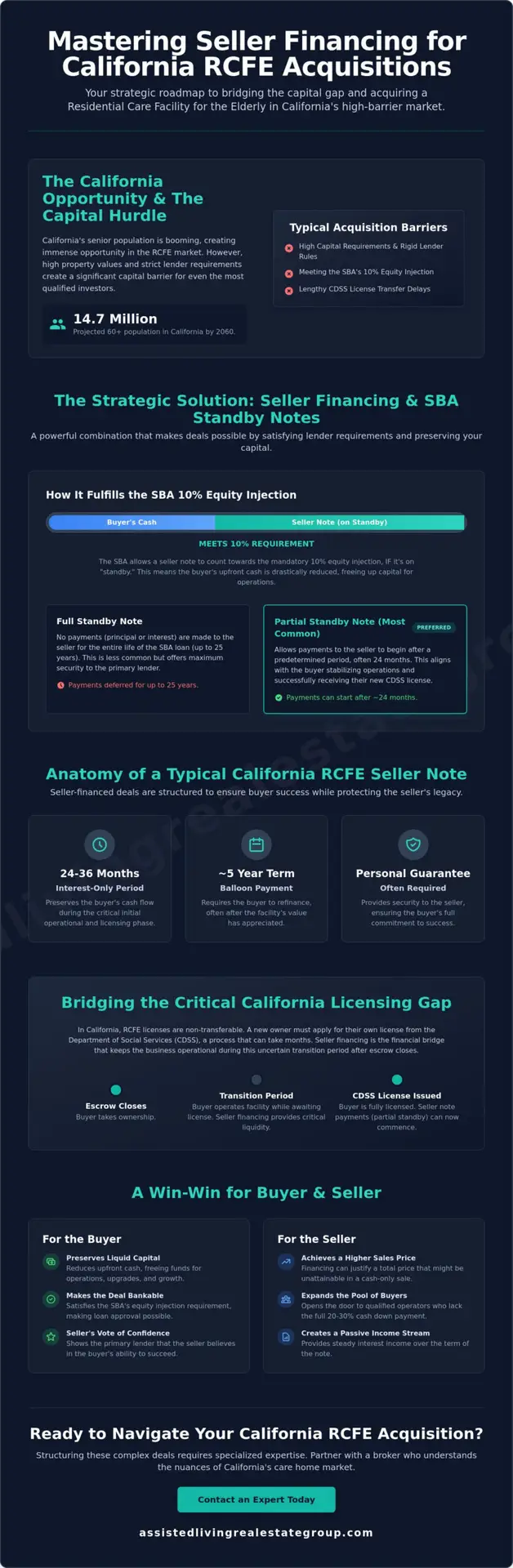
Most California RCFE notes are structured as interest-only for the first 24 to 36 months. This approach preserves cash flow for the buyer while they navigate the initial operational learning curve and the DSS licensing process. Fully amortized notes are less common but provide the seller with steady principal reduction. Most agreements include a balloon payment, typically due within five years. This timeline requires the buyer to refinance the debt once the facility’s value has appreciated or the interest rate environment has stabilized. In the 2026 market, many California sellers also require a personal guarantee to secure the note. These structures ensure the deal remains viable for both parties in the current economic climate.
The Mechanics of SBA Standby Notes and Equity Requirements
In 2026, the Small Business Administration (SBA) remains the primary engine for care home acquisitions, yet its requirements are increasingly nuanced. For many investors, securing seller financing for RCFE purchase is the only viable path to meeting the mandatory 10% equity injection. Current guidelines allow a portion of this equity to be satisfied by a seller note, provided it is structured correctly. An SBA standby note is a debt that cannot be repaid until the senior loan is satisfied or specific milestones are met. This arrangement reduces the buyer’s upfront cash burden while providing the lender with additional security.
Understanding the distinction between full and partial standby notes is essential for your long-term cash flow. A full standby note prohibits any principal or interest payments for the entire life of the SBA loan, which can last up to 25 years for real estate. In contrast, a partial standby note allows payments to commence after a predetermined period, often two years. This distinction is vital because California RCFE license transfer regulations dictate that licenses are non-transferable. Lenders often tie the commencement of seller payments to the successful issuance of the buyer’s permanent license from the Department of Social Services (DSS).
SBA 7(a) vs. 504 Loans for RCFE Acquisitions
For a typical 6-bed residential care home, the SBA 7(a) loan is usually the preferred instrument. It offers the flexibility to finance business goodwill and working capital, which are critical components of a care facility’s value. The SBA 504 loan is better suited for larger facilities where the real estate value far exceeds the business value. In the 2026 market, the SBA has introduced more flexibility regarding the ‘forgiveness’ of seller notes, allowing for debt reduction if the facility does not meet specific financial benchmarks during the first year of operation.
Negotiating the Standby Period
You don’t always have to accept a standby period that lasts the life of the loan. Strategic buyers negotiate performance triggers that allow for earlier repayment of seller debt once the facility reaches a certain debt-service coverage ratio. Securing seller financing for RCFE purchase with these triggers in place requires a sophisticated understanding of both banking and care home operations. Partnering with a specialized California RCFE broker allows you to mediate these complex terms between the bank and the seller, ensuring the deal remains attractive to all parties while protecting your liquidity.
Bridging the California Licensing Gap: Why Financing Matters
The “Licensing Gap” is the most volatile phase of any California care home acquisition. In California, licenses aren’t simply handed over at the close of escrow. The Department of Social Services (DSS) requires a new application for every Change of Ownership (CHOW). This creates a high-stakes period between the financial closing and the official issuance of the new license. Utilizing seller financing for RCFE purchase provides a critical layer of security during this transition. When a seller retains a financial interest in the facility’s success, they’re far more likely to ensure the physical plant remains in strict Title 22 compliance while your application is pending.
Structure your seller note to serve as leverage. It guarantees that the previous owner remains available for essential transition training and operational hand-off. If the DSS identifies historical facility issues that require immediate remediation, having a seller carryback allows for potential offsets or credits against the debt. This financial alignment prevents the seller from simply walking away after the check clears. It forces a collaborative environment where both parties are incentivized to navigate the bureaucratic hurdles of the California regulatory system together.
The 25-Year Mentor Perspective on License Transfers
A seller “holding paper” acts as more than just a lender; they become a vested mentor. They understand the nuances of local DSS offices and can help you anticipate specific inspector preferences. For a deeper dive into these regulatory requirements, consult our guide on RCFE Licensing in California. We recently managed a Southern California 6-bed sale where a strategic seller carryback saved the deal. When the buyer faced an unexpected delay in their three-hour required orientation, the seller extended their consulting period to ensure the facility remained compliant and the residents’ care was never interrupted. This level of cooperation is rarely found in cash-out transactions.
Managing Risk During the Transition
Risk management in California requires specific clawback provisions within your promissory note. If the license is denied due to the seller’s prior litigation history or undisclosed regulatory violations, the buyer must have a legal mechanism to reduce the principal balance. This protection is vital because California licensing is a lengthy process that can extend well beyond the initial three-month operating fund requirement. Combining a consulting agreement with seller financing for RCFE purchase ensures continuity of care. It provides the financial framework needed to sustain operations while the state processes the change of ownership, protecting both your investment and the vulnerable seniors you serve.
Structuring the Deal: Credit, Collateral, and Guarantees
Vetting a buyer for a seller financing for RCFE purchase requires a deep dive into financial stability and operational intent. While 60% to 90% of general business listings might offer some form of owner participation, California care facilities are more exclusive, with financing often capped at 15% to 20% of the purchase price. Sellers look for a credit score benchmark of 680 or higher. This score doesn’t just determine eligibility; it dictates the interest rate, which often mirrors the 9.5% to 13.5% range seen in fixed-rate SBA products. Collateral usually involves a junior deed of trust on the property. In California’s high-liability environment, a personal guarantee is non-negotiable. It bridges the gap between financial obligation and the ethical responsibility of senior care.
Presenting yourself as a high-level professional is paramount during negotiations. Retiring owners often prioritize the continuity of care for their residents over the highest possible cash offer. They want to know their legacy is in capable hands. Having clinical experience as an RN or LVN can sometimes offset lower liquidity because it reduces operational risk in the seller’s eyes. You should frame your acquisition as a mission-driven investment that balances profitability with human significance. This approach appeals to the seller’s desire for a lasting social impact. For a complete checklist on how to prepare your buyer profile, review The Ultimate Guide to Buying an RCFE in California.
The Buyer’s Resume and Experience Profile
Your professional background is a form of currency in these transactions. California sellers are increasingly cautious about who they “hold paper” for, given the rising operational complexity of Title 22 regulations. Highlighting your experience with the California Department of Social Services (CDSS) or your 80-hour administrator certification can build immediate trust. It shows you’re not just an investor, but a strategic professional who understands the nuances of the California market.
Drafting the Promissory Note and Security Agreement
The legal framework of your deal must be airtight. A standard promissory note isn’t enough for the complex California RCFE market. You need specific clauses covering default, acceleration, and cure periods. Most importantly, your agreement must include care-facility specific defaults. If the facility loses its license or faces a significant DSS citation, the seller needs the right to intervene to protect their remaining equity. Specialized brokers in Southern California understand how to coordinate these details with escrow and title companies. They ensure the security agreement is properly recorded to protect all parties. If you’re ready to explore these high-barrier opportunities, contact us to review our current RCFE sales.
Why Partner with a Specialized California RCFE Broker?
California’s regulatory environment is a labyrinth that general business brokers simply aren’t equipped to navigate. When you’re pursuing seller financing for RCFE purchase, you need a partner who understands the friction between complex financial structures and strict Title 22 compliance. Assisted Living Real Estate Group bridges this gap by acting as a specialized consultancy rather than a traditional agency. We recognize that a care facility isn’t just a real estate asset; it’s a living ecosystem where resident stability and staff morale are paramount. Our confidential marketing strategy ensures that sensitive financial negotiations don’t disrupt the daily operations or the “change of ownership” process of your potential acquisition.
Teri Szoke brings 25 years of seasoned expertise to every transaction, positioning herself as a high-level mentor for investors. Her approach helps you achieve significant financial returns while maintaining the highest standards of compassionate care. This dual focus is essential in Southern California, where the current demographic shift is an untapped market potential for strategic professionals. We utilize a success fee structure to ensure our interests are perfectly aligned with your closed deal. This means we’re committed to identifying opportunities that are operationally viable and financially sound, rather than just pushing for a quick sale.
Accessing Off-Market RCFE Opportunities in Southern California
The most lucrative seller-financed deals in California are rarely found on public listing sites. Sellers who are open to “holding paper” often demand total confidentiality to protect their business’s reputation and resident census. We vet every buyer to ensure they are “Seller Finance Ready,” checking for the 680+ credit score benchmark and the necessary clinical or administrative background mentioned earlier in this guide. This exclusive approach allows us to match motivated sellers with qualified investors in a way that minimizes transition risk and protects the facility’s long-term value.
Your Next Steps in Senior Care Investment
Securing your place in the 2026 California care market requires immediate action and a clear roadmap. Your first step is to prepare a robust financial package that highlights your liquidity and your commitment to the residential care model. We invite you to Contact Teri Szoke and the Assisted Living Real Estate Group today to schedule a confidential consultation. We’ll review current California listings and help you structure a seller financing for RCFE purchase that aligns with your long-term wealth and social impact goals.
Mastering the Future of California Care Acquisitions
The window for entry into California’s high-barrier care market is widening for those who understand how to leverage creative capital. Mastering the mechanics of SBA standby notes and the nuances of the licensing gap isn’t just a financial strategy; it’s a commitment to long-term operational success. By aligning your interests with the seller through a carryback, you ensure a smoother transition that protects both your equity and the residents’ well-being. Successfully navigating a seller financing for RCFE purchase requires a precise roadmap that accounts for Title 22 compliance and the specific demands of the 2026 economic landscape.
Don’t let high capital requirements or regulatory hurdles stall your vision. With over 25 years of specialized experience, we provide the expertise needed to negotiate complex SBA standby notes and ensure your acquisition meets every state mandate. Your path to achieving significant financial returns while making a tangible social impact starts with professional advocacy. Secure Your RCFE Investment with Expert Guidance. The opportunity to lead in California’s senior care industry is yours for the taking. We’re ready to help you build a legacy of excellence.
Frequently Asked Questions
Is seller financing common for 6-bed RCFEs in California?
Seller financing is common but typically restricted to 15% to 20% of the acquisition price for 6-bed facilities in California. Most owners prefer high-liquidity buyers but will offer a carryback to bridge the gap between the senior loan and the buyer’s down payment. This participation demonstrates the seller’s confidence in the facility’s historical performance and helps you navigate the state’s high-barrier entry costs without exhausting all your liquid capital.
What interest rate should I expect for a seller carryback in 2026?
You should expect interest rates between 9.5% and 13.5% for a seller carryback in the current 2026 market. These rates generally track with fixed-rate SBA 7(a) products to ensure the seller receives a competitive return on their deferred equity. Deal structures often involve interest-only payments for the first two years. This approach preserves your cash flow during the critical licensing transition period while you establish operational stability.
Can I use seller financing to cover the entire down payment for an SBA loan?
No, you cannot use a seller note to cover your entire down payment because SBA guidelines require a minimum 10% equity injection from the buyer. However, you can structure a seller financing for RCFE purchase to satisfy a portion of this requirement if the note is placed on full standby. This means no payments are made on the seller debt until the SBA loan is fully satisfied or specific milestones are met.
What happens to the seller note if my RCFE license application is delayed by DSS?
Most sophisticated promissory notes include a clause that defers principal payments until the California Department of Social Services (CDSS) officially issues the new license. If the licensing gap extends beyond the anticipated timeline, the buyer is protected from high debt-service obligations while the facility is technically in a pending status. This alignment ensures the seller remains motivated to assist with any regulatory hurdles or physical plant inspections required by Title 22.
Does the seller have a say in how I run the business if they are financing it?
The seller does not have a say in daily operations once escrow closes, but they maintain specific rights through the security agreement and promissory note. If the facility faces a major DSS citation or a loss of license, the seller may have the right to accelerate the debt or intervene to protect their collateral. Clear operational boundaries should be established in the initial purchase agreement to ensure your autonomy as the new operator.
What are the risks for a seller offering financing in the assisted living industry?
The primary risk for a seller is their junior lien position, meaning they only get paid after the primary lender is satisfied in the event of a foreclosure. They also face the risk of a buyer’s operational failure or a significant regulatory change that impacts the facility’s valuation. To mitigate this, sellers often require personal guarantees and a credit score above 680 to ensure the buyer is a strategic professional with a vested interest in success.
How does seller financing affect the valuation of a California care home?
Offering seller financing for RCFE purchase often allows a seller to achieve a higher total sales price because it expands the pool of eligible buyers. In the 2026 California market, facilities with flexible financing terms are valued more favorably than cash-only deals that might require deep discounts. This structure justifies a premium price by providing the buyer with the leverage needed to acquire a high-performing asset with less upfront capital.
Can I refinance a seller note once the RCFE business is stabilized?
Yes, most buyers plan to refinance the seller note once the business reaches stabilization or the initial balloon payment period expires. This typically occurs after 36 to 60 months of consistent operational performance and a successful DSS license transfer. Refinancing allows you to move the seller’s high-interest debt into a more traditional commercial loan. This move effectively lowers your monthly debt service and increases your long-term financial returns.