
Buying the building is only one part of acquiring a California assisted living facility. The requirements to buy an assisted living facility also involve evaluating the business, the property, your financial readiness, and the steps needed to operate. A sale alone doesn’t transfer an RCFE license or automatically authorize a new owner to operate.
A facility’s location, occupancy, and financial performance may catch your attention first, but each needs to be assessed in context. A sound acquisition plan separates the real estate, business assets, operating plan, and licensing transition, then brings them together before you commit. This guide explains the key financial, business, property, zoning, and licensing considerations California buyers should evaluate, including the ownership-change process overseen by the California Department of Social Services’ Community Care Licensing Division. It also outlines records and questions to organize for facility-specific review. With those workstreams clear, you can assess Southern California opportunities with a more structured plan.
Key Takeaways
- Assess buyer readiness across acquisition funding, transaction costs, leadership, and working capital for the transition.
- The requirements to buy an assisted living facility depend on what you’re acquiring: the property, the business, or a lease-based operation.
- Review property suitability separately from operating approval, including California zoning and land-use details for the specific location.
- Before closing, organize facility records, contracts, and transition questions, including current licensing requirements with California’s Community Care Licensing Division.
- A written acquisition plan helps you compare opportunities and coordinate the property, business, and operating transition.
What requirements apply when buying an assisted living facility in California?
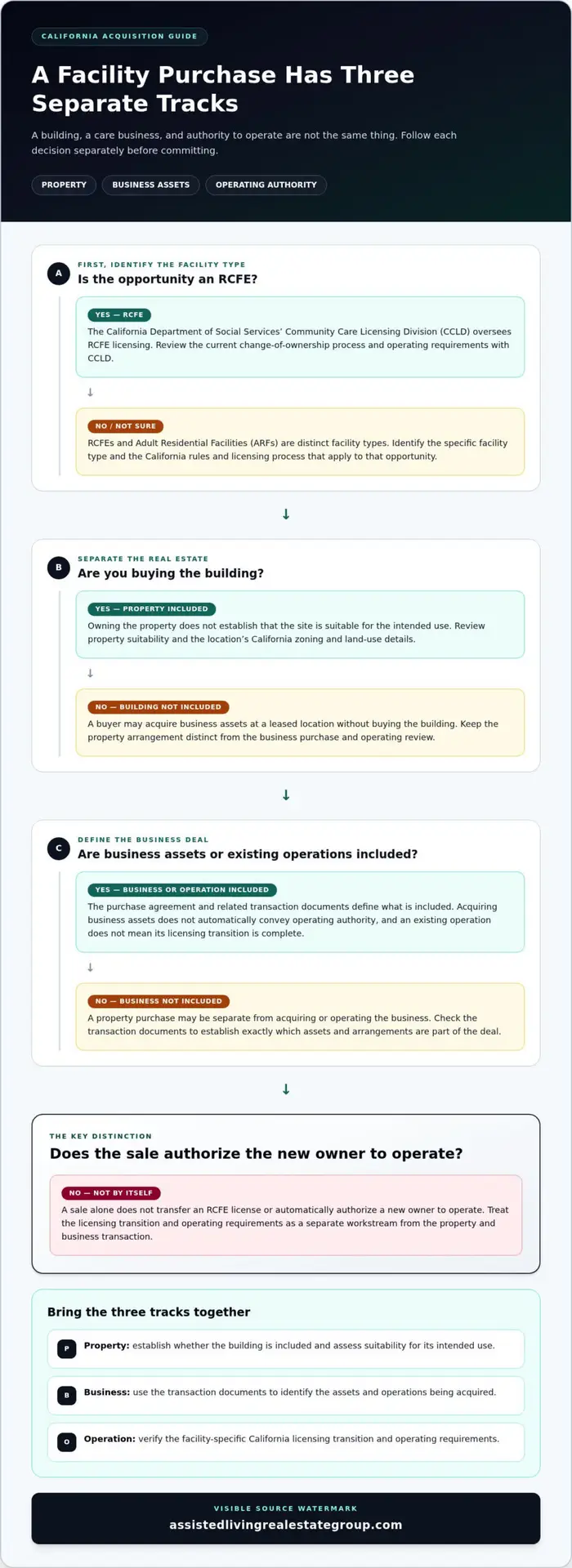
In California, buying an assisted living facility means assessing buyer readiness, transaction structure, property suitability, and the approvals needed to operate. These are related but separate questions: purchasing a building, acquiring a care business, and obtaining authority to continue operations are not the same step.
The requirements to buy an assisted living facility depend on the facility type, the assets included in the transaction, the property’s intended use, and the California rules that apply at the time of purchase. Residential Care Facilities for the Elderly (RCFEs) and Adult Residential Facilities (ARFs) are distinct facility types, so buyers should identify which rules and licensing process apply to the specific opportunity. For an RCFE, the California Department of Social Services’ Community Care Licensing Division (CCLD) oversees licensing. A sale alone doesn’t establish that a buyer can continue operating. Review the current change-of-ownership process and operating requirements with CCLD.
What does buying an assisted living facility include?
A California transaction may include real estate, business assets, existing operations, or a combination of these. The purchase agreement and related transaction documents define what is included. For example, a buyer might purchase a property and arrange separately to acquire or operate the business. Another buyer might acquire business assets at a leased location without purchasing the building.
Review each component on its own terms. Property ownership doesn’t establish that the site is suitable for the intended use. Business assets don’t automatically convey operating authority. Acquiring an existing operation also doesn’t mean its license-related transition is complete. The facility type and transaction structure determine which California regulatory requirements and reviews are relevant.
Who should assess the requirements before pursuing a facility?
First-time buyers should decide whether they intend to manage the operation or rely on experienced leadership. Experienced operators still need to assess how a new property, business structure, and licensing transition fit their capabilities. Investors considering an operating partner should define each party’s role, including who will lead day-to-day operations.
Your operating plan affects what readiness looks like. A hands-on operator and an investor working with a separate operating partner need different plans for leadership and continuity. Before evaluating a California opportunity, write down what you intend to acquire and how operations could continue through the transition. For a deeper look at RCFE transactions in California, review the California RCFE acquisition guide. Confirm current licensing and property-use details for the facility and its jurisdiction.
Which buyer, financial, and operating capabilities should be ready first?
Before pursuing a California facility, build a readiness plan that connects acquisition funding with the practical demands of ownership. The requirements to buy an assisted living facility aren’t captured by a single net-worth figure or financing threshold. They depend on the transaction, the property, and the resources needed to sustain operations after the purchase.
Plan for more than the acquisition price. Separate funds for the purchase from working capital, transition needs, and potential property improvements. Assess financing options against the assets being acquired and your operating plan. A qualified financial adviser can help review funding and cash-flow assumptions, while a qualified legal adviser can address buyer-specific structuring decisions.
What financial preparation should a buyer consider?
Map expected outlays and incoming revenue through the transition instead of relying on the purchase price alone. Review the facility’s financial records and test the assumptions behind occupancy, staffing costs, and other operating expenses. Identify whether planned improvements could affect the funds available for day-to-day operations. For a wider market perspective, see this Southern California senior housing investment guide.
What operating capabilities matter after acquisition?
Decide who will lead daily operations and oversee resident care and staff. If you plan to work with an operating partner, define responsibilities and how leadership will continue during the transition. Ownership by itself doesn’t demonstrate operational readiness or establish regulatory approval.
Review staffing continuity and facility records together. Staffing plans should reflect the services provided and residents’ needs. Test occupancy assumptions against the resources required to operate responsibly. Records showing occupancy, revenue, expenses, staffing, and operational history can help you compare projections with actual performance and identify questions that need follow-up.
For an RCFE, confirm current licensing and operational requirements through the California Department of Social Services, including its page on California’s assisted living laws and regulations. Requirements can depend on facility type and transaction details, so a financial plan is not a substitute for regulatory review.
A strong readiness plan brings capital, leadership, and care operations into the same picture. Buyers preparing for a specific California opportunity can also review specialized guidance for care-facility acquisitions as they organize their next steps.
How do property, business, and operating-approval requirements compare?
A care-facility acquisition can involve real estate, business assets, and an operating transition, but each component raises different questions. Transaction documents show what the buyer is acquiring; they don’t, by themselves, resolve whether the property suits the intended use or what California licensing and operating steps apply.
A property sale alone doesn’t establish that the buyer can continue the facility’s care operations. Review the deal as separate but connected workstreams:
| Transaction structure | What the buyer may acquire | What remains a separate review |
|---|---|---|
| Property acquisition | The real estate used by the facility. | Whether the property can support the intended use, including applicable local land-use considerations, and who will own or operate the business. |
| Business or asset acquisition | Specified business assets or operational components, as defined by the transaction. | Whether real estate is included, which contracts or obligations continue, and what California licensing or operating transition applies. |
| Lease-based operation | The right to occupy and use a property under lease terms. | Lease scope and responsibilities, property suitability, and the buyer’s separate plan for licensing and operating authority. |
Use this comparison as a starting point, then review the actual agreements and facility. A transaction may combine these structures or divide them among separate agreements.
What changes when buying real estate and the operating business separately?
Separate purchases can divide property ownership from responsibility for the care business. Real-estate documents and business or asset agreements may cover different assets, parties, and responsibilities, so the buyer needs to understand how the terms fit together. Discussions of separate property and operating entities, such as Pinkowski’s, can help frame questions, but they don’t establish a universal structure for California buyers. Have qualified legal advisers review the specific agreements and proposed arrangement.
Does buying an existing facility automatically authorize continued operation?
No. Don’t assume a sale transfers operating authority. California RCFE licenses aren’t transferable, and a change of ownership may require a new licensing process. Requirements can vary by facility type and transaction, so verify the current RCFE or ARF change-of-ownership process with the relevant California authority, including CCLD where applicable. Plan for the operating transition as part of the acquisition, not as an afterthought. The California RCFE licensing guide offers additional context for buyers.
What California property and regulatory checks belong before closing?
Before closing on a California care facility, organize your review so licensing records, property use, contracts, and the operating transition inform one another. This overview can help you organize the requirements to buy an assisted living facility, but it isn’t legal, licensing, or property-specific advice. Current rules and local approvals depend on the facility and its jurisdiction.
- Review facility and licensing records. Gather available licensing history, inspection records, enforcement information, and operational documentation. Compare the records with the seller’s description of the facility and its operations. For an RCFE or ARF, verify current requirements and the applicable process with the California Department of Social Services (CDSS) Community Care Licensing Division (CCLD). Confirm which rules apply to the specific facility, including relevant Title 22 provisions, rather than relying on a general summary.
- Assess property suitability and local use. Review the site’s condition, occupancy configuration, and property records. Identify questions about permitted use, zoning, and land use for the specific California city or county. Local requirements and approval processes can vary by jurisdiction, so don’t assume the property’s current use settles every question about the proposed operation. The California RCFE licensing and investment guide offers additional context.
- Map contracts to the transaction. Identify which agreements cover the real estate, business assets, leases, and ongoing operations. Establish what the transaction includes and which responsibilities or arrangements may need to continue, change, or be addressed separately. Contract interpretation and transaction-specific decisions call for qualified legal advice.
- Plan the operating transition. Identify who will lead operations after closing and which licensing or approval steps may apply. Verify current change-of-ownership and operating-authority requirements with CCLD or the relevant California authority. Don’t assume a purchase, existing license, or agreed transition plan alone authorizes continued operation.
Consider the findings together. A property concern may affect the operating plan, while a licensing question may shape the transaction timeline or agreements. Specialized California care-facility acquisition guidance can help you coordinate these workstreams as qualified advisers address legal, licensing, and property-specific questions.
How can buyers turn California requirements into a confident acquisition plan?
A clear acquisition plan turns separate questions about capital, property, business operations, and regulatory review into a coordinated path forward. Before pursuing a specific California opportunity, define what you want to acquire, the role you’ll play, and how operations could continue during a transition. The requirements to buy an assisted living facility are easier to assess when priorities and open questions are organized from the start.
What should a buyer prepare before pursuing a specific facility?
Start with a brief buyer profile. Identify the facility type you’re targeting, preferred California locations, whether you want to own the real estate or consider a lease, and whether you’ll lead operations or work with an operating partner. Then outline a preliminary funding path that accounts for acquisition costs, working capital, transition needs, and possible property improvements.
Gather the questions and records you’ll want to assess for each opportunity. A practical readiness file can include:
- Buyer plan: your acquisition role, facility priorities, and operating approach.
- Funding path: anticipated sources of capital and funds reserved for post-acquisition needs.
- Facility review: available business, licensing, inspection, staffing, and occupancy records.
- Property fit: the site’s condition, intended use, and location-specific land-use questions.
- Transition plan: who will lead operations and which current California licensing or approval requirements need verification.
Use this as a starting framework, not a substitute for reviewing the actual property and transaction. Each opportunity has its own agreements, operating history, physical condition, and jurisdiction-specific considerations. Qualified financial and legal advisers can help with buyer-specific funding and structuring decisions; current regulatory and local-use questions require facility-specific review.
How can a specialized California broker support the acquisition?
A facility-focused broker can help buyers assess the real estate and operating business together. That perspective is useful when an opportunity involves separate assets, agreements, or transition considerations. Assisted Living Real Estate Group facilitates RCFE and ARF transactions, bringing more than 25 years of combined care-facility industry experience to its work with buyers and sellers.
With a prepared buyer plan, you can compare opportunities more strategically and focus diligence on the questions that matter for your intended acquisition. To discuss your California care-facility acquisition goals, discuss your acquisition strategy.
Build your California acquisition plan with confidence
A successful care-facility acquisition starts with clarity. The requirements to buy an assisted living facility involve more than funding a purchase: you need to understand what the transaction includes, whether the property fits the intended use, and what must be addressed before operations can continue. Organizing facility records, property questions, and transition priorities early helps you assess opportunities with greater discipline.
Each acquisition is distinct. Assisted Living Real Estate Group focuses on RCFE and ARF transactions, with more than 25 years of combined care-facility industry experience, a Southern California market focus, and a confidential marketing strategy.
When you’re ready to plan your next steps, discuss your California care-facility acquisition goals. Specialized guidance can help you evaluate the real estate and business components of a care-facility transaction.
Frequently Asked Questions
What qualifications do you need to buy an assisted living facility in California?
California doesn’t set one universal buyer qualification based on a single net-worth or experience threshold. Readiness means having a funding plan, deciding whether you intend to acquire the property, the business, or both, and identifying who will lead operations. You’ll also need to plan for the facility’s applicable licensing process and property-specific review. The requirements to buy an assisted living facility depend on the facility type and transaction structure.
Can you buy an assisted living facility in California without operating experience?
Lacking personal operating experience doesn’t by itself determine whether a specific acquisition can proceed. Develop a plan for experienced operational leadership, staffing continuity, resident-care oversight, and the applicable licensing transition. If you’re considering an operating partner, clarify responsibilities before evaluating a deal. For an RCFE or ARF in Southern California, verify current requirements with the relevant California authority for that facility type and proposed ownership transition.
Does buying an existing RCFE automatically transfer its license to the buyer?
No. An existing RCFE license doesn’t automatically transfer to a buyer. California’s change-of-ownership process requires a new owner to apply for a new license through the California Department of Social Services (CDSS), Community Care Licensing Division (CCLD). Don’t treat a signed purchase agreement or transfer of business assets as operating approval. Confirm current application steps and administrator requirements with CCLD for the specific facility before planning the transition.
What is the difference between buying an assisted living business and buying its real estate?
Buying the real estate means acquiring the property; buying the business means acquiring the assets or operational components specified in the transaction. A deal may include either one or both, and a lease-based arrangement may allow operation without acquiring the building. Review the agreements to establish what’s included and which responsibilities remain separate. Property ownership alone doesn’t establish licensing or authority to operate a California RCFE or ARF.
What California approvals should a buyer review before acquiring an RCFE?
Review the RCFE’s current licensing status and the applicable change-of-ownership process with CDSS’s Community Care Licensing Division. Identify which current Title 22 requirements apply to the facility and proposed operation, and clarify the steps needed for operating authority. The required review depends on the transaction and facility details. For an acquisition in Southern California, verify current requirements directly with CCLD rather than relying solely on prior-owner records or general guidance.
Do zoning requirements affect buying an assisted living facility in California?
Yes. Property use and local land-use considerations can affect whether a site fits the intended operation. Review the property’s use, occupancy configuration, and records, then identify zoning questions with the specific California city or county. Don’t assume that a facility’s existing use resolves every question about a buyer’s proposed plans. Requirements and local review can vary by jurisdiction, so assess the property in its local context before committing.
What should buyers review before closing on an assisted living facility?
Review available licensing history, inspection and enforcement records, operational and financial documentation, staffing and occupancy information, property condition and use, and the agreements covering real estate, business assets, or a lease. Then identify who will lead operations and verify the current licensing transition with California authorities. Organizing these records helps surface questions for qualified legal, financial, and property advisers before closing on a specific California opportunity.