
A promising property can still be the wrong RCFE opportunity. Leasing an RCFE in California is an operating-fit decision as much as a real estate decision: the lease terms, property condition, and intended care model need to work together before you commit.
Location, layout, and rent are important, but they don’t tell you what the lease includes or who is responsible for repairs, utilities, alterations, or other obligations. They also don’t establish whether a care business, operating assets, or licensing approvals are part of the opportunity. Clarifying these points early can help you avoid investing time and resources in an arrangement that doesn’t fit your plans.
This article offers a practical way to compare California lease opportunities, including those in Southern California. You’ll learn what to clarify about the property, lease, and care business; how to assess whether an opportunity fits your plans; and which questions to resolve before signing. Licensing, legal, and real estate questions should be reviewed by qualified professionals. A careful evaluation can help you determine whether an opportunity supports your operating plan and the care you intend to provide.
Key Takeaways
- Clarify whether an opportunity covers a property lease, a care business, or both. A listing doesn’t automatically include an operating business.
- When leasing an RCFE in California, check how the lease assigns property responsibilities instead of assuming who handles maintenance or compliance.
- Compare leasing, buying property, and acquiring a care business based on control, capital commitment, exit flexibility, and operating complexity.
- Assess the property against your intended operation, including its layout, accessibility, location, and care model.
- Resolve licensing questions with qualified professionals. Specialized brokerage guidance can help connect experienced operators with suitable California opportunities.
Leasing an RCFE in California: What the Opportunity Includes
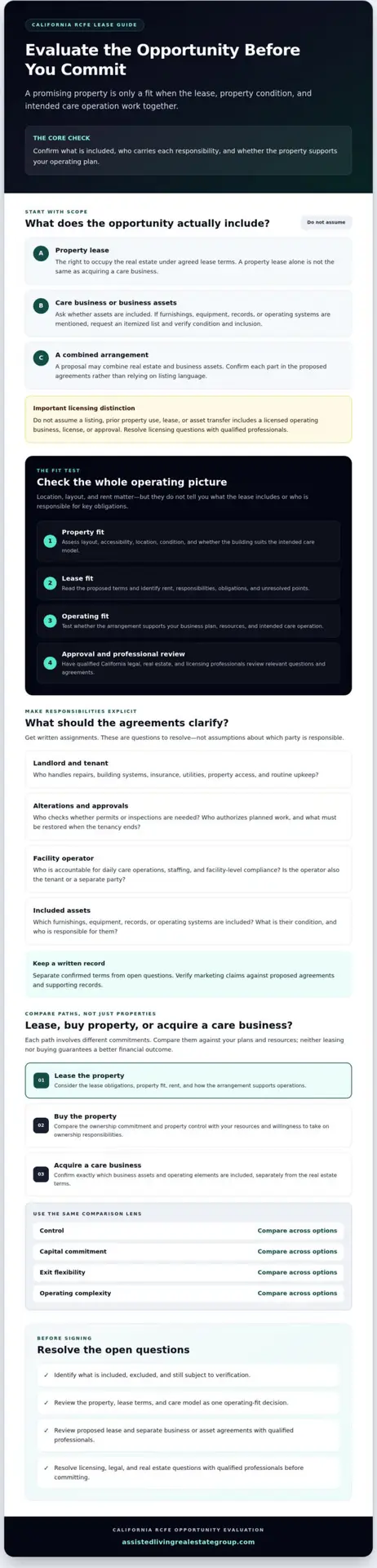
If you want to operate a California Residential Care Facility for the Elderly (RCFE) without purchasing the real estate, a lease may be worth exploring. But “RCFE lease opportunity” can describe different arrangements. It may refer to a property lease, a transaction involving business assets, or a combination of the two. Don’t assume a listing includes a licensed operating business, a license, or everything needed to begin operating.
Before comparing locations or terms, establish exactly what is being offered. The broad concept of Residential care includes different residential care settings, but it doesn’t tell you what a specific California property or business opportunity includes. The listing documents and proposed agreements must spell that out.
What might be included in an RCFE lease opportunity?
Ask whether the offer covers real estate, business assets, or both. If furnishings, equipment, records, or operating systems are mentioned, request an itemized list. Confirm which items are included, their condition, and who is responsible for them. Treat marketing materials as preliminary until you verify their claims against the proposed agreements and supporting records.
Keep a written list of confirmed terms and unresolved questions. A property lease alone isn’t the same as acquiring a care business, and one arrangement shouldn’t be assumed to include the other.
Who should consider leasing instead of buying?
Leasing may suit an experienced operator who wants to pursue a California facility while preserving capital for business operations. The arrangement still needs to fit the operator’s business plan. Review the lease obligations, assess whether the property suits the intended operation, and determine whether rent and other commitments are manageable within that plan.
Leasing and buying involve different levels of property control and different commitments. Neither guarantees a better financial outcome. Compare the operator’s resources, plans, and willingness to take on ownership responsibilities before deciding which path to pursue.
Before moving forward, ask the owner or representative to identify what is included, what is excluded, and which points remain subject to verification. Review the proposed lease and any separate business or asset agreements with qualified real estate, legal, and licensing professionals. Pay particular attention to licensing questions. Don’t infer from a property’s prior use or a listing description that a license or approval transfers with the lease.
For California operators, a suitable building is only part of the opportunity. The arrangement should clearly document how the property, any included assets, and the operator’s plans fit together. Resolving open questions early can help you decide whether leasing an RCFE in California suits the intended operation.
How RCFE Leasing, Property Duties, and Care Operations Fit Together
A California RCFE lease connects two distinct plans: control of the property and operation of a care facility. The lease and any separate business or operating agreements should make clear who is responsible for each obligation. Don’t assume the landlord handles repairs, the tenant handles every building issue, or the real estate agreement settles care-business responsibilities.
Leasing an RCFE in California isn’t the same as property management or facility operations. A specialized brokerage may facilitate lease negotiations and connect owners with experienced RCFE or ARF tenants. That role is different from overseeing a property after the transaction or managing daily care.
Which responsibilities should the lease spell out?
Ask for clear written assignments, and have qualified California legal and licensing professionals review the language. Use this checklist to identify questions that need answers, not to presume which party is responsible:
- Landlord and tenant: Who handles repairs, building systems, insurance, utilities, property access, and routine upkeep?
- Alterations and approvals: Who will check whether permits or inspections are needed for planned work? Who authorizes alterations, and what must be restored when the tenancy ends?
- Facility operator: Who is accountable for daily care operations, staffing, and facility-level compliance? Clarify whether the operator is also the tenant or a separate party.
- Separately engaged professionals: Which legal, licensing, insurance, or building professionals will review the relevant questions, and what is each engaged to do?
Keep property obligations separate from licensing and care-operation questions. Consult current California Department of Social Services licensing information and qualified advisers to confirm which requirements apply to the specific RCFE and arrangement. A lease alone doesn’t confirm that licensing matters are resolved.
How do property management and RCFE operations differ?
Property management concerns real estate oversight, such as coordinating building maintenance or access when authorized. RCFE operations concern running the care facility, including organizing daily services and staffing. These are different functions, and neither should be assumed to come with a lease or brokerage transaction.
Before signing, identify who will manage the property and who will lead facility operations. Confirm how each role is documented and who has authority to make decisions. For California owners and experienced operators seeking a suitable match, Assisted Living Real Estate Group facilitates care-facility lease negotiations and tenant connections. You can review California care-facility lease opportunities to learn more about the specialized transaction process.
Lease an RCFE or Buy One? Compare the California Options
“Buy an RCFE” can mean purchasing the real estate, acquiring a care business, or pursuing an opportunity that combines both. These paths differ in control, obligations, and what changes hands. An overview of what an RCFE is can help frame the care operation, but the transaction documents determine what a particular opportunity includes.
Use this comparison to identify questions to ask about each opportunity. The actual lease, purchase terms, and operating arrangement matter more than the label in a listing.
| Consideration | Lease property | Buy property | Acquire care business |
|---|---|---|---|
| Control | Property use is subject to the lease. | Owner holds the property, subject to applicable agreements and obligations. | Control depends on the assets and operating rights included in the sale. |
| Capital commitment | Review rent and all other documented commitments. Don’t assume leasing requires less capital. | Assess the purchase commitment and ongoing property obligations. | Confirm the purchase scope and any obligations that accompany the business. |
| Maintenance | Responsibility depends on the lease language. | Property ownership brings responsibilities to evaluate before purchase. | Acquiring a business alone doesn’t establish who owns or maintains the real estate. |
| Exit flexibility | Check renewal, assignment, and termination provisions. | Consider the process and obligations involved in a future property sale. | Review how the transaction documents address transfer or sale of the business. |
| Operating complexity | Coordinate the lease with the planned care operation. | Evaluate both property ownership and facility operations. | Verify which operational assets and responsibilities are included. |
When might leasing better match an operator’s plans?
Leasing may suit an experienced operator who wants to focus resources on the care business rather than property ownership. The fit depends on the operator’s timeline and the actual terms, including renewal, assignment, and exit provisions. Compare all documented obligations. Leasing doesn’t automatically mean lower capital needs or lower risk. For a closer look at property acquisition, see this California RCFE buying guide.
When should an operator compare a lease with an acquisition?
Compare what each opportunity actually includes, not just its listing label. Assess your operating experience, financing plan, and capacity to meet the documented obligations, then have qualified professionals review the transaction. The guide to buying an RCFE for sale offers another perspective on acquisition. Leasing an RCFE in California may suit one operator’s plans, while buying property or acquiring a business may fit another’s. There’s no universal answer.
How to Evaluate an RCFE Lease in California Before Committing
A disciplined review can show whether a property and its proposed terms fit your operating plan before you take on a commitment. When leasing an RCFE in California, work through these steps in order. Keep a written record of what’s confirmed, what’s unresolved, and who needs to verify it.
- Define the operation. Clarify the care model you intend to operate, your operational readiness, and the property features that plan requires. Check whether the layout, accessibility, location, and intended use align with your plans.
- Investigate the property. Request available property, maintenance, inspection, and occupancy documentation for review by appropriate professionals. Record questions about repairs, alterations, access, and building systems. Confirm intended use and applicable local requirements with qualified California professionals and relevant local authorities.
- Review the proposed terms. Read the lease and any separate business or asset agreements together. Identify provisions that affect responsibilities, access, alterations, renewal, assignment, and exit. Ask for written clarification wherever the documents leave obligations uncertain.
- Verify licensing questions. Consult the California Department of Social Services (CDSS), including its Community Care Licensing Division (CCLD), and qualified licensing professionals about current requirements. Confirm whether the proposed operation or a change in operation raises licensing questions before relying on a listing description or prior use.
What should a prospective tenant investigate about the property?
Use a site visit and document review to test the property against your operating plan, not just its appearance. Have qualified professionals assess relevant records and unresolved building questions. Confirm who will investigate local property-use requirements, and document outstanding repairs or proposed changes before negotiations advance. A property that looks suitable may still need follow-up on access, building systems, or intended use.
Which California licensing questions need professional review?
Ask qualified advisers to check current California requirements, including applicable Title 22 provisions, and any licensing implications tied to the proposed operation or a change in operation. Don’t assume that a lease, prior facility use, or business transaction resolves licensing matters. For additional background, review this California RCFE licensing guide, then confirm current requirements with the appropriate authorities and professionals.
Once you’ve documented the property fit, open lease questions, and licensing items for review, you can make a more informed decision about whether to proceed. To discuss a California RCFE lease opportunity, contact a specialized care-facility transaction firm that facilitates lease negotiations and matches owners with experienced RCFE or ARF tenants.
Find the Right California RCFE Lease With Specialized Guidance
A strong lease opportunity needs to align four things: operator readiness, property fit, documented lease obligations, and licensing review. A specialized broker can help connect California property owners with experienced RCFE or ARF tenants and facilitate lease negotiations. That support can help clarify the opportunity, but it isn’t legal representation or ongoing property management. The operator remains responsible for arranging qualified reviews and determining who will manage the property and care operation.
What information should you prepare before contacting a broker?
Be ready to explain your experience and the kind of California opportunity you’re seeking. A clear outline can make the initial conversation more useful without assuming a matching property is available.
- Operating experience: Summarize your relevant care-facility background and readiness to operate.
- Target area: Identify the California communities or service area you’re considering, including Southern California locations that fit your plans.
- Facility needs: Describe the property features and care model your plan requires.
- Preferred structure: Clarify whether you’re exploring a property lease, a business opportunity, or another arrangement.
- Open questions: Note what you need to verify about property condition, lease scope, included assets, and licensing.
What happens after you identify a possible lease?
First, confirm with the relevant parties exactly what the opportunity includes: the property, any business components, and any listed assets. Then arrange separate reviews of the lease, financial assumptions, property condition, and licensing questions with appropriately qualified professionals. Keep unresolved items visible, and don’t treat a verbal description or marketing summary as a substitute for the relevant documents.
Care-facility transactions involve distinct property and operational considerations. A broker can facilitate discussions and help connect parties, while legal, real estate, financial, and licensing professionals address matters within their respective expertise. Keeping those roles clear can help you assess whether leasing an RCFE in California fits your plans.
If you’re considering an opportunity, prepare your experience, target area, facility needs, and questions. You can review California RCFE leasing opportunities before deciding whether to take the next step. Understand what’s included and which questions still need professional review before committing.
Move Forward With a Clear California RCFE Leasing Plan
Leasing an RCFE in California involves more than finding a suitable property. The opportunity needs to align with your operating readiness, intended care model, lease obligations, and licensing questions. Confirm what the arrangement includes, compare it with buying property or acquiring a care business, and involve qualified professionals before committing.
Specialized guidance can help clarify the transaction and connect owners with experienced care-facility tenants. Assisted Living Real Estate Group focuses on California RCFE and ARF transactions and facilitates lease negotiations. The firm reports more than 25 years of combined care-facility industry experience. Its role is transaction-focused, not legal representation or ongoing property management.
If you’re exploring a lease, prepare your operating background, target area, facility needs, and questions about the opportunity. Then discuss your California RCFE leasing goals with a team focused on care-facility transactions. A careful review can help you pursue an opportunity that fits your business plan and supports quality care.
Frequently Asked Questions
Can you lease an RCFE in California without buying the property?
Yes. An operator may lease a California property for an RCFE without purchasing the underlying real estate. The lease defines the rights and responsibilities it covers, but it doesn’t automatically include a care business, operating assets, or authorization to operate. Before leasing an RCFE in California, clarify what the agreement covers and ask qualified licensing professionals to review requirements for the intended operator, property, and care model.
What is included when leasing an RCFE in California?
There’s no single package for every opportunity. An offer may concern the property alone or include separately documented business assets. Ask whether furnishings, equipment, records, or operating systems are included, and request written confirmation of each item and its condition. Compare the listing with the proposed lease and any separate business agreement to identify what’s confirmed, excluded, or still subject to verification.
Who is responsible for repairs and maintenance in an RCFE lease?
The lease and related agreements should specify who handles repairs and maintenance. Don’t assume the property owner is responsible for every building system or that the tenant takes on every repair obligation. Review language covering upkeep, utilities, insurance, access, alterations, and restoration at the end of the tenancy. If responsibility is unclear, ask for written clarification and have qualified California legal and real estate professionals review the terms before you commit.
Does leasing an RCFE include its business or license?
Not automatically. A property lease and a care-business acquisition are distinct arrangements, and a listing’s wording doesn’t confirm that business assets or a license are included. Ask the parties to identify exactly what is covered in writing. Don’t assume an existing license transfers to a new operator or applies to a leased property. Confirm current requirements and any licensing implications with California’s Community Care Licensing Division and qualified professionals.
How do I evaluate an RCFE lease opportunity in California?
Start by defining your intended care operation and the property features it requires. Review available property and maintenance records, assess the layout, accessibility, location, and intended use, then examine lease responsibilities and any separate business terms. List unresolved repair, alteration, and access questions. Finally, ask qualified California professionals to review local property-use and licensing questions. For Southern California opportunities, check that the location fits your operating plan and target community.
Can an existing RCFE license be used at a leased property?
Don’t assume an existing RCFE license can be used at a leased property or by a different operator. Whether a license or proposed operating arrangement applies depends on the details, so verify before relying on a seller’s or listing’s description. Contact California’s Community Care Licensing Division and consult qualified licensing professionals about the specific operator, location, care model, and any proposed change in operation.
What is the difference between RCFE property management and facility operations?
Property management concerns real estate oversight, such as coordinating building maintenance or access according to the parties’ agreements. Facility operations concern running the care business, including daily care responsibilities and staffing. These are separate roles, so identify who is responsible for each before signing. Assisted Living Real Estate Group specializes in California RCFE and ARF transactions and facilitates lease negotiations, but it doesn’t provide ongoing property management or direct senior care.