
An RCFE sale doesn’t automatically mean residents have to move. What happens to residents when an RCFE is sold depends largely on whether the new owner continues operating the California facility as an RCFE or plans to close it. Even if care continues, a change in ownership can raise questions about caregivers, services, agreements, and familiar routines.
Families may hear that a facility is being sold and worry that a move is imminent. Residents need clear information about what will change and what will stay the same. A sale and a closure are different situations, and understanding the distinction helps families focus on the questions that matter.
This article explains possible resident outcomes when an RCFE changes ownership, how continued operations differ from a closure, and why licensing and transition planning matter to continuity of care. It also covers practical questions for facility management and the role of California’s Community Care Licensing Division. These steps can help families seek timely answers and keep the resident’s needs in view throughout a transition.
Key Takeaways
- What happens to residents when an RCFE is sold depends on whether the facility continues operating, changes its operations, or closes.
- Ask the facility for clear, written updates about its plans, who will communicate changes, and what residents should expect.
- Review the current admission agreement and keep a record of questions and responses to track information during the transition.
- California protections related to a facility closure shouldn’t be assumed to apply automatically to every ownership change.
- Coordinated planning for ownership, operations, and licensing can help reduce uncertainty, but it can’t guarantee a specific care or occupancy outcome.
What Happens to Residents When an RCFE Is Sold in California?
Hearing that a residential care facility for the elderly is being sold can leave residents and families wondering whether a move is coming, whether familiar caregivers will remain, or whether daily routines will change. The word “sale” alone doesn’t answer those questions. An RCFE sale can involve a change in ownership of the operating business, the property, or both. It does not automatically mean the facility will close.
A change in ownership is not the same as a decision to close an RCFE. The facility may continue operating, its management or procedures may change, or the owner may pursue a separate closure. The outcome depends on the transaction and the plans for the facility. California licensing requirements may also affect who operates it, depending on the transaction structure. The California Department of Social Services’ Community Care Licensing Division oversees RCFE licensing, so families can ask how licensing plans relate to continued operations.
For residents, the practical questions are whether their living arrangements, services, or agreement may change. The answers depend on the transaction, facility operations, the resident’s current agreement, and applicable California requirements. A general overview can’t determine what a particular California RCFE sale means for an individual resident.
What can change when a California RCFE changes ownership?
A sale may bring a new owner and potentially new management, communication channels, or facility procedures. Residents might receive updates from different staff or learn that administrative processes are changing. These are possibilities, not automatic outcomes. The incoming owner may retain existing managers and practices or introduce changes over time. Families should ask the facility about specific plans rather than infer a change from the sale announcement alone.
Operational changes also aren’t the same as a change to an individual resident’s agreement. A new owner, a revised procedure, and a change to a resident’s terms are distinct matters. Review the current agreement and any written updates, then ask the facility to explain how a proposed change applies to that resident. Don’t assume either that the agreement will change or that every operational detail will stay the same.
- Ownership: Who will own or operate the facility after the transaction?
- Communication: Who will provide residents and families with transition updates?
- Operations: Are changes to management, procedures, or services planned?
What may remain stable during a sale?
If the facility continues operating as an RCFE, residents may be able to remain there, subject to applicable requirements and the details of the transition. Familiar surroundings, routines, and staff relationships can be important planning considerations. Continuity is a goal, not a guaranteed result. The sale alone can’t establish whether a particular resident’s circumstances will remain unchanged.
Clear communication helps families separate confirmed plans from assumptions. Ask the facility what is known, what remains undecided, and when it expects to share further updates. Written information can help residents and representatives track changes and raise questions about individual needs, agreements, or routines as the transition develops.
Does an RCFE Sale Mean Residents Must Move? Sale Versus Closure
No. A sale alone doesn’t establish that residents will be relocated. The key question is whether the facility will continue operating as a California RCFE, continue with operational changes, or close. These situations raise different questions for residents and families, so focus on the facility’s actual plan rather than treating “sold” as another word for “closed.”
The comparison below can help families identify what they still need to learn. It doesn’t predict an individual resident’s outcome, which depends on the transaction, facility operations, the resident’s agreement, and applicable California requirements.
| Scenario | What families should establish |
|---|---|
| RCFE continues operating | Will the facility remain open as an RCFE? Who will operate it, and what information is available about the transition and any licensing steps? |
| Operations change | What changes, if any, are planned for management, procedures, services, communication, or staffing? How might they relate to the resident’s current agreement and individual circumstances? |
| Facility closes | Is a closure actually planned, and what written information is available about the process, resident relocation, and applicable protections or notice requirements? |
When the facility continues operating as an RCFE
Residents may be able to remain at the facility if it continues operating as an RCFE. A change in ownership can, however, raise licensing questions separate from whether operations will continue. The process can depend on the transaction and the entities involved. Families shouldn’t assume that a sale automatically transfers a license or that every service, staff role, or agreement will remain unchanged. The California Department of Social Services provides official information about RCFEs and licensing through its California RCFE Regulations page.
When a sale is followed by an RCFE closure
A closure is different from a transfer in which the facility continues operating as an RCFE. California closure and relocation protections apply in particular circumstances, so families shouldn’t assume they apply in the same way to every continuing sale or change of ownership. The California Advocates for Nursing Home Reform (CANHR) explains this distinction in its RCFE closure materials. Review current California law and Community Care Licensing Division guidance to understand which protections, notice requirements, or relocation procedures may apply to the specific situation.
Ask for written confirmation of whether the facility will remain open, continue operating as an RCFE, or close. If a closure is proposed, request information about the planned process and how residents and representatives will receive updates. For owners considering a transaction, coordinating plans for the facility’s property and business operations can keep continuity questions in view, without guaranteeing a resident outcome. Explore California RCFE sale guidance to learn about the transaction side of the transition.
California Resident Protections When an RCFE Closes or Changes Hands
California resident protections depend on what is happening to the facility. A continuing RCFE sale is not automatically a closure, so rules or notices associated with closing a facility shouldn’t be assumed to apply to every ownership transfer. First establish whether the RCFE will continue operating, change its operations, or close. Then confirm which requirements apply to that specific situation.
California closure requirements apply to the circumstances covered by current state law, not automatically to every RCFE sale or ownership change. The California Department of Social Services (CDSS), through its Community Care Licensing Division (CCLD), is the state licensing authority. Its RCFE information and regulations can help families locate official guidance. Requirements can depend on the facts, so verify current rules and agency instructions before relying on a notice period or assuming a particular protection applies.
What California closure notices may tell residents
For a closure, notice and planning information can help residents and representatives understand the facility’s stated plans and prepare for next steps. California’s closure-notice requirements include advance notice to residents and their representatives, as well as the city and county where the facility is located. Confirm the applicable timing and requirements with current CCLD guidance. These closure provisions shouldn’t be treated as rules for every sale where RCFE operations continue.
Families can read a written notice closely and ask for clarification about:
- The facility’s stated reason and whether it plans to stop operating as an RCFE.
- Available information about transition timing and relocation planning.
- Who will provide updates to the resident and their representative.
- Which CCLD office or contact can address questions about the facility’s regulatory status.
A closure notice and an individual resident’s circumstances are related, but they aren’t interchangeable. A facility-wide plan may not answer every question about a resident’s agreement, care needs, or next steps. Ask the facility how the information applies to the resident, and keep copies of notices and written responses.
Where residents and families can seek California guidance
Start with the facility’s written communication, then use CDSS CCLD’s current RCFE resources to find the appropriate contact for licensing or oversight questions. California Advocates for Nursing Home Reform (CANHR) also provides resident-focused informational materials. These resources can help explain the issues, but they aren’t a substitute for legal counsel.
If a family disputes a proposed move, has questions about how a requirement applies to a specific resident, or needs advice about an agreement, consult a qualified California attorney. This is especially important when the facility’s plans are unclear or the family receives conflicting explanations. Understanding what happens to residents when an RCFE is sold starts with establishing whether the facility will continue operating or close, then confirming which protections fit the circumstances.
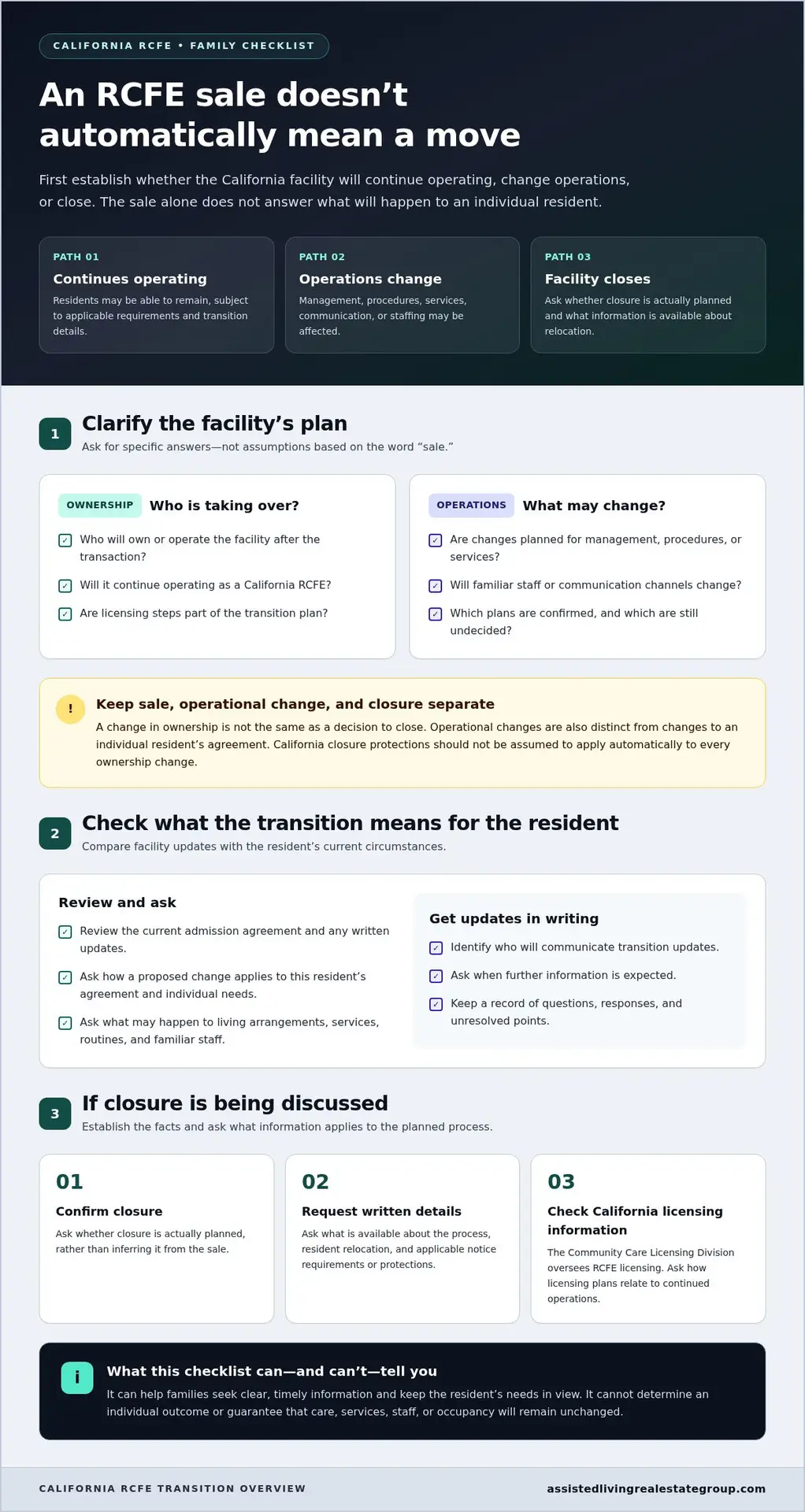
What Residents and Families Can Do During an RCFE Sale
A clear process can make an uncertain transition easier to manage. Ask the facility for written updates about the sale and its expected effect on residents. Keep questions specific, save the responses, and note when the facility expects to share more information. A written record helps separate confirmed information from rumors or informal conversations.
Review the resident’s current admission agreement and any written communication about proposed changes. Separate confirmed details from plans still under discussion. If something is unclear, ask the facility to explain it in writing and identify the appropriate person to follow up with. Keep private health and personal records within appropriate care and authorized representative channels rather than sharing them broadly during a transaction.
Questions to raise with the facility about continuity
Ask whether the facility expects to remain open as an RCFE, who will oversee communication with residents and families, and how transition updates will be shared. Ask whether changes are anticipated to care routines, staff contacts, or operating procedures. If a change to an agreement is proposed, request a clear explanation through the facility’s appropriate channels before drawing conclusions about its effect on the resident.
Include the resident’s day-to-day needs in care continuity discussions. Ask the facility team how it will communicate about care routines, medication coordination, and emergency contacts if staff responsibilities or communication procedures change. Confirm that the facility has current contact information for the resident’s authorized representative. These conversations support practical planning; they don’t mean a specific change will occur.
- Request: Written updates about whether the RCFE will remain open and what transition information is available.
- Review: The current admission agreement and any proposed written changes.
- Record: Each question, the date it was raised, the person who received it, and the response or expected follow-up.
- Clarify: Who is responsible for future updates and how families should communicate care-related concerns.
When a resident may need more support
If the resident has difficulty understanding updates, or if communication or care needs shift, involve the resident’s representative early. Share questions through the facility’s designated channels and keep copies of relevant correspondence. If an answer remains outstanding, document the follow-up and consult current California Department of Social Services Community Care Licensing Division resources for licensing or oversight context.
The agency’s California RCFE licensing overview can help families locate official information. Use it to frame questions, not to assume how a particular sale will affect one resident. A sale announcement alone can’t establish whether someone may remain or will need to relocate. That depends on the facility’s plans and the resident’s circumstances.
For owners, coordinating the facility property and operating business can keep resident communication and continuity considerations visible during a transaction. Explore California RCFE sale support to learn how specialized transaction planning can account for both operational and property considerations.
How Careful RCFE Sale Planning Can Support Resident Continuity
A California RCFE transaction involves more than a change in ownership. Coordinating the property, business operations, and applicable licensing processes can help reduce avoidable uncertainty for residents, families, staff, and transaction parties. It also gives the facility an opportunity to plan how information will be shared during the transition, rather than leaving residents to piece together updates as they arise.
Planning can support continuity, but it can’t guarantee that a particular resident will remain, that services will be unchanged, or that the facility will continue operating. What happens to residents when an RCFE is sold depends on the transaction, operating plans, resident-specific circumstances, and applicable California requirements. Treat continuity as a priority to plan for, not an outcome to promise.
Thoughtful transition planning can address practical questions such as:
- Timing: How will transaction milestones align with the operational transition and any licensing steps that apply to the ownership structure?
- Communication: Who will update residents, representatives, and facility personnel, and where should they direct questions?
- Operations: Which responsibilities, procedures, or points of contact may change, and how will the facility communicate confirmed information?
- Resident needs: How will the appropriate facility team and resident representative handle care-related questions?
These are planning topics, not a substitute for resident-specific decisions. Care questions belong with the appropriate care team and the resident or authorized representative. Transaction planning should make the right communication channels clear without treating the sale itself as a decision about an individual’s care or living arrangement.
Confidentiality can also matter. A discreet marketing approach may help protect seller information and reduce disruption to facility operations while a transaction is being considered. It doesn’t replace clear communication with residents when updates are appropriate, and it can’t guarantee a particular transition or resident outcome.
A broker familiar with California care-facility real estate and business operations can help coordinate a transaction’s property and operational considerations. That specialized perspective can help owners and buyers identify transition questions early. Licensing remains subject to the applicable California process, and resident care decisions remain with the appropriate parties. Assisted Living Real Estate Group brings over 25 years of combined experience in the care facility industry.
Whether you’re evaluating a sale or considering an acquisition, keep resident continuity in view alongside transaction readiness. Explore California RCFE transaction support as you consider the sale or purchase of a care facility. Careful coordination can support a more informed transition without promising a particular outcome for any resident.
Make the Next Step Clear and Resident-Centered
For families, the next step is to seek information about the resident’s own situation rather than rely on assumptions about what a sale means. For an RCFE owner, it’s to include resident communication and operational continuity in transaction planning, alongside property, business, and applicable licensing considerations.
That focus can guide practical decisions: who will communicate with residents and representatives, how updates will be shared, and which transition questions need attention before plans move forward. No plan can guarantee a particular care or occupancy outcome, but clear responsibilities can help reduce confusion as the transaction develops.
Understanding what happens to residents when an RCFE is sold starts with knowing the facility’s actual plans and keeping resident needs in view as decisions take shape. Owners considering a sale can discuss the transaction with a brokerage focused on California care facilities. Discuss your California RCFE transaction and consider how property, operations, and resident-focused planning can be addressed together.
Frequently Asked Questions
Can an RCFE owner sell the facility without residents moving?
Yes. A sale by itself doesn’t mean residents must move, though whether they can remain depends on the facility’s plans, operating structure, licensing requirements, and individual circumstances. For a Southern California RCFE, ask whether the buyer plans to continue operating the facility and who will provide updates. Don’t make plans based only on the sale announcement. Request written information about the resident’s situation as details become available.
Does an RCFE sale automatically cancel a resident agreement?
No. A sale doesn’t automatically establish that an agreement is canceled or unchanged. The agreement’s terms, the entities involved, applicable California requirements, and any proposed revisions may affect the answer. If the facility sends a revised document, compare it with the current agreement and ask for a written explanation of each proposed change. For advice about a particular agreement or dispute, consult a qualified California attorney.
Can a new RCFE owner change caregivers or daily routines?
Possibly, but a change in ownership alone doesn’t tell families whether caregivers, schedules, or routines will change. Ask who will communicate confirmed operational updates and how the facility will account for resident-specific needs. If a change could affect a resident’s care, share the concern with appropriate facility personnel and ask how it will be addressed. Keep notes on the concern and response so follow-up is clear.
What happens to a resident agreement if an RCFE closes after a sale?
A closure raises different questions from a sale in which the RCFE continues operating. If closure is planned, request written details about the stated reason, expected timing, relocation planning, and how the resident’s agreement will be addressed. Notice and relocation requirements depend on the circumstances, so don’t rely on a general description to determine a resident’s rights. Verify current California requirements with the responsible agency or qualified legal counsel.
Can an RCFE increase resident fees after it is sold?
A sale alone doesn’t establish whether or how fees may change. Review the resident agreement and request any proposed rate change in writing, including when it would take effect and which services it covers. California RCFEs must provide 90 days’ advance written notice for rate increases, including increases for basic and optional services. If the notice or proposed terms seem inconsistent with the agreement or applicable requirements, seek qualified California advice.
Who should families contact if they are worried about an RCFE sale?
Begin with the facility. Ask for a written update and the name or role of the person responsible for communicating with residents and representatives. For licensing or closure concerns at a Southern California RCFE, use current California Department of Social Services Community Care Licensing Division resources to identify the appropriate agency contact. Questions about an individual agreement, threatened relocation, or a dispute may require advice from a qualified California attorney.
Does an RCFE sale affect a resident’s medical or care information?
Don’t assume a sale means records will be lost, transferred in a particular way, or handled differently. Ask the facility who will coordinate resident-specific information during the transition and how representatives should share updates relevant to care. Keep sensitive records within appropriate care and authorized representative channels rather than sending them broadly in response to sale-related communications. Raise unanswered privacy or records questions with facility personnel and consult California oversight resources if needed.