
The full budget depends on the property’s condition, the work needed to meet safety and accessibility requirements, and the facility’s day-to-day needs. Plan beyond the purchase price.
For prospective owners, the pressure point is often what comes after acquisition: a facility may look financially viable on paper, but additional costs can reshape cash flow. A realistic budget accounts for predictable expenses as well as repairs, staffing needs, and compliance work that may emerge as operations take shape.
This article covers the property, staffing, repair, and compliance costs to consider when budgeting for an RCFE in California, and how each can affect the overall investment. Understanding the cost drivers helps you assess an opportunity with financial discipline while keeping residents’ needs in view.
Key Takeaways
- Build property expenses beyond the purchase into your California budget, including taxes, utilities, financing, and application costs.
- Set aside operating reserves for repairs, then use preventive maintenance to help limit disruption and larger repair needs.
- Plan staffing around administrator coverage and resident care needs, since labor is a major ongoing operating cost.
- Assess fire-safety and accessibility work early; compliance upgrades can materially affect a property’s total conversion budget.
Utilities, property taxes, and mortgage payments
In California, RCFE property costs start with acquisition, while utilities, taxes, insurance, and maintenance affect ongoing cash flow. Budget for both the property and the operating expenses required to run the facility.
Property Taxes and Insurance
Property taxes and homeowners insurance are recurring ownership expenses that affect an RCFE’s annual budget. Model them separately from mortgage principal and interest, since they may change over time. The tax burden and appropriate insurance coverage depend on the property and its ownership structure.
Ongoing Property Expenses
Ongoing property expenses include utilities, mortgage payments, and preventive maintenance. Unpaid mortgages remain a regular cash obligation, while inspections and scheduled servicing can identify issues before they become larger repairs. California RCFE budgets may include thousands of dollars per month for utilities, medical supplies, food services, and cleaning. Facility size, occupancy, equipment, and service needs shape those operating costs.
Acquisition and conversion costs can be substantial. Leasing may reduce upfront property costs, but lease terms can limit changes to the facility or allow rent increases over time.
Application costs also belong in the opening budget: pay the application processing fee of $140, according to the California Department of Social Services. Fines and penalties for California RCFE regulatory violations depend on the violation and enforcement action; budget for corrective work as well as any assessed amount.
Food, medical supplies, utilities, and cleaning can add up to substantial monthly costs; transportation expenses vary with staffing and resident needs. Operating costs also depend on facility size and location in California. Larger buildings generally use more resources, while local property, utility, and service expenses affect the overall budget.
Budgeting for repairs and maintenance
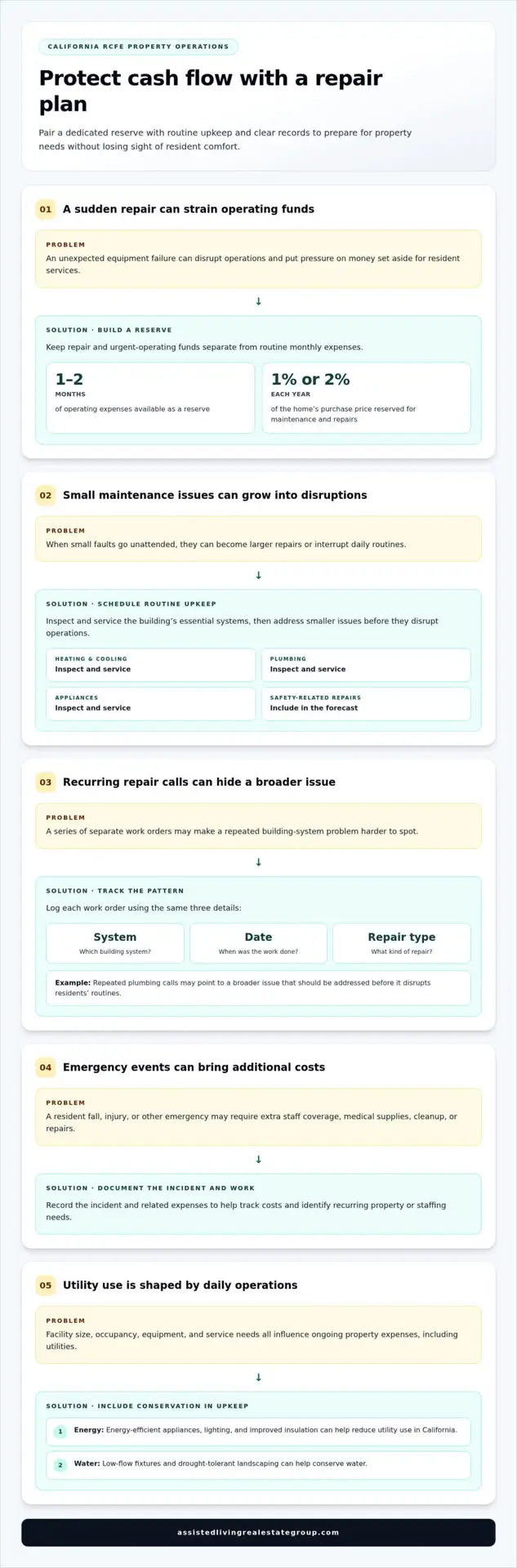
A California RCFE repair budget should account for routine maintenance and unexpected failures. A reserve can help protect cash flow when the building or essential equipment needs attention.
A resident fall, injury, or other emergency may require additional staff coverage, medical supplies, cleanup, or repairs. Documenting the incident and related work helps operators track expenses and spot recurring property or staffing needs.
Maintenance and Emergency Reserves
A reserve is cash set aside for repairs and urgent operating needs, separate from routine monthly expenses. It matters because an unexpected equipment failure can disrupt operations and strain funds allocated to resident services. Experts suggest keeping one to two months of operating expenses available for an RCFE. Another budgeting rule is to reserve 1% or 2% of a home’s purchase price each year for maintenance and repairs.
Routine Upkeep and Utilities
Routine maintenance keeps the property functional, clean, and comfortable for residents. Schedule inspections and servicing for heating, cooling, plumbing, and appliances, and address small issues before they disrupt daily operations. Energy-efficient appliances, lighting, and improved insulation can help reduce utility use in California. Low-flow fixtures and drought-tolerant landscaping can also conserve water.
Create a property calendar that separates monthly cleaning and utility expenses from less frequent maintenance. Track work orders by building system, date, and repair type to identify patterns. For example, repeated plumbing calls may point to a broader issue that should be addressed before it disrupts residents’ routines. Include landscaping, equipment servicing, and safety-related repairs in the forecast, not just visible damage.
For a property acquisition, compare the maintenance record with the building’s condition and planned use. A disciplined reserve and inspection schedule can support dependable operations and resident comfort. Explore RCFE acquisition opportunities as part of evaluating a facility’s ongoing property needs.
Caregiver and administrator staffing costs
Staffing is a major recurring expense for California RCFEs, shaped by facility size, resident needs, and coverage schedules. Include administrator compensation, caregiver wages, recruitment, and the supplies staff use to provide daily care.
The budget depends on the staffing model, operating hours, residents’ support needs, and the number of employees required to maintain consistent care.
California operators must hire or certify an administrator for licensing. Prior healthcare or management experience is not required, but administrator coverage and training belong in the operating plan. Map responsibilities across shifts, then budget for recruitment, onboarding, and coverage during employee absences. Cross-training can help staff handle multiple tasks, as long as it does not compromise care quality.
Caregiver well-being also affects operations. Demanding schedules and heavy workloads can contribute to stress, while turnover adds recruitment and training costs. Build realistic schedules, clarify responsibilities, and track recurring overtime. These steps can support continuity for residents and ease avoidable pressure on the team.
Caregiving responsibilities can also strain employees’ work and household budgets. Predictable schedules and clear shift-coverage processes can help caregivers plan. Track staffing expenses separately from food, cleaning, and resident-care supplies to see which costs are changing.
Private caregivers may suit residents who need help for only a short period, but continuous support can substantially increase labor expenses. Compare the resident’s support needs with the facility’s staffing plan before adding outside coverage.
Resident move-outs, vacancies, and unpaid fees reduce revenue while payroll and facility expenses continue. Track occupancy and collections alongside staffing costs so a revenue gap does not catch you off guard and constrain operating cash.
Fire safety and compliance modifications
Safety upgrades can significantly affect a California RCFE conversion budget before residents move in. Plan for fire protection, accessibility, and the work needed to make the building comfortable and functional.
The project may include fire suppression systems, safety alarms, accessible ramps, and widened doorways. The property’s layout and condition determine the scope of construction. Include these modifications in the purchase, renovation, and financing plan rather than treating them as later improvements.
Inspection, fire-clearance, and local-permit costs depend on the property, the work required, and local fees. Include these charges in the conversion budget, along with the time and labor needed to address issues identified during inspections.
Accessibility work supports residents with different mobility needs. Widened doorways can improve access between rooms, while ramps can reduce barriers at entrances. Assess routes to shared spaces and bathrooms as well. These changes can support comfort and everyday independence while affecting the facility’s layout and renovation scope.
Assess how residents will use the building when planning modifications for aging in place. Identify potential barriers, then prioritize improvements that support safe movement and access. A single-family home can be converted into an RCFE if it meets zoning, accessibility, and licensing requirements. This makes an early property assessment important: a lower purchase price does not necessarily mean lower total project costs.
Compare planned modifications with the building’s existing systems before finalizing the renovation budget. Fire protection, alarms, doorway changes, and ramp construction may involve separate trades and schedules. Sequence the work so inspections can assess completed safety features without delaying other improvements. Plan for contingencies separately from mortgage payments, which continue while construction and approvals progress.
Considering an RCFE property purchase? Explore California RCFE acquisition opportunities with safety and accessibility requirements in view.
Assisted Living Real Estate Group: RCFE Sales (Residential Care Facilities for the Elderly)
Assisted Living Real Estate Group supports buyers and sellers through California RCFE sales, where property condition, staffing, and compliance needs all inform the business decision. Its specialized brokerage guidance can help you weigh an acquisition against the operating costs and renovation requirements outlined above.
For buyers considering an established operation, turnkey business acquisitions connect the property decision with the underlying business. Sellers can use a confidential marketing strategy to protect facility operations and reputation while reaching qualified buyers in the assisted living sector. The right approach depends on whether you are entering the market, acquiring an operating facility, or preparing to sell.
For a focused discussion about buying or selling an RCFE in California, contact Assisted Living Real Estate Group.
Turn your investment plan into a clear next move
Owning a California care facility is an investment decision and a commitment to residents. Before moving forward, define your intended operating model, the renovation work you can manage, and the role you want to play in the business. This clarity helps you weigh the unexpected costs of owning an RCFE against the opportunity and mission you are pursuing.
Assisted Living Real Estate Group supports buyers and sellers through California RCFE and ARF sales, as well as turnkey business acquisitions. These services can help frame your next step, whether you are evaluating a facility purchase or preparing an existing operation for sale. Start with a focused conversation about your goals and the facility’s business considerations.
Discuss your California care facility goals and move forward with a deliberate plan. With sound preparation, you can pursue an opportunity that aligns thoughtful investment with meaningful care.
Frequently Asked Questions
Should I consider any hidden costs?
Yes. Budget for expenses that begin before occupancy, not just the purchase price. California requires RCFE applicants to show three months of operating funds in a bank account before the state issues a license. Include setup utilities, initial supplies, and furnishings.
What unexpected costs should RCFE owners budget for?
Unexpected costs of owning an RCFE can arise from timing, capacity, or the property’s existing condition. Separate one-time startup costs from recurring operating expenses, then note what drives each one. For example, furnishings may need to be purchased before operations begin, while supply orders recur as occupancy and resident needs change. This approach makes cash-flow planning more useful.
What are the licensing and renewal fees for an RCFE in California?
California RCFE application fees vary by bed range: $495 for one to three beds, $990 for four to six, $1486 for seven to 15, and $3469 for 75 to 100. Annual renewal fees also apply through the California Department of Social Services. Track each separately from renovation expenses.
How much should an RCFE budget for staffing overtime, training, and employee turnover?
Track overtime, onboarding, and training as separate labor expenses because each reflects different operating pressures. Overtime may rise when schedules need coverage, while turnover brings recruitment and orientation work. Review shift records, hiring activity, and training plans together. This can help identify whether staffing pressure stems from scheduling, retention, or the facility’s care model, so you can adjust forecasts accordingly.
What unexpected building repairs and accessibility upgrades can an RCFE require?
Repairs may involve plumbing, heating and cooling equipment, appliances, or worn surfaces; accessibility work may include ramps and widened doorways. Before purchase, review maintenance records and assess routes from entrances to bedrooms and shared spaces. A room-by-room review can reveal whether the building’s layout or existing systems need work before they can support residents’ daily routines.