
Clear pathways, purposeful furniture placement, and brighter rooms can make staging your RCFE for buyer tours more effective without fully staging the property. Start by clearing routes between rooms, then use existing furniture to show how each space functions. The goal is a tour that is easy to follow and helps buyers understand the home’s layout.
It’s natural to focus on décor before a tour, but buyers also need to see how rooms connect and whether the spaces support the facility’s intended use. A selective refresh can clarify the flow without making the property feel overproduced. This guide covers practical ways to open up transitions, define each room’s purpose, brighten dim areas, and prepare for tours using furnishings already on hand.
Key Takeaways
- Clear routes between rooms help buyers follow the layout; look for furniture and clutter that interrupt the natural path.
- Use furniture placement to make each area’s purpose easy to understand without overcrowding the room.
- In dim spaces, consider lighter furnishings and thoughtful placement to help the room feel brighter and more open.
- A focused pre-tour refresh can make a strong impression without fully staging every room.
1. Creating clear pathways and flow between rooms
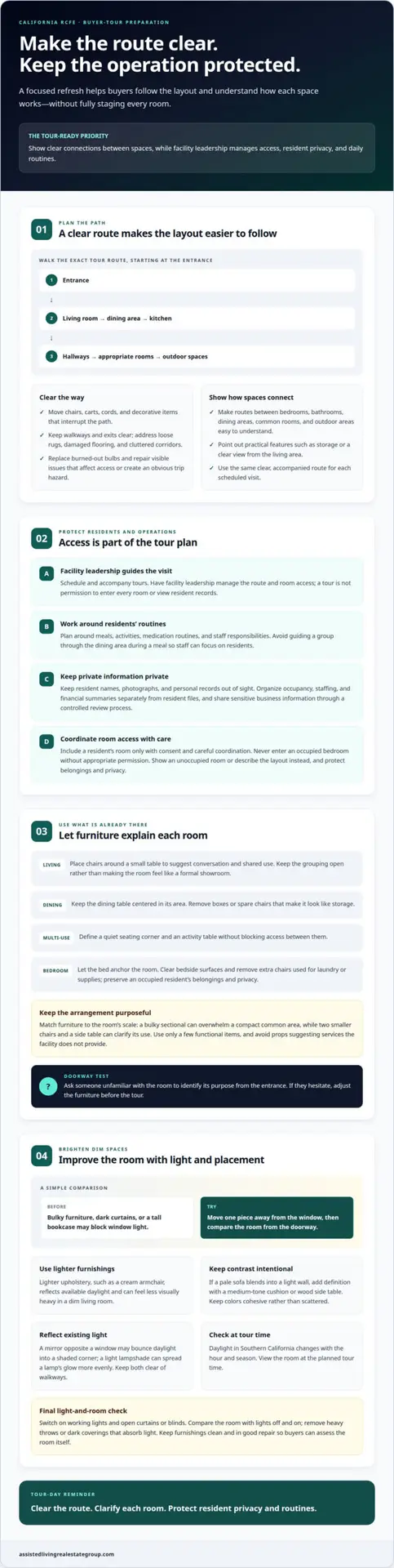
For a California RCFE, plan buyer access around the facility’s operating and privacy procedures. A tour is not permission to enter every room or view resident records. Have facility leadership guide the route and manage access.
Start at the entrance and walk the exact route buyers will take. Check the transitions from the entry to the living room, dining area, kitchen, hallways, and outdoor spaces. Move chairs, carts, cords, and decorative items that obstruct the path.
Buyers commonly assess how shared and private areas connect, including bedrooms, bathrooms, dining spaces, common rooms, and outdoor areas. Show the routes between these spaces and point out practical features such as storage or a clear view from the living area.
Prepare concise documents about occupancy, staffing, and financial performance. Organize current summaries and supporting records separately from resident files, then share sensitive business information through a controlled review process rather than leaving papers in view.
Protect residents’ dignity by keeping names, photographs, and personal records out of sight. Schedule tours so residents can continue their routines comfortably, and never enter an occupied bedroom without appropriate permission and coordination.
Schedule around meals, activities, medication routines, and staff responsibilities. For example, avoid guiding a group through the dining area during a meal. Choose a route that lets staff focus on residents rather than managing tour traffic.
Before a showing, walk the route and address visible issues such as loose rugs, blocked exits, damaged flooring, burned-out bulbs, or cluttered corridors. Keep walkways clear and repair anything that affects access or creates an obvious trip hazard.
Include residents’ rooms only with consent and careful coordination. If a room is occupied, show an unoccupied room or describe the layout without entering. Protect personal belongings and avoid interrupting care.
Showing the property before an agreement can expose private operations, disrupt routines, or create uncertainty among residents and staff. Limit access to scheduled, accompanied tours, secure confidential records, and use the same clear route for each visit.
Schedule and accompany buyer tours, with facility leadership managing the route and access to rooms. Protect resident privacy and routines, secure records, and enter an occupied bedroom only with appropriate permission and coordination.
2. Defining spaces through furniture placement
Arrange furniture to make each room’s purpose clear. In a California RCFE living room, place chairs around a small table to suggest conversation and shared use. Keep the grouping open rather than creating a formal showroom feel. Buyers can then picture how residents might use the area during an ordinary day.
Start with the room’s function, then remove pieces that compete with it. Keep a dining table centered in its area, for example, rather than letting boxes or spare chairs turn it into storage. In a multipurpose room, position a sofa to define a quiet seating corner and an activity table without blocking access between them.
Match furniture to the room’s scale. A bulky sectional can overwhelm a compact common area, while two smaller chairs and a side table can make its purpose clearer. When staging your RCFE for buyer tours, view each room from the doorway and note which pieces hide usable space or obscure the layout.
In a bedroom, let the bed remain the visual anchor. Clear bedside surfaces and remove extra chairs being used for laundry or supplies. In an occupied room, preserve the resident’s belongings and privacy; a vacant room can show the layout instead.
Use only a few items to reinforce a room’s function. A book on a reading table or a simple dining arrangement can communicate how the space is used without distracting from the property. Avoid props that suggest services or operations the facility does not provide.
Finish with a practical test: ask someone unfamiliar with the room to identify its purpose from the entrance. If they hesitate, adjust the furniture before the tour. This final check makes staging your RCFE for buyer tours purposeful, helping buyers focus on how the space works rather than decorative details.
3. Using light-colored furnishings in dim rooms
In a dim California RCFE living room, a cream armchair may feel less visually heavy than a dark one. Lighter upholstery reflects available daylight and helps furniture stand out from shadowed corners. Choose practical, clean-looking pieces suited to the room’s purpose instead of adding décor that does not support the space.
Begin by identifying the room’s darkest area. During a daytime walkthrough, note whether a bulky sofa, dark curtains, or tall bookcase blocks light from a window. Try moving one piece away from the window, then view the room from the doorway. This simple comparison shows whether the change brightens the space without buying new furnishings.
Use contrast carefully. A pale sofa against a light wall may disappear, so add definition with a medium-tone cushion or a wood side table. In a small dining area, a light tablecloth can soften a dark tabletop, while chairs in a complementary neutral keep the arrangement cohesive. Avoid scattering unrelated colors around the room.
Reflective surfaces can help distribute existing light. A mirror opposite a window may bounce daylight into a shaded corner, while a light lampshade can spread a lamp’s glow more evenly. Keep mirrors and lamps clear of walkways, and check the room at the planned tour time. In Southern California, daylight changes with the hour and season.
Before the tour, switch on working lights and open curtains or blinds. Compare the room with the lights off and on, then remove heavy throws or dark coverings that absorb light. Keep furnishings clean and in good repair; stains and worn upholstery remain noticeable even in a brighter room. Aim for a calm, clear space where buyers can assess the room itself.
Neutral paint colors such as beige or gray can appeal to a broad range of potential home buyers and provide a quiet backdrop for lighter furnishings. If large furniture is not ready to be parted with, home sellers can consider renting a storage unit. A staged property in Englewood, Colorado, closed $540,000 over list price.
4. Alternatives to full staging
Full staging isn’t the only way to prepare a California RCFE for buyer tours. Start with a focused reset: remove excess items, clean visible surfaces, and arrange existing furnishings to show how each room is used. For example, clear a crowded dining table and leave only the chairs and setting needed to define the space.
Review furniture room by room before moving anything off-site. Keep pieces that support the facility’s current function, and relocate oversized or duplicate items that make rooms feel crowded. If large furniture needs to stay, renting storage can create space without requiring you to discard it.
Prioritize the work buyers will notice during a walkthrough. Clean windows, replace burned-out bulbs, remove marks from frequently used surfaces, and address visible wear. Repairing a cabinet door or cleaning a common area can make the room feel better cared for without changing its layout.
Use existing items selectively. A clean throw on a lounge chair or a simple centerpiece on a dining table can give the room a finished look. Avoid buying matching furnishings for every room; limit purchases to pieces that solve a clear presentation problem.
How much does it cost to stage or prepare an RCFE for sale? The cost depends on the work needed, such as cleaning, repairs, furniture storage, or selective purchases. Plan around the property’s specific needs rather than a generic staging package.
Make a simple preparation list by room, then separate essential fixes from optional improvements. For instance, address a loose door handle before replacing serviceable décor. This keeps spending tied to visible condition and function while preserving the facility’s authentic operating character.
If you’re preparing to sell and want guidance on the transaction, discuss an RCFE sale strategy as you plan the property’s presentation.
Agent-led staging can be an option when a full-service package is not a fit. Focus on clearing rooms, improving visible condition, and using furnishings already on hand, so presentation decisions remain tied to the facility’s needs.
Assisted Living Real Estate Group: RCFE Sales (Residential Care Facilities for the Elderly)
Assisted Living Real Estate Group supports California owners considering an RCFE sale, including the transition from tour preparation to buyer discussions. If you’re deciding how to present the facility while protecting day-to-day operations, its RCFE Sales service and Confidential Marketing Strategy align with those priorities.
A clear presentation helps buyers understand the property and its operation, but a sale also involves positioning the opportunity and managing sensitive information. Specialized brokerage guidance can help when you’re ready to discuss the sale process, reach qualified buyers, or explore a turnkey acquisition. The next step depends on whether you’re selling an operating facility or evaluating an acquisition.
For a conversation about selling your California RCFE, contact Assisted Living Real Estate Group.
Make Your Next Move With Confidence
A buyer tour is also a chance to shape the next chapter of a California care business. Before setting dates, decide what you want prospective buyers to understand about the facility’s future, then align the tour plan with that priority. A deliberate approach to staging your RCFE for buyer tours can support a clearer conversation about the opportunity, not just the rooms.
Before the first visit, set a consistent process for access, questions, and follow-up. A well-prepared seller can keep attention on the facility’s strengths while protecting the rhythm of daily operations. That discipline matters when a property represents both a business decision and a place of care.
If you’re considering a sale or acquisition, contact Assisted Living Real Estate Group to discuss your next step. Your preparation can create a stronger foundation for the opportunity ahead.
Frequently Asked Questions
How should an RCFE be staged before buyer tours?
Prepare the RCFE to show its real operating character, not an imagined version of the business. For a Southern California tour, remove temporary clutter, make shared rooms presentable, and keep the entrance orderly. Leave familiar operational items in place when they help explain daily use, but store unrelated supplies out of sight. Before visitors arrive, designate a staff contact to guide the visit and answer operational questions.