
RCFE owner salary expectations in California vary with occupancy, resident rates, operating expenses, and the owner’s role in the facility. A small home and a larger operation can have very different financial profiles, and revenue is not the same as take-home income. To estimate earnings, assess the facility’s operating model, costs, and management structure together.
Before committing to an RCFE, it is reasonable to want a clear picture of its financial potential. Ownership can combine running a business with serving older adults, but earnings depend on disciplined operations, not just the number of beds. This article explains how occupancy, staffing, location, and payer mix affect income, how administrator duties can shape compensation, and what may make operating an RCFE rewarding beyond its financial return.
Key Takeaways
- Estimate owner income from operating profit, not gross revenue, by weighing occupancy, resident rates, staffing, and other recurring expenses.
- Decide how involved you want to be: taking on administrator duties can change payroll needs, while absentee ownership depends more on paid management.
- Look beyond financial returns to the potential for meaningful work and a well-run residential care home.
- Compare an RCFE’s operations, staffing structure, and growth potential when evaluating an ownership opportunity.
Factors affecting RCFE owner income
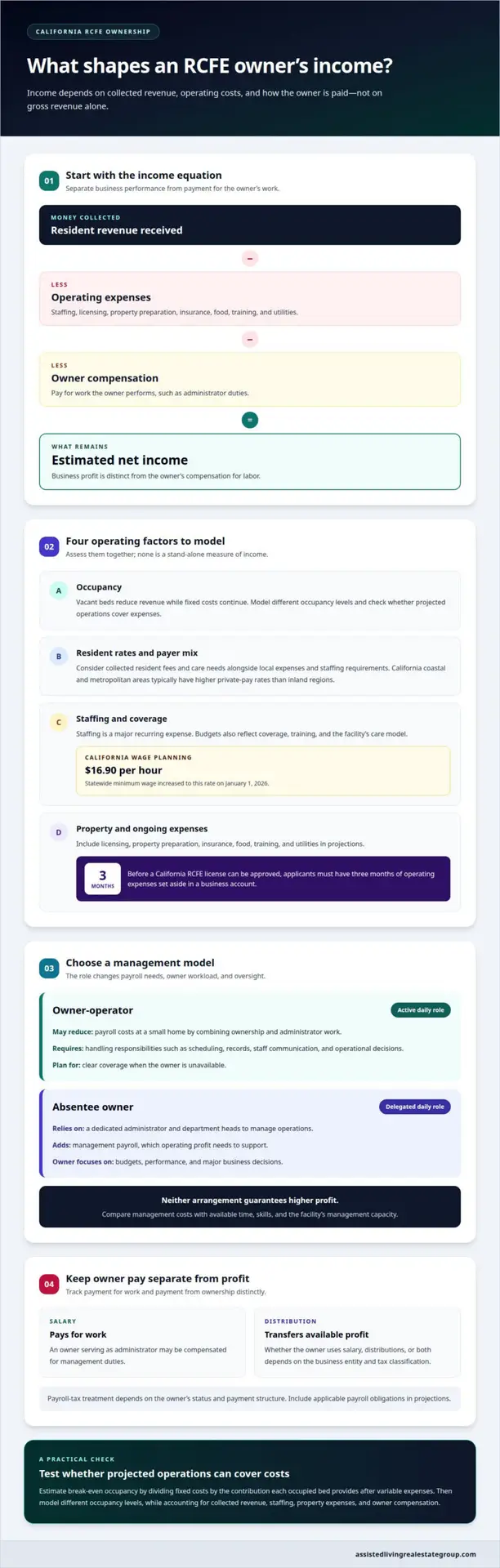
RCFE owner salary expectations depend on collected revenue, occupancy, staffing, and property expenses. Owner compensation is separate from the facility’s gross income.
Owner and Administrator Pay
An owner who also serves as administrator may be compensated for management work, while ownership income comes from business profit. This distinction matters: an owner-operator may reduce payroll costs at a small home but takes on the administrator’s workload. Review the duties and financial results separately to understand what the owner earns for labor versus ownership.
Salary and Distribution Choices
Salary pays for work, while distributions transfer available business profit to owners. To refine RCFE owner salary expectations, separate these payment types in the financial records. Whether an owner uses salary, distributions, or both depends on the business entity and tax classification. Payroll-tax treatment also depends on the owner’s status and payment structure, so include applicable payroll obligations in projections.
Staffing is a major recurring expense, and California’s wage floor affects payroll planning. The statewide minimum wage increased to $16.90 per hour on January 1, 2026, according to the California Department of Industrial Relations. Staffing budgets also reflect coverage, training, and the facility’s care model.
Startup and ongoing expenses depend on the property and operating plan. Include licensing, property preparation, insurance, staffing, food, training, and utilities in projections. Before a California RCFE license can be approved, applicants must have three months of operating expenses set aside in a business account. This reserve supports the business before resident revenue begins.
Location and payer mix shape revenue. California coastal and metropolitan areas typically have higher private-pay RCFE rates than inland regions. Consider resident fees and care needs alongside local expenses and staffing requirements, not as stand-alone measures of potential income.
Estimate net income by subtracting operating expenses and owner compensation from collected revenue. To estimate break-even occupancy, divide fixed costs by the contribution each occupied bed provides after variable expenses. Model different occupancy levels: vacant beds reduce revenue while fixed costs continue. This helps owners assess whether projected operations can cover expenses.
Owner-operator versus absentee ownership
An owner-operator takes an active role in daily RCFE decisions, while an absentee owner relies on staff to manage operations. The choice affects payroll, oversight, and the time the owner spends responding to resident and staffing needs.
In a small California home, an owner may also serve as administrator, handling scheduling, records, staff communication, and operational decisions. Combining the roles can reduce payroll costs, but concentrates responsibility in one person. If the owner is unavailable, the facility still needs clear coverage for decisions about resident routines, staff concerns, and urgent operational issues.
An absentee owner separates investment oversight from daily management. A dedicated administrator and department heads can manage staffing, documentation, and resident services, while the owner focuses on budgets, performance, and major business decisions. This structure adds management payroll, so income depends on whether operating profit can support those roles without weakening the facility’s financial position.
California’s regulatory environment makes oversight a continuing business responsibility, even when an owner delegates. Establish routines for reviewing staffing, expenses, resident concerns, and compliance matters. For example, a monthly review of payroll, occupancy trends, and unresolved operational issues can help identify cash-flow pressure before it affects service or staffing decisions.
Choose a model that matches your experience and the facility’s management capacity. An owner with administrator experience may prefer direct involvement and closer control; an investor with other commitments may prioritize experienced onsite leadership and structured reporting. Neither arrangement guarantees higher profit. Compare management costs with your available time, skills, and desired level of involvement.
For an owner considering a change in involvement, planning an RCFE ownership transition can help frame the next business decision.
Rewards of running an RCFE
Running a California RCFE can unite business ownership with a visible community purpose. Owners help shape a residential setting where older adults receive support while maintaining meaningful routines. The impact can show in everyday details, such as creating a quieter dining area or preserving a resident’s preferred morning routine. The reward is not only financial; it can also come from seeing thoughtful operations improve daily life.
There is satisfaction in building a facility that works well behind the scenes. Clear documentation, consistent staff communication, and reliable routines help turn a care philosophy into daily practice. For example, recording a resident’s preferences gives staff a practical reference when schedules change. Staying current with California Title 22 requirements also makes responsible oversight part of the operating culture, rather than a last-minute task.
Ownership can also bring professional purpose through problem-solving. A staffing gap, a family concern, or a change in resident needs calls for careful decisions and follow-through. A clear escalation process helps staff respond consistently. Over time, that structure can support trust among residents, families, and employees, while giving the owner a better grasp of the facility’s strengths and pressure points.
The business challenge itself can be rewarding. Owners develop skills in leadership, budgeting, team development, and service design. A well-run facility brings those disciplines together: staff need useful guidance, residents need dependable support, and the operation needs sustainable revenue. Progress can be seen in practical measures, such as smoother shift handoffs, complete records, and fewer unresolved concerns.
California’s RCFE market also offers a long-term opportunity: demand is projected to grow by over 20% by 2030. That outlook is not a promise of individual profit, but it underscores the importance of capable operators. Owners who build a stable, resident-centered facility can pursue financial goals while contributing to a vital part of California’s residential care community.
How do RCFE owner salaries compare with administrator salaries?
An administrator is compensated for managing facility operations, while an owner’s income may include pay for work and returns from business profit. These are separate financial roles, even when one person holds both. For example, an owner who serves as administrator performs operational duties and also holds an ownership interest. Separating those functions clarifies labor costs and the facility’s remaining profit.
Administrator compensation reflects the work required to keep the RCFE operating. California administrator certification requires 80 hours of training, and candidates must pass the CDSS examination with a minimum score of 70%. They must pass within 60 days of completing the course. Administrators also complete 40 hours of continuing education every two years. These requirements illustrate the preparation and ongoing professional development attached to the role.
An owner’s potential return depends on the business’s financial results after expenses. If the owner hires an administrator, that compensation is an operating expense before profit is available for distributions. If the owner also performs administrator duties, the business still needs a clear accounting of work-related compensation and ownership returns. This distinction helps avoid treating all cash left in the business as salary.
Compare the roles by examining duties, hours, accountability, and the facility’s management structure. A dedicated administrator may oversee staffing, resident records, and daily decisions, while an owner monitors performance and capital needs. In a smaller operation, an owner may combine responsibilities, but the workload and administrative obligations remain. California administrators must also maintain their continuing education, adding an ongoing professional responsibility to the role.
There is no single salary figure that captures both positions: administrator pay compensates management labor, while owner income varies with the operation’s profitability and compensation structure. Build separate projections for administrator payroll, owner work, and potential distributions. If you’re evaluating a California RCFE purchase or ownership structure, explore RCFE ownership opportunities as a next step.
Assisted Living Real Estate Group: RCFE Sales (Residential Care Facilities for the Elderly)
Assisted Living Real Estate Group helps California buyers and sellers navigate RCFE transactions, including the facility and its underlying business operations. Turn to the firm when evaluating an acquisition, preparing to sell, or considering a turnkey business opportunity. Its confidential marketing strategy helps sellers protect facility operations and reputation while reaching qualified buyers in the assisted living sector.
For buyers, an RCFE transaction means looking beyond projected revenue to the operation, staffing structure, and costs that shape potential income. For owners planning a sale, presenting the business clearly can help prospective buyers understand its operating model. Assisted Living Real Estate Group also handles ARF Sales (Adult Residential Facilities), supporting related California residential care transactions.
Contact Assisted Living Real Estate Group to discuss your California RCFE buying or selling plans.
Make your next ownership decision with clarity
Turn an income estimate into a decision framework: define the role you want, the operating structure you can sustain, and the kind of facility that fits your goals. Those choices shape both the business you build and your contribution to California’s residential care community. RCFE owner salary expectations are most useful when they inform a specific acquisition or ownership plan.
Assisted Living Real Estate Group supports California buyers and sellers through RCFE Sales, ARF Sales, and Turnkey Business Acquisitions. If you’re considering entering the market, acquiring an operating facility, or planning a sale, contact the firm to discuss the transaction path that fits your objectives.
Contact Assisted Living Real Estate Group to discuss your next step. Build an ownership strategy that aligns sound business decisions with purposeful care.
Frequently Asked Questions
How much do RCFE owners make in California?
There is no single income figure for every California RCFE owner. Personal income depends on collected revenue, operating expenses, and how compensation is structured. For a practical estimate, separate pay for work performed from profit retained or distributed by the business. Facility revenue alone does not show what the owner ultimately takes home.
What is the average annual salary for an RCFE owner in California?
A single average annual salary would not capture the different ways California RCFE owners earn income. Some receive compensation for operating duties; others may receive income from business profits, depending on their ownership and management arrangements. To estimate annual income, review the facility’s financial statements and distinguish owner compensation from business profit. Then account for the owner’s actual role in the operation.
How do RCFE owner earnings vary by facility size and occupancy rate?
Earnings generally reflect the revenue generated by occupied beds compared with the facility’s costs. Compare licensed capacity with the number of residents actually generating collected revenue, rather than relying on bed capacity alone. For example, two facilities with similar licensed capacity may have different financial results if one has more vacant beds or higher costs per resident.
What factors affect an RCFE owner’s salary, including location and care level?
Location, resident needs, payer mix, and the resulting staffing model all influence income. California coastal and metropolitan areas typically have higher private-pay RCFE rates than inland regions, but higher rates alone do not establish profit. Care needs can affect staffing requirements, while payer sources shape collections. Operators participating in the Assisted Living Waiver should assess reimbursement rates against operating costs.
What financial risks can reduce an RCFE owner’s take-home pay?
Unexpected vacancies, staffing disruptions, and compliance problems can put pressure on an owner’s income. A serious citation at a California RCFE can trigger vacancies that may take months to recover from. During that period, reduced resident revenue can strain cash flow while facility expenses continue. A financial plan should account for operating reserves and the potential effect of interruptions on collections.