
In California, analyzing resident records before buying means reviewing relevant property and neighborhood information alongside inspections, not relying on a single record to judge a purchase. Due diligence is the period for examining a property after an offer is accepted and before the deal is finalized, and its timing can vary by location and contract. These checks can help surface concerns that may affect safety, use, condition, or ownership.
Even a promising property deserves careful review beyond its listing. Records add context, but they don’t replace an inspection or close examination of the transaction. This guide covers four practical checks for California buyers: neighborhood conditions, due diligence timing, property history and inspection findings, and liens or legal concerns. Together, they can help you organize questions, prioritize follow-up, and make a more informed decision.
Key Takeaways
- Compare neighborhood records with what you observe in person to build a fuller picture of local conditions and amenities.
- Map due diligence tasks to the contract timeline so records review and inspections happen before key decisions are due.
- Use ownership, permit, and maintenance history to identify questions an inspection alone may not answer.
- Review title and property records for liens, disputes, and other claims that could affect the purchase.
1. Crime, safety, and neighborhood considerations
In California, assess neighborhood conditions through records and direct observation rather than relying on a single crime statistic. Start with publicly available local information and library resources about the property or neighborhood’s history. Then visit the area at different times of day. A quiet weekday afternoon may look different from evening activity near a busy commercial corridor. Note lighting, traffic, property upkeep, and how nearby homes and businesses are used. These observations add context without treating any one indicator as a verdict.
For an investment property, compare nearby schools, reported crime information, amenities, and the condition of surrounding homes. A block with well-maintained homes, accessible services, and active businesses may appeal to a different resident profile than one with vacant storefronts or visible deferred maintenance. Check distances to transit and daily services, too. Use recent nearby rental listings to assess potential rents, then compare them with the property’s location, condition, and intended use. This makes local market indicators more useful than broad neighborhood labels.
Turnover, vacancy, and delinquency can reduce investment returns by interrupting rental income and increasing leasing, repair, and collection work. Review these measures together: frequent departures may coincide with prolonged vacancies, while late payments can reduce collected income even when units appear occupied. Compare the records with the seller’s explanations and the property’s transaction history. Ask whether turnover reflects ordinary changes, unresolved maintenance concerns, or a mismatch between rents and local demand. Patterns matter more than isolated entries.
Keep the review thorough and organized. Record the source and date for each item, then group findings by safety, access, upkeep, and market demand. If the area includes a historic property, the National Park Service manages the National Register of Historic Places, and a listing may affect preservation considerations. For a California care-property purchase, distinguish neighborhood research from confidential resident-level information. Focus on relevant, lawfully available property and operating records, and use them to frame specific questions for due diligence. This helps identify concerns early and assess whether the local setting supports your investment plan.
2. Due diligence timing
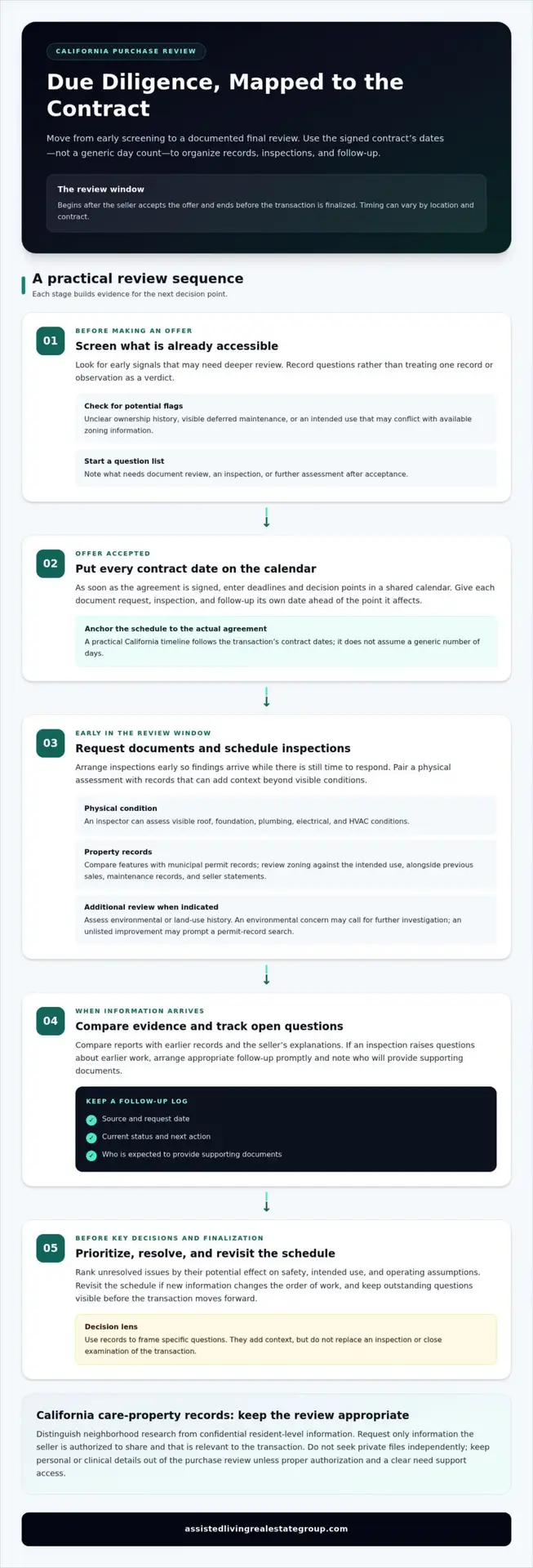
For a California real estate purchase, base due diligence on the dates in the signed contract. The review period begins after the seller accepts the offer and ends before the transaction is finalized. Enter every deadline in a shared calendar as soon as the agreement is signed. Assign each document request, inspection, and follow-up a date ahead of the relevant decision point.
Begin screening before making an offer when records are accessible. This pre-offer review can reveal red flags such as an unclear ownership history, visible deferred maintenance, or an intended use that conflicts with available zoning information. List questions that need deeper review. After acceptance, examine documents, arrange inspections, and assess environmental or land-use history.
Schedule the work so findings arrive while there’s still time to respond. First, note contract deadlines and decision points. Next, request seller documents and schedule inspections early. Then compare reports with previous sales, permits, maintenance records, and the seller’s statements. If an inspection raises concerns about earlier work, arrange appropriate follow-up promptly and record who will provide the supporting documents.
Track requests that depend on municipal records or further assessment. An environmental concern, for example, may call for additional investigation, while an unlisted improvement may prompt a permit-record search. Maintain a log of each item’s source, request date, status, and next action. Rank unresolved issues by their potential effect on safety, intended use, and operating assumptions.
A practical California timeline follows the transaction’s actual contract dates, not a generic number of days. Review each date alongside the tasks it governs, and revisit the schedule when new information changes the order of work. This keeps potential concerns visible and gives buyers a clear record of outstanding questions before the transaction moves forward.
3. Home inspections and records-based research
Pair a physical inspection with records review before a California purchase. An inspector can assess visible conditions in the roof, foundation, plumbing, electrical systems, and HVAC. Other records may reveal past repairs, permit history, or concerns outside the inspection’s scope. Compare the property’s features with municipal permit records, and check zoning information against your intended use. If your mortgage plan depends on rental income, use records that support those assumptions.
Analyzing resident records before buying requires an appropriate, consent-based process. Request only information the seller is authorized to share and that’s relevant to the transaction. Don’t seek private files independently. Keep personal or clinical details out of the purchase review unless proper authorization and a clear need support access.
In rent rolls, leases, and payment histories, compare occupancy, rent amounts, lease dates, concessions, arrears, and renewal terms. Match each rent-roll entry to its lease, then compare reported payments with the corresponding ledger entries. Note unexplained gaps, inconsistent amounts, expired agreements, and recurring late payments. These checks help establish whether stated income is supported by documented transactions.
Before closing, reconcile resident deposits, outstanding balances, and prepaid rent against the seller’s ledger and supporting account records. Request a dated schedule showing each amount by unit or resident, then compare it with leases and payment entries. Record discrepancies in writing and resolve how they’ll be reflected in the closing figures.
Relevant due diligence records may include rent rolls, leases, payment histories, deposit schedules, occupancy records, permits, inspection reports, and maintenance documents. When analyzing resident records before buying, verify occupancy by comparing the current rent roll with active leases and a seller-coordinated walkthrough. Treat an unmatched occupant as a discrepancy to investigate, not proof of wrongdoing.
Common red flags include unexplained vacancies, inconsistent rent figures, missing leases, balances that don’t match payment histories, and repeated repairs. Review records alongside inspection findings. Repeated system overhauls may indicate ongoing concerns rather than routine upgrades. Document each issue, its source, and the follow-up needed before deciding whether it affects the purchase.
4. Liens and legal issues
Start with a title search to examine ownership and identify liens, easements, or claims tied to the California property. Compare the deed with the seller’s identity, and review mortgage documents, tax assessments, and lien records. An unpaid tax balance or recorded debt can affect what must be resolved before ownership transfers. Ask for an explanation of any mismatch between public records and the seller’s account.
Tenant and resident records require a separate privacy review. Buyers should receive only transaction-relevant information the seller is authorized to disclose, with sensitive personal details protected. Access depends on authorization and applicable privacy rules; a purchase review does not grant permission to access private files. For care properties, keep clinical or personal resident information outside routine financial due diligence.
To assess leases, rent increases, and fees, compare each written agreement with the rent roll, payment ledger, and seller’s transaction records. Check dates, amounts, stated charges, and written changes against applicable California and local requirements. Record differences for review before relying on projected income. A real estate agent can help organize transaction documents, while legal questions require qualified legal review.
Look beyond title documents. Search available property records for disputes, zoning changes, prior claims, or unresolved permit issues. Compare renovation descriptions with permit records and inspection documents; a finished addition alone doesn’t establish its approval history. For example, the seller’s account of a completed renovation should align with available permits and related property records. Document each discrepancy, its source, and the follow-up needed.
Some findings can be addressed through negotiation with the seller, such as resolving a lien or clarifying a documented claim. Others may change the purchase decision if ownership, debt, or permitted use remains unclear. Keep the contract timeline in view and preserve written responses alongside the records reviewed. For a care-home acquisition structured around ownership transition, explore lease-to-own care home opportunities as a transaction option.
Assisted Living Real Estate Group: RCFE Sales (Residential Care Facilities for the Elderly)
Assisted Living Real Estate Group helps buyers and sellers evaluate transactions involving California Residential Care Facilities for the Elderly (RCFEs). After reviewing property, operating, and resident records, investors considering a care facility can explore RCFE sales or turnkey business acquisitions. The right path depends on whether you’re acquiring an established operation or assessing a facility purchase alongside its business.
The firm also handles Adult Residential Facilities (ARFs) and uses a confidential marketing strategy for sellers who need discretion during a sale. These services fit specialized care-facility transactions, rather than general residential property purchases. Bring your transaction goals and key review questions to the discussion to clarify next steps.
To discuss a California care-facility transaction, contact Assisted Living Real Estate Group or visit assistedlivingrealestategroup.com.
Turn Your Review Into a Confident Next Step
A disciplined approach to analyzing resident records before buying can do more than flag concerns. It can sharpen your investment thesis by showing whether the property, its operations, and your goals align. Before moving forward, write down the assumptions behind your decision, such as expected income, planned improvements, or the type of care business you intend to acquire. Connect each assumption to the records and findings that support it. This creates a clear basis for deciding what needs further attention.
For a California care-facility transaction, bring that focused view to a specialist in the sector. Assisted Living Real Estate Group can discuss the transaction path that fits your goals and help you consider your next move.
Contact Assisted Living Real Estate Group to discuss your plans. A well-grounded decision can position you to pursue an investment with both purpose and confidence.
Frequently Asked Questions
What Is Due Diligence in Real Estate?
In real estate, due diligence is the buyer’s organized review of a property and its transaction before proceeding to closing. In California, use it to test whether the property’s condition, documented income, intended use, and ownership details align with your purchase plan. For example, compare seller-provided operating figures with supporting records, then note unresolved questions against the relevant contract milestones.
What is a due diligence checklist?
A due diligence checklist is a working record of documents to review, inspections to arrange, deadlines, and open questions. Tailor it to the California property: include title materials, tax assessments, permits, inspection reports, leases, operating records, and zoning information where relevant. Add columns for the source, date reviewed, discrepancy, and next action. This keeps follow-up visible and helps prevent important documents from being overlooked.
What resident records should you review before buying a property?
Review only resident information the seller is authorized to share and that’s relevant to evaluating the transaction. For an income-producing property, this may include occupancy and lease records, payment summaries, deposit and prepaid-rent schedules, and documents supporting stated balances. Keep the review focused on operational and financial facts. Avoid seeking clinical or other sensitive personal details that aren’t needed to assess the purchase.