
The lowest upfront estimate isn’t always the safest budget. A property that looks ready may still need costly changes, while an existing care business can bring its own licensing and operational considerations. So, how much does it cost to start a group home in California? There’s no single statewide price tag. The total depends on the facility type, its location, the property’s condition, and the path you take to open.
If you’re deciding whether an RCFE, ARF, or another care-home category fits your plans, it can be difficult to know which costs belong in your budget. Property, licensing, site preparation, staffing, and operating reserves all need to be considered together. An overlooked expense can affect your opening plans and cash flow.
This 2026 guide breaks down the main cost categories in a California startup budget without relying on one-size-fits-all estimates. You’ll learn how developing a site compares with leasing or acquiring an existing care business or facility, what can change your projections, and what to gather before building a project-specific plan. When a purchase or lease is under consideration, assessing the property and the business together can help clarify what the project involves.
Key Takeaways
- There’s no single answer to how much does it cost to start a group home in california. The right budget depends on the care model, property, and services planned.
- Separate one-time setup costs, recurring expenses, and pre-opening cash needs to see how each affects the investment.
- Compare leasing, developing a new site, and acquiring an existing California facility based on readiness and project-specific due diligence, not assumptions about which path costs less.
- Build a defensible budget around one property, then document and validate key estimates before committing to the project.
- Specialized California brokerage guidance can bring facility acquisition or leasing decisions into focus alongside business and operational considerations.
What Does Starting a Group Home in California Actually Involve?
Start with the care model, not a price estimate. In California, “group home” is a broad description, not one universal license for every residential care business. The residents you plan to serve and the services you intend to provide shape the facility category and the planning involved. A useful answer to how much does it cost to start a group home in california begins with those decisions.
Why startup costs vary: A California care home’s investment depends on its facility model, property, and operating plan. Together, those choices shape licensing, site work, staffing, and the cash needed to prepare for opening and sustain operations.
Does a California group home mean an ARF or an RCFE?
Not necessarily. An Adult Residential Facility (ARF) serves adults with disabilities, while a Residential Care Facility for the Elderly (RCFE) is intended for older adults who need residential care and supervision. These are distinct California care-facility paths, not interchangeable labels. Let the planned services and resident population guide which category you investigate before estimating costs.
If you’re weighing these models, the existing RCFE-versus-ARF comparison article can help clarify their differences. For broader context on the term, see the Group home Wikipedia article. That overview isn’t a guide to California licensing, so use it to understand the general concept, not to choose a license.
Why there is no single California startup cost
Once you define the model, map its separate budget drivers. Property costs depend on whether you lease, buy, or develop a site. Licensing expenses depend on the facility category and application details. Site work may include changes needed to prepare a particular property, while staffing and ongoing operations depend on the services and resident needs the business plans to support.
Capacity, property condition, and location can all change the project scope. A building suited to one care model may need different preparation for another. Local considerations can also affect the work or review required for a specific site. Treat a cost estimate as specific to the proposed California property and operating plan, not as a statewide benchmark.
Keep the categories distinct as you plan. Property purchase or lease costs are different from site preparation and licensing. Furnishings and other setup needs are different from recurring payroll and operating expenses. At this stage, the goal isn’t to force every project into one number. It’s to define the facility clearly enough to estimate each cost against the same model, location, and plan.
Which California Group Home Startup Costs Belong in Your Budget?
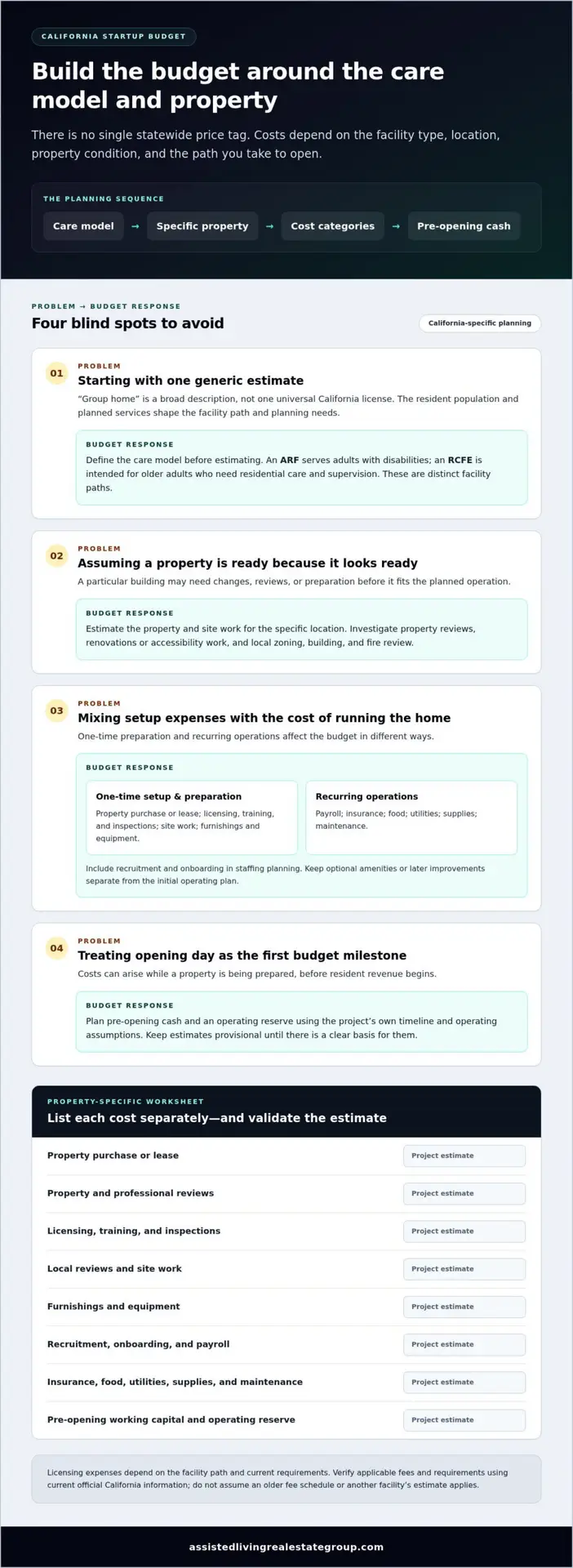
A useful budget separates the costs of preparing a California facility from the costs of keeping it running. The question of how much does it cost to start a group home in california can’t be answered responsibly with one generic total. Build the estimate around the care model and property you’ve chosen, then validate each line item for that project.
Property, licensing, and site-readiness expenses
Start with the property: purchase or lease costs, property reviews, and any renovations or accessibility work identified for the site. Add the furnishings and equipment needed for the planned operation. Local zoning, building, and fire review are also property-specific items to investigate before relying on an opening budget.
Track licensing and related preparation separately. Application fees, training, inspections, and other licensing expenses depend on the facility path and current requirements. Review current information from the California Community Care Licensing Division and verify applicable fees using official California information. Don’t assume an older fee schedule or another facility’s estimate applies to your project.
Staffing, furnishings, and working capital
Staffing costs can begin before occupancy. Include recruitment, onboarding, and payroll planning, then account for recurring expenses such as insurance, food, utilities, supplies, and maintenance. Separate these operating costs from one-time setup purchases. Also distinguish items needed for the initial operating plan from optional amenities or improvements you may choose to make later.
Plan for pre-opening cash, too. Expenses can arise while the property is being prepared, before the operation brings in resident revenue. Model that period using your own project timeline and operating assumptions rather than treating opening day as the first budget milestone.
California project worksheet: Enter a written, property-specific estimate beside each category. Leave an item provisional until you have a basis for the estimate.
- Property purchase or lease: ______
- Property and professional reviews: ______
- Licensing, training, and inspections: ______
- Local reviews and site work: ______
- Furnishings and equipment: ______
- Recruitment, onboarding, and payroll: ______
- Recurring insurance, food, utilities, supplies, and maintenance: ______
- Pre-opening working capital and operating reserve: ______
- Optional amenities or future improvements: ______
Keep the assumptions beside the figures. Note what each estimate covers, whether it is one-time or recurring, and what still needs verification. For a California acquisition or lease, review facility acquisition and leasing opportunities to assess property and business considerations together.
New Property or Existing Facility: Which California Startup Path Fits?
Your startup path affects which costs arrive first, what needs assessment, and how much operational groundwork is already in place. A practical answer to how much does it cost to start a group home in california depends partly on whether you develop a site, lease a property, or acquire an existing care business. None is automatically the lower-cost choice. Compare the full project scope, not just the asking price or initial rent.
Starting from a new or leased property
A new or leased site gives you room to shape the operation, but the property must suit the intended care model. Before treating a California listing as ready for use, investigate permitted use, physical suitability, and the local review process. The California Adult Care Licensing Program is a useful official reference for adult-care licensing information, but licensing is only one part of site readiness.
Depending on the property, planning may include professional property reviews, renovations, accessibility work, furnishings, or other site improvements. The work varies by project. A written, property-specific assessment can help separate essential readiness costs from optional upgrades before you commit to a lease or development plan.
Acquiring an existing California care facility
An established operation may include assets that would take time to assemble from scratch, but “existing” doesn’t automatically mean ready for your intended model. Analyze the transaction in distinct parts: real estate value, business assets, equipment, operating records, and licensing considerations. Confirm what is included in the sale and what may need replacement, updating, or separate planning.
Include transition costs and timing in the comparison. A change in ownership or operating plan can raise questions that property condition alone won’t answer. Review records and assets carefully, then develop a transition plan that reflects the proposed operation. For a deeper acquisition framework, consult the existing California RCFE buying guide.
Use the same categories to compare each route:
- New development: site acquisition or lease, planning and reviews, construction or renovation, furnishings, and startup readiness.
- Leasing: lease terms, property suitability, any approved improvements, furnishings, and pre-opening operating needs.
- Acquisition: real estate, business assets, equipment, records, transaction considerations, and transition planning.
Then compare each option against the specific facility category, property condition, licensing status, and intended services. A specialized California brokerage can bring property and business considerations into the same acquisition or leasing discussion. The most useful comparison isn’t “new versus existing” in isolation. It’s a documented view of what each particular path requires before the home can operate as planned.
How to Build a Defensible California Group Home Startup Budget
A defensible budget starts with a defined operating plan and estimates tied to one property, not a single statewide figure. To answer how much does it cost to start a group home in california, make every assumption visible, identify what still needs verification, and update the plan as the project becomes more specific.
Set the operating model before estimating
Start by recording the intended resident population, care scope, planned capacity, and proposed California location. These details establish the basis for estimating licensing, property readiness, staffing, and operating needs. For RCFE licensing-process details, use the California RCFE licensing guide rather than relying on a cost worksheet to explain regulatory steps.
Build the budget around one property. Classify each expense so you can see when it may occur and what drives it:
- Define the model: Document the resident population, services, capacity, location, and whether the plan involves leasing, purchasing, or developing a site.
- Sort the costs: Mark items as one-time setup costs, recurring fixed expenses, variable costs, or costs that depend on occupancy. Property expenses, for example, may follow a different schedule from payroll or resident-related supplies.
- Map the timeline: Identify costs that could arise before opening, during setup, and after operations begin. Tie each estimate to the expected project stage.
- Record the source: Note whether an amount comes from a written estimate, official fee information, or a preliminary assumption.
Budget summary: “A California group-home startup budget should account for property, licensing, site preparation, furnishings, staffing, insurance, and working capital, with estimates tied to the specific facility and operating plan.” Treat this as a planning framework, not a claim that every project will have identical expenses.
Validate estimates and plan for contingencies
Replace placeholders with property-specific estimates wherever possible. Gather written figures for the property, planned construction or site work, staffing, and insurance. Verify licensing fees and process details against current California Department of Social Services (CDSS) information, and check local zoning, building, and fire considerations for the selected site. Construction scope and insurance assumptions also require project-specific review.
For each line, document what the estimate includes and excludes, when payment may be due, and who supplied it. Keep contingency assumptions visible instead of burying them in another category. If an amount has no current source or written estimate, label it provisional rather than treating it as a committed project cost.
Planning principle: “An unverified cost should remain provisional because property conditions, local review, staffing needs, and coverage terms can change the scope of a California project.” Review the budget when new information arrives, and preserve earlier assumptions so changes are easy to trace.
If an acquisition or lease is part of your plan, explore California care-facility acquisition options alongside the property and operating assumptions in your budget.
How Specialized California Facility Guidance Can Reduce Startup Uncertainty
A startup budget becomes more useful when you assess the property decision and operating business together. A specialized California brokerage can help buyers compare acquisition and leasing paths, understand which business assets are part of a transaction, and consider how a facility’s current condition aligns with their plans. This perspective can organize a complex decision while leaving licensing and legal questions to the appropriate authorities and professionals.
Assisted Living Real Estate Group focuses on California RCFE and ARF facilities and related business operations. The team brings over 25 years of combined care-facility industry experience and provides setup and relicensing guidance. This experience can help investors connect transaction details with operational readiness, but it isn’t a substitute for legal advice or official licensing direction.
When acquisition or leasing belongs in the plan
The right path depends on your goals, available resources, and project readiness. Leasing may suit a plan centered on operating from a selected property, while acquisition can involve evaluating both a facility and its existing business assets. In either case, review real estate and operations as connected parts of the decision. The building, equipment, records, and transition needs can all influence the budget and timeline.
For broader context on investment considerations, explore the California senior housing investment guide. Pair that perspective with a property-specific review rather than assuming a facility’s past use or current operation makes it ready for your plans.
Turn the budget framework into a next step
Bring your core assumptions into one working brief before evaluating a transaction: the care model, intended resident population, target California location, planned capacity, and preliminary budget categories. Mark which estimates are written and which remain provisional. This gives acquisition or leasing discussions a clear foundation and makes unresolved questions easier to identify.
That preparation puts the central question, how much does it cost to start a group home in california, into a project-specific frame. Instead of relying on a universal estimate, you can compare a facility’s transaction details with the setup and operating assumptions behind your plan.
For California facility acquisition, leasing, or setup guidance, discuss your care-facility plans with Assisted Living Real Estate Group. A clear model and preliminary budget are practical starting points for evaluating your next step.
Turn Your California Care-Home Plan Into a Clear Next Step
A sound startup budget begins with the right care model and a specific property, then separates setup expenses from ongoing operating needs. Leasing, developing, or acquiring a facility can each make sense, but the true scope depends on the property, its readiness, and your operating plan. That’s why the answer to how much does it cost to start a group home in california should come from project-specific estimates, not a universal figure.
With over 25 years of combined care-facility industry experience, Assisted Living Real Estate Group provides specialized California RCFE and ARF acquisition, sale, and leasing guidance. If you’re weighing a facility or planning your next move, explore California care-facility opportunities with our experienced team.
A thoughtful plan can align a sustainable investment with meaningful community care. Start with clear assumptions and build your plan from there.
Frequently Asked Questions
How much does it cost to start a group home in California?
There’s no single startup price for every California care home. The answer to how much does it cost to start a group home in California depends on the facility category, property, planned capacity, site work, staffing, and operating plan. Build a budget for one specific property, separating one-time setup expenses from recurring costs and pre-opening cash needs. For a Southern California project, use current, property-specific estimates rather than a general statewide figure.
What costs should I include when opening a group home in California?
Include property purchase or lease costs, property reviews, licensing and training expenses, local review items, site work, furnishings, recruitment, onboarding, payroll, insurance, food, utilities, supplies, maintenance, and working capital. Some costs occur once; others continue after opening or vary with occupancy. Keep optional amenities and future improvements separate from expenses required for your initial operating plan, and verify fees and site-related estimates for the specific California facility.
Do I need an ARF or RCFE license for a California group home?
The appropriate facility category depends on the residents you intend to serve and the services you plan to provide. An Adult Residential Facility (ARF) serves adults with disabilities, while a Residential Care Facility for the Elderly (RCFE) serves older adults needing residential care and supervision. These are distinct California licensing paths, not interchangeable labels. Define the care model first, then review current state licensing information for the applicable category.
Is it cheaper to buy an existing group home or start a new one in California?
Neither option is automatically cheaper. An existing facility may include equipment, business assets, and operating records, but its condition, licensing considerations, and transition needs affect the project. A new or leased site may require preparation, furnishings, and other site-specific work. Compare the real estate, business assets, setup scope, and readiness of each California property. Written estimates and transaction due diligence provide a more useful comparison than purchase price alone.
Can I lease a property for a group home in California?
Yes. Leasing can be a path to operating a California care facility without purchasing the property. A lease alone doesn’t establish that a site is suitable for the intended care model. Assess the proposed use, physical condition, local review considerations, potential improvements, and licensing sequence. For a Southern California property, make the budget specific to that location and include both lease-related expenses and any required site preparation.
How long does it take to open a group home in California?
There isn’t one dependable timeline for every California project. The schedule can depend on the facility category, application process, property readiness, local reviews, construction or renovation, and staffing preparation. A property needing substantial work may follow a different path from one closer to operational readiness, but don’t assume either will open by a fixed date. Build a project timeline from current licensing information and written property-specific estimates, then update it as steps are confirmed.