
You’ve built more than a business; you’ve created a sanctuary for recovery. It’s a legacy of profound impact. Now, the decision to sell my rehabilitation center brings a wave of critical questions. How do you determine its true worth without alerting staff and clients? How can you find a successor who will honor your mission and maintain your high standard of care? The path to a successful exit can feel overwhelmingly complex, threatening both your financial future and the community you’ve so carefully nurtured.
This is not just a transaction; it’s the strategic transition of your life’s work. This confidential guide is the definitive roadmap you need. We will demystify the entire process, providing a step-by-step framework for accurate valuation, discreet marketing, and identifying qualified buyers who share your vision. Prepare to navigate your exit with the confidence of an expert, ensuring you achieve maximum value while securing the future of the lives you’ve changed.
Key Takeaways
- A premium valuation begins long before you list; discover the critical operational shifts that position your center for a maximum exit.
- Learn to see your facility through an investor’s eyes, understanding they are buying future cash flow, not just past performance.
- The decision to sell my rehabilitation center requires a confidential, step-by-step process managed by a specialized broker to protect your legacy and maximize your final offer.
- Navigate the complexities of a healthcare transaction by proactively addressing the key regulatory and compliance hurdles that sophisticated buyers will scrutinize.
The Foundation: Preparing Your Rehab Center for a Premium Sale
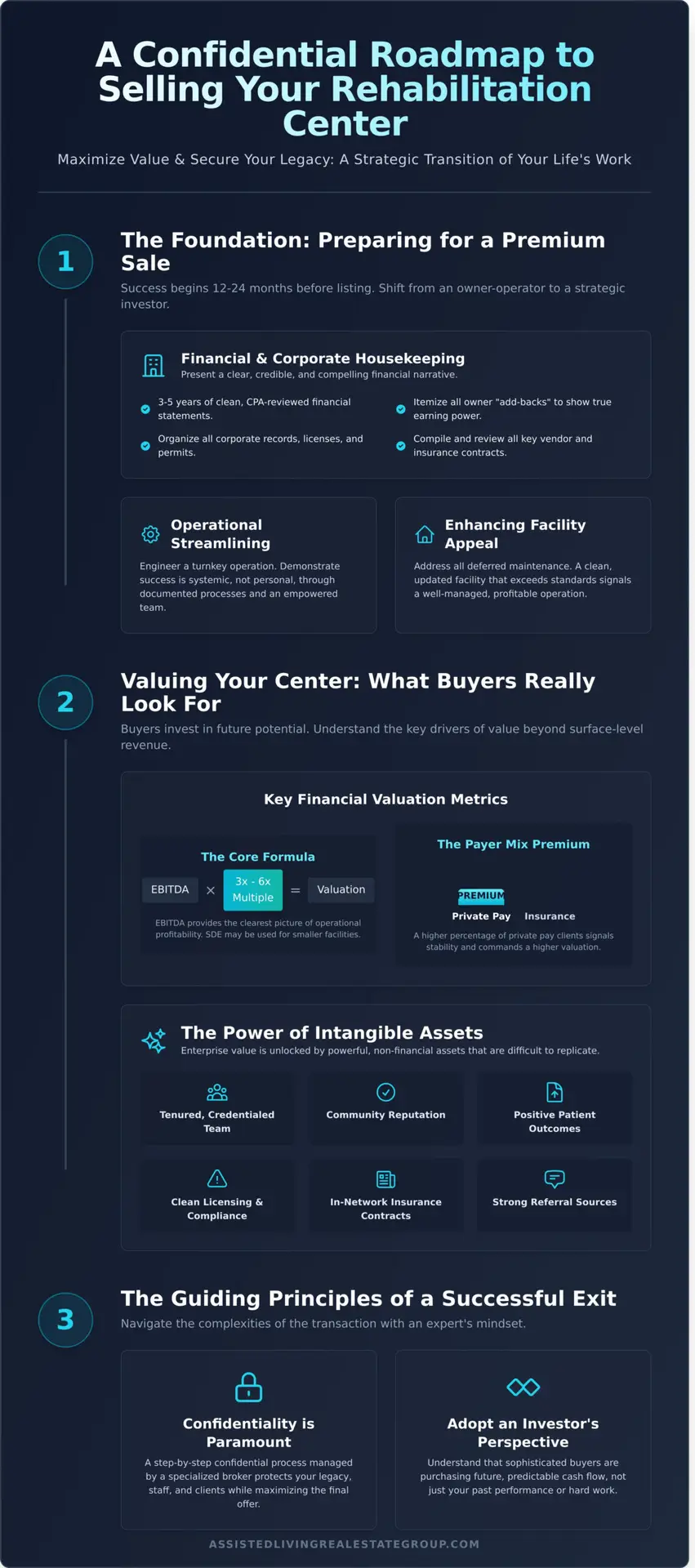
A successful sale is not an event; it’s a meticulously planned process. The decision to sell my rehabilitation center for maximum value begins 12 to 24 months before it ever hits the market. This critical period requires a fundamental shift in perspective: you must evolve from a passionate owner-operator, deeply involved in daily tasks, to a strategic investor preparing an asset for acquisition. The objective is to engineer a turnkey operation-a business so well-documented and efficiently run that a new owner can step in and achieve success from day one. This proactive preparation is the single most important factor in commanding a premium valuation and ensuring your legacy of care continues.
Financial & Corporate Housekeeping
Investors buy predictable cash flow, not potential. Your financial narrative must be clear, credible, and compelling. Before entering due diligence, you must assemble a pristine data room. This isn’t just about having the numbers; it’s about presenting them with institutional-grade professionalism.
- Clean Financial Statements: Gather 3-5 years of immaculate Profit & Loss statements and balance sheets, preferably reviewed or audited by a CPA.
- Document Add-Backs: Clearly itemize all discretionary owner expenses (e.g., personal vehicles, travel) that can be “added back” to the bottom line to show the facility’s true earning power.
- Organize Corporate Records: Ensure all corporate filings, state licenses, and local permits are current, organized, and readily accessible.
- Review Key Contracts: Compile and review all agreements, including property leases, vendor contracts, and insurance provider agreements.
Operational Streamlining & Documentation
A business that depends solely on its owner is a business that is difficult to sell. Your goal is to demonstrate that the facility’s success is systemic, not personal. By documenting processes and empowering your team, you build tangible value that extends beyond your direct involvement. Different types of drug rehabilitation programs have unique operational needs, making clear documentation even more critical for a smooth transition. Proactively address any outstanding compliance or regulatory issues, turning potential liabilities into proven strengths.
Enhancing Facility & Curb Appeal
First impressions are critical in any high-value transaction. A prospective buyer’s first tour of your facility sets the tone for negotiations. Address all deferred maintenance, from a leaky roof to worn-out flooring. Ensure the property not only meets but exceeds all current safety and licensing standards. A fresh coat of paint, updated landscaping, and a clean, welcoming environment signal a well-managed, profitable operation and reinforce the quality of care you provide.
Valuing Your Rehabilitation Center: What Buyers Really Look For
Determining the value of your life’s work is a complex process, blending financial science with the art of storytelling. When you decide to sell your rehabilitation center, sophisticated buyers aren’t just acquiring your past performance; they are investing in its future potential for both impact and income. They look past the surface-level revenue to understand the true, sustainable profitability and the intangible factors that create a lasting legacy of care.
Key Financial Metrics for Valuation
The financial heart of your valuation is EBITDA (Earnings Before Interest, Taxes, Depreciation, and Amortization). This metric provides the clearest picture of your center’s operational profitability. Buyers typically apply an industry multiple, often ranging from 3x to 6x EBITDA, to arrive at a baseline valuation. For smaller, owner-operated facilities, Seller’s Discretionary Earnings (SDE) may be used. Furthermore, your payer mix is a critical lever; a higher percentage of private pay clients often signals financial stability and can command a premium valuation compared to heavy reliance on fluctuating insurance reimbursements.
The Power of Intangible Assets
The numbers only tell part of the story. The true enterprise value is often unlocked by powerful, non-financial assets that are difficult to replicate. A tenured, highly-credentialed clinical and administrative team is invaluable, ensuring continuity of care. Your center’s reputation within the community and with key referral sources creates a protective “moat” around your business. Well-established, in-network insurance contracts, clean state licensing, and documented proof of positive patient outcomes are not just operational details-they are significant value drivers that sophisticated buyers actively seek.
Common Valuation Pitfalls to Avoid
An inaccurate valuation can derail a deal before it even begins. To ensure you receive a fair market price, it’s critical to avoid these common missteps:
- Over-reliance on ‘rules of thumb’ or what another owner claims they sold for, without considering specific operational differences.
- Failing to normalize financials. Your books must be “recast” to remove one-time or personal expenses that a new owner would not incur.
- Ignoring negative trends. A declining census, revenue, or key staff turnover will be scrutinized and will negatively impact your multiple.
- Neglecting regulatory compliance. Buyers will perform deep due diligence on your referral sources to ensure they comply with all federal guidelines, including the Physician Self-Referral Law.
Understanding your center’s true worth is the first step toward a successful exit. Don’t leave your legacy to chance.
Get a Confidential, No-Obligation Valuation for Your Center.
The Sales Process: A Step-by-Step Roadmap with a Specialized Broker
Selling a recovery facility is not a transaction; it is a strategic transition of a vital community asset. A haphazard approach risks confidentiality, destabilizes operations, and ultimately devalues your life’s work. The key to maximizing your return while protecting your legacy is a structured, professionally managed process. Your specialized broker acts as the project manager, emotional buffer, and chief negotiator, allowing you to remain focused on providing exceptional care while they orchestrate the sale.
This disciplined roadmap is designed to move from broad exposure to a successful closing with precision and complete confidentiality.
Phase 1: Confidential Marketing & Buyer Screening
The first step is to attract qualified interest without alerting your staff, clients, or competitors. We create a “blind” business summary and a comprehensive Confidential Information Memorandum (CIM) that details your operations, financials, and growth potential without revealing your identity. This is marketed not to the public, but through a private, curated network of vetted buyers-private equity groups, strategic healthcare operators, and high-net-worth individuals actively seeking opportunities in the behavioral health space. Every prospect is required to sign a stringent NDA and provide financial pre-qualification before receiving any sensitive information.
Phase 2: Buyer Meetings & Offers
Once qualified buyers are identified, the process moves to direct engagement. We coordinate management meetings and discreet facility tours, often scheduled after hours to maintain operational integrity. As interest solidifies, we field and analyze Letters of Intent (LOIs). Our role is to dissect these offers beyond the headline price, negotiating critical terms such as the deal structure (asset vs. stock sale), financing contingencies, and the timeline for closing. This ensures you are comparing apples to apples and selecting the partner whose vision aligns with your own.
Phase 3: Due Diligence & Closing
The accepted LOI triggers the final, intensive phase: due diligence. We establish a secure virtual data room where the buyer and their team can review your financial, operational, and legal documents. This is the most complex stage for anyone looking to sell my rehabilitation center, involving deep dives into clinical records, billing practices, and state licensing compliance. We work hand-in-hand with your attorneys and accountants to navigate these audits, finalize the definitive Purchase Agreement, and coordinate the seamless transfer of licenses, funds, and assets for a successful closing.
This methodical approach transforms a daunting challenge into a predictable journey. To learn how our specialized process can protect and maximize the value of your facility, explore our advisory services.
Navigating the Unique Challenges of a Rehab Center Sale
Selling a healthcare business is an entirely different league than a standard commercial transaction. When you decide to sell my rehabilitation center, you are not just transferring assets; you are transitioning a complex ecosystem of patient care, regulatory obligations, and specialized financial structures. Success demands more than a broker-it requires a strategic partner who understands this intricate landscape.
Licensing, Certification, and Accreditation
Your licenses and accreditations are foundational to your facility’s value and a buyer’s confidence. A seamless Change of Ownership (CHOW) application, managed with precision, is critical to avoid operational downtime. In states like California, navigating the Department of Health Care Services (DHCS) requires specific expertise. Furthermore, prestigious accreditations from bodies like JCAHO or CARF act as powerful value multipliers, signaling operational excellence and reducing a buyer’s perceived risk.
Managing Patient & Staff Transition
Continuity of care is paramount, and it hinges on your staff. During due diligence, protecting patient information under HIPAA is a non-negotiable legal and ethical line that savvy buyers will scrutinize. Post-closing, a transparent communication strategy is key to retaining your best people. Sophisticated deals often include retention bonuses or employment agreements for key clinical staff, ensuring the facility’s operational heart continues to beat strongly through the transition.
Insurance Contracts & Billing
The financial viability of a recovery facility is tied directly to its insurance contracts and billing integrity. Transferring in-network provider contracts is a notoriously complex process that can make or break a deal. Buyers will place your billing practices, historical reimbursement rates, and any potential audit risks under a microscope. Unresolved compliance issues or potential clawbacks can quickly erode your valuation and terminate negotiations.
This intricate web of compliance, finance, and human capital presents significant hurdles. These challenges underscore why the process to sell my rehabilitation center requires specialized guidance, not a generic business broker. The stakes are simply too high to leave to chance. Partner with an expert in healthcare transactions to ensure you protect your legacy and maximize your return.
Secure Your Legacy: The Final Step in a Successful Sale
The journey to sell my rehabilitation center is not merely a transaction; it is the culmination of your dedication and a pivotal step in securing your future. As we’ve detailed, achieving a premium valuation hinges on meticulous preparation and a deep understanding of what sophisticated buyers truly seek. Navigating this complex process with absolute confidentiality and specialized guidance is the difference between a good exit and a great one.
When you are ready to translate your years of impact into a successful financial outcome, the right strategic partner is essential. The Assisted Living Real Estate Group offers a proven confidential marketing strategy, direct access to a private network of qualified buyers in the addiction treatment space, and unparalleled expertise in licensed healthcare facility sales.
Take the definitive next step. Schedule a Confidential Consultation to Discuss Your Exit Strategy and discover how our specialized approach can maximize your outcome. Your next chapter awaits, built on the foundation of the incredible work you’ve already done.
Frequently Asked Questions
How long does it typically take to sell a rehabilitation center?
Selling a specialized healthcare asset requires precision and patience. The process, from listing to closing, typically spans 9 to 18 months. This timeline accounts for in-depth valuation, confidential marketing to a vetted pool of buyers, and navigating the complex due diligence involving licensing, insurance contracts, and regulatory compliance. Our strategic process is designed not for speed, but for maximizing value and ensuring a seamless transition of care for your residents.
What are the standard broker commission fees for this type of sale?
Commission for a highly specialized transaction like a rehabilitation center sale is structured to reward performance. We utilize a tiered model, often based on the Lehman Formula, where the fee percentage decreases as the sale price increases. For example, a fee might be 10% on the first million and scale down thereafter. This aligns our incentives directly with yours: to secure the highest possible valuation for the legacy and impact you have built.
Should I sell the business and the real estate together or separately?
This is a pivotal decision that shapes your financial outcome. Selling the operating business and the real estate as a single package often simplifies the transaction and can attract a broader range of institutional buyers, potentially increasing the total value. However, separating them allows you to sell the business while retaining the property, creating a long-term passive income stream through a lease. We help you model both scenarios to determine the path that best achieves your wealth and legacy goals.
How do you ensure confidentiality and prevent my staff from finding out?
Absolute confidentiality is the cornerstone of our process. We protect your operations by requiring all interested parties to be financially pre-qualified and to execute a stringent Non-Disclosure Agreement (NDA) before any identifying information is released. All marketing is “blind,” and any on-site tours are meticulously scheduled to appear as routine inspections. This disciplined approach safeguards your staff morale and ensures business continuity from day one until closing.
What can I do if my rehab center is not currently profitable but I want to sell?
Profitability is only one measure of value. Visionary investors and strategic buyers are often seeking turnaround opportunities where the intrinsic assets-such as licenses, bed capacity, and prime real estate-hold immense potential. When you want to sell my rehabilitation center, we focus on highlighting this untapped value. We reframe the narrative from past performance to future opportunity, attracting sophisticated buyers who understand how to unlock the facility’s dormant financial and social impact.
What is the difference between an asset sale and a stock sale, and which is better for me?
In an asset sale, a buyer acquires specific assets (e.g., equipment, brand, client contracts) without assuming the liabilities of your corporate entity. In a stock sale, the buyer acquires your entire company, including all assets and liabilities. As a seller, a stock sale is often preferable due to more favorable capital gains tax treatment. Conversely, buyers typically prefer an asset sale to avoid unknown liabilities. The right structure depends entirely on your unique financial and legal position.