
The search for a profitable RCFE for sale in California can feel like navigating a maze blindfolded. You’re analyzing listings, struggling to untangle the value of the business from the real estate, all while the shadow of Title 22 regulations looms large. This uncertainty stalls even the most determined investors. But what if you saw this complexity not as a barrier, but as the very moat protecting a generational investment opportunity? The Silver Tsunami isn’t just a demographic shift; it’s a blue ocean for savvy entrepreneurs ready to achieve both impact and income.
This guide is your roadmap. We are pulling back the curtain on the entire acquisition process, transforming your uncertainty into strategic action. Here, you will learn how to confidently evaluate a facility’s financial health, master the nuances of due diligence, and navigate the licensing landscape like a seasoned professional. We’ll equip you with the knowledge to identify a premier, turnkey care facility, empowering you to build a legacy of compassionate, boutique care and secure your financial future. It’s time to invest with conviction.
Key Takeaways
- Gain a competitive edge by uncovering high-potential off-market opportunities and leveraging specialized brokers to find the ideal RCFE for sale.
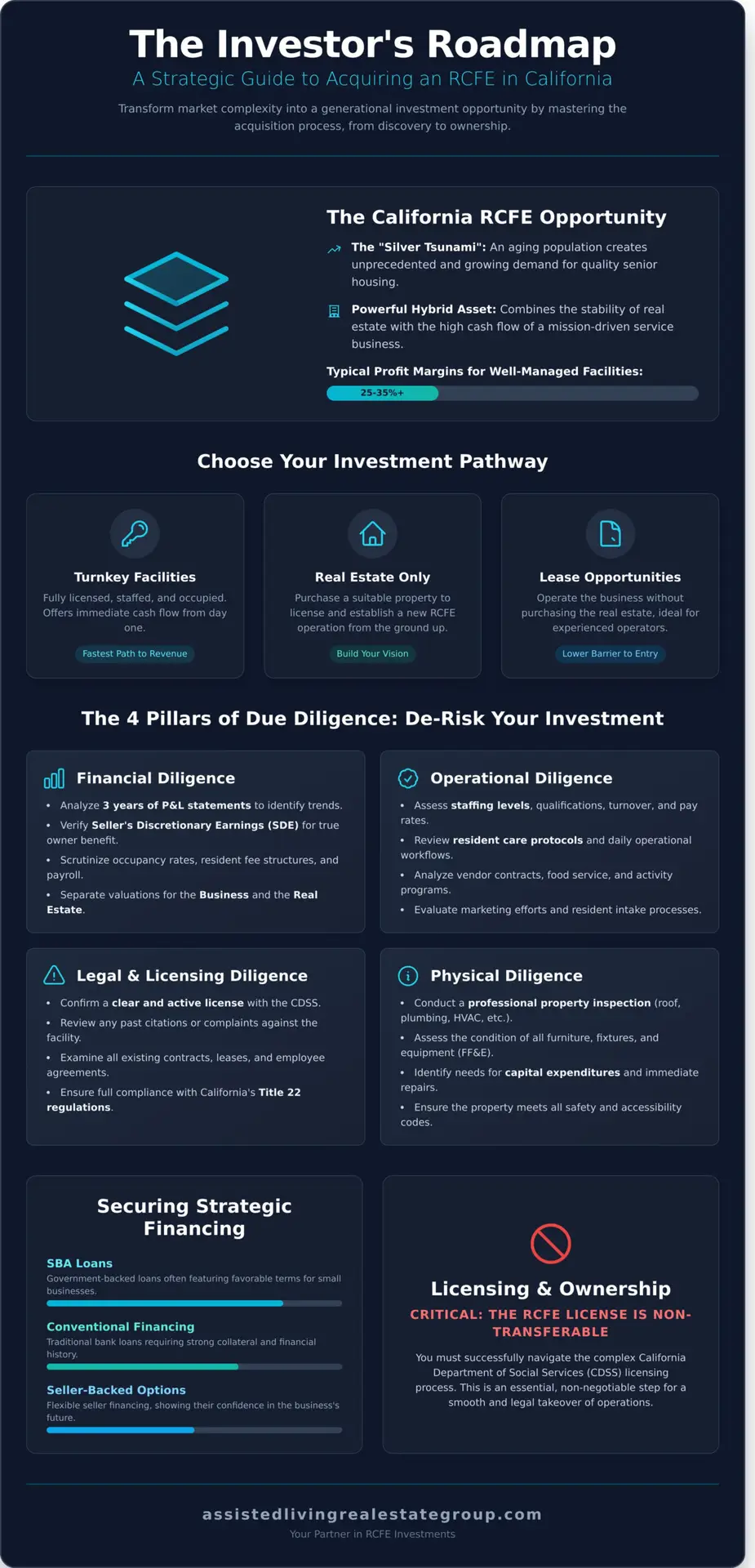
- Master the four pillars of due diligence-financial, operational, legal, and physical-to de-risk your investment and ensure long-term profitability.
- Navigate complex financing with confidence by understanding the strategic differences between SBA loans, conventional financing, and seller-backed options.
- Successfully manage California’s complex CDSS licensing process, a critical and non-transferable step that is essential for a smooth takeover of operations.
Understanding the RCFE Investment: Why California is a Prime Market
The demographic shift known as the “Silver Tsunami” isn’t a challenge; it’s the single greatest opportunity in real estate today. In California, an aging population is creating unprecedented demand for quality senior housing, transforming the Residential Care Facility for the Elderly (RCFE) market into a blue ocean for savvy investors. An RCFE is a powerful hybrid asset, combining the stability of real estate with the high cash flow of a mission-driven service business. This isn’t just about property; it’s about providing a vital service and building a legacy of both Impact and Income.
Unlike an Adult Residential Facility (ARF), which often serves adults with mental health or developmental disabilities, an RCFE is specifically licensed to care for seniors aged 60 and over. These facilities range from intimate, 6-bed “boutique” homes offering personalized attention to larger, campus-style communities. Each model offers a unique investment profile, but all operate on the principle of providing essential care. To fully grasp the market, understanding what is residential care in its various forms provides a crucial foundation for any potential buyer.
The Business and Real Estate Components
When you acquire an RCFE for sale, you are purchasing two distinct yet interconnected assets: the physical property and the licensed, operational business. The business generates substantial monthly cash flow from resident fees, which cover room, board, and care services. While operational expenses like staffing, insurance, and food are significant, well-managed facilities in California can achieve profit margins of 25-35% or more. Investors evaluate these opportunities using a Capitalization (Cap) Rate, which measures the property’s net operating income relative to its asset value, providing a clear metric for ROI.
Types of RCFE for Sale
The California market offers several pathways to entry, each suiting different investment strategies and capital levels:
- Turnkey Facilities: These are fully licensed, staffed, and occupied properties, offering immediate cash flow from day one. This is the fastest path to generating revenue.
- Real Estate Only: An opportunity to purchase a suitable property, often in a desirable residential zone, with the intent to license and establish a new RCFE operation from the ground up.
- Lease Opportunities: This model allows you to operate the RCFE business without the capital outlay of purchasing the real estate, providing a lower barrier to entry for experienced operators.
How to Find and Analyze an RCFE for Sale
The most lucrative investment opportunities are rarely found on public websites. The premier Residential Care Facilities for the Elderly (RCFEs) are sold through confidential marketing channels, a strategy that protects the residents, staff, and the seller’s legacy. To access this exclusive inventory, you need a specialized broker who understands the nuances of this high-barrier-to-entry market. They provide access to off-market deals and the expertise to vet them properly, transforming the challenge of finding a quality RCFE for sale into a clear, strategic advantage.
Decoding the Listing Information
A listing is more than just numbers; it’s a story of operational health. Your first task is to translate it. Focus on Net Operating Income (NOI), not gross income, as this reveals the true profitability after all necessary expenses. Scrutinize the occupancy rate, demanding both current and historical data to gauge stability and market demand. The staffing structure is your window into the facility’s largest expense and most critical asset. Finally, a clean license status is non-negotiable. You must verify the facility holds a clear and active license with the California Department of Social Services (CDSS). Understanding the rigorous standards is crucial, and familiarizing yourself with the official RCFE License Application Process will prepare you for a smooth transition of ownership.
Key Financial Metrics to Scrutinize
Go beyond the listing sheet and dive into the financials. Request the Profit & Loss (P&L) statements for the last three years to identify trends in revenue, payroll, and key operational costs. Analyze the Seller’s Discretionary Earnings (SDE), which represents the total financial benefit to an owner-operator and is a key metric in business valuation. It’s also vital to understand that the asking price is often a combination of two separate valuations: the value of the ongoing business (based on cash flow) and the appraised value of the real estate itself.
Initial Questions to Ask the Broker
Your initial conversation with a broker should be focused and strategic. The answers to these questions will quickly reveal the true nature of the opportunity:
- Why is the current owner selling the facility? The motivation-be it retirement, partnership dissolution, or burnout-is a critical piece of the puzzle.
- What is the current staffing situation and turnover rate? High turnover can be a major red flag indicating underlying operational or management issues.
- Are there any pending complaints or citations with licensing? Unresolved regulatory issues can derail a transaction and create significant future liability.
Armed with this knowledge, you can analyze opportunities with the precision of a seasoned investor. View our exclusive RCFE listings to see these principles in action.
The Due Diligence Process: A Deep Dive Before You Buy
The excitement of finding a promising RCFE for sale can be intoxicating, but the due diligence phase is where a great opportunity is validated-or a potential disaster is averted. This is the critical, non-negotiable investigation where you verify every claim, inspect every corner, and scrutinize every document. Success in this niche requires more than just capital; it demands meticulous preparation. Assembling an expert team-a specialized broker, an elder care attorney, and a savvy accountant-is your first and most important step to protect your investment and future legacy.
Financial and Legal Due Diligence
This is the bedrock of your investment analysis, where you confirm the story the numbers tell. An attractive Profit & Loss statement is only the beginning. True validation comes from a forensic review of the facility’s financial and legal standing. Key tasks include:
- Verifying Financials: Meticulously cross-referencing at least three years of financial statements with corresponding bank records and tax returns to confirm revenue and expenses.
- Reviewing Agreements: Analyzing all current resident agreements to understand the fee structure, level of care charges, and any existing concessions.
- Checking for Encumbrances: Conducting a thorough search for any liens, outstanding lawsuits, or other legal disputes that could become your liability.
- Ensuring Compliance: Confirming the facility is in good standing with all local zoning ordinances and holds the necessary city and county business permits.
Operational and Licensing Review
Beyond the balance sheet, the operational health of a facility dictates its long-term success and quality of care. This is where you assess the human element and regulatory standing. Examining the facility’s public record with the California Department of Social Services, Community Care Licensing Division for any past citations under Title 22 regulations is critical. You must also audit resident files for care plan compliance, review employee records for proper training and credentials, and, with the owner’s permission, interview key staff to gauge morale and operational stability.
Physical Property Inspection
The property itself is a core component of your investment and the foundation for providing excellent care. A professional commercial property inspection is essential to uncover any hidden structural, electrical, or plumbing issues. This inspection should specifically assess resident safety features, fire-life safety systems, and full compliance with the Americans with Disabilities Act (ADA). This evaluation helps you accurately forecast the need for immediate repairs or future capital expenditures, ensuring your financial model for the RCFE for sale is built on solid ground.
This overview covers the major pillars of investigation. For a granular, step-by-step guide, be sure to review our complete Due Diligence Checklist article.
Securing Financing and Making an Offer
Transitioning from analysis to acquisition is where your vision meets capital. Finding the right RCFE for sale is only the first step; securing the right financing and structuring a compelling offer are the pivotal actions that transform a promising opportunity into a tangible asset in your portfolio-a boutique facility poised to generate both significant returns and profound social impact.
Financing Your RCFE Purchase
Capital is the catalyst for your success. While the path to funding an RCFE can seem complex, several well-trodden routes exist for the savvy investor:
- SBA Loans (7a & 504): Often favored for their lower down payment requirements and extended repayment terms, making them ideal for entrepreneurs entering the market. However, they demand a meticulous application process.
- Conventional Loans: Typically require a more substantial capital injection (20-25% down) and stronger borrower financials, but can offer faster closing times and greater flexibility.
- Seller Financing: A powerful strategic tool where the seller carries a portion of the note. This can ease the path to ownership and demonstrates the seller’s confidence in the facility’s continued success.
Lenders are investing in your vision. Your business plan is the cornerstone of their confidence, detailing your operational strategy, financial projections, and commitment to providing exceptional care. They seek qualified buyers with relevant experience, solid credit, and a clear plan to deliver on the promise of “Impact and Income.” For a deeper dive, explore our comprehensive guide to financing your RCFE acquisition.
Structuring a Competitive Offer
A strong offer is a strategic blend of price, terms, and conviction. After completing your due diligence, you can confidently formulate an offer that reflects the facility’s true value. This begins with a Letter of Intent (LOI), a non-binding document that outlines the core terms of your proposal, including the purchase price, contingencies (for financing and licensing), and a proposed closing timeline.
The LOI serves as the framework for the definitive Purchase Agreement, the legally binding contract that formalizes the sale of both the real estate and the business entity. A substantial earnest money deposit accompanying your offer signals your seriousness as a buyer and provides a competitive edge, positioning you to secure a premier asset in this blue ocean market.
The Licensing Process and Taking Ownership
Acquiring an RCFE for sale in California is more than a real estate transaction; it’s the transfer of a legacy and a significant operational responsibility. A critical detail many new investors overlook is that the RCFE license is tied to the operator, not the property. It is non-transferable. You are not buying a license; you are earning a new one through a rigorous process that demands precision and strategic guidance.
The California Department of Social Services (CDSS) oversees this journey to ensure every facility meets the state’s high standards for resident safety and quality of life. The process begins with a comprehensive application and hinges on you or your designated manager holding a valid RCFE Administrator Certification. This timeline can span several months, and any misstep can cause significant delays, jeopardizing your investment and timeline.
Navigating the CDSS Application
Success is in the details. The CDSS requires a complete and flawless package to prove your viability as a responsible operator. Key components include:
- The Application Packet: A collection of meticulous forms, including financial verification proving you have sufficient operating capital.
- Plan of Operation: A detailed document outlining everything from staffing and resident care protocols to menus and activity schedules.
- Background Checks: All principals must undergo fingerprinting and a thorough criminal background check.
Once your application is accepted, a CDSS analyst will schedule a pre-licensing inspection to ensure the physical plant meets all health and safety codes before a license is issued.
Why a Specialized Broker is Crucial
This is where a general real estate agent falls short. They understand property, not the intricate dance of regulatory compliance and boutique care operations. A specialist broker provides an indispensable roadmap, connecting you with a vetted network of lenders who understand the business model and attorneys who specialize in healthcare transactions. Their expertise is most vital during negotiations, ensuring the deal structure protects you during the lengthy licensing contingency period. Don’t navigate this complex, high-stakes acquisition alone. Partner with an expert for your RCFE acquisition. Contact us today.
Once the CDSS grants your license, the final step is closing escrow. This is the moment your vision becomes reality, and you officially take ownership, ready to build a business that delivers both profound impact and income.
From Vision to Value: Securing Your RCFE Investment
The journey from identifying a promising RCFE for sale to taking ownership is complex, yet profoundly rewarding. As this guide has shown, success hinges on meticulous due diligence, strategic financing, and a deep understanding of California’s unique market dynamics. This isn’t just an investment in real estate; it’s an investment in a high-demand, high-impact industry poised for exponential growth.
Navigating this niche market alone is a significant risk. That’s where a strategic partner becomes invaluable. With over 25 years of specialized experience, Assisted Living Real Estate Group offers more than just listings. We provide confidential marketing to protect asset value and expert guidance through every stage, from complex licensing to operational launch. We are dedicated to helping you achieve both impact and income.
The time to act is now. The “Silver Tsunami” represents a blue ocean of opportunity for visionary investors ready to build a lasting legacy. Explore our current RCFE listings and start your investment journey.
Frequently Asked Questions About Buying an RCFE in California
What is the difference between the RCFE business price and the real estate price?
The real estate price is the value of the physical property-the land and building itself. The business price, however, represents the value of the ongoing operation. This includes critical assets like goodwill, resident census, cash flow, and the in-place license. A successful RCFE investment requires a clear analysis of both valuations to ensure the total purchase price aligns with your long-term goals for both impact and income.
How long does it typically take to buy an RCFE, from search to closing?
Acquiring an RCFE is a strategic process, not a simple transaction. From the initial search and due diligence to securing financing and navigating the crucial licensing transfer with the Community Care Licensing Division (CCLD), the timeline typically ranges from 6 to 12 months. This deliberate pace ensures every detail is meticulously managed, protecting your investment and setting the stage for a successful, high-quality care operation from day one.
Can I buy an RCFE in California if I don’t have prior healthcare experience?
Absolutely. Many of the most successful RCFE owners are astute investors, not clinicians. The key is to hire a state-certified RCFE Administrator to manage daily operations and ensure regulatory compliance. Your role becomes that of the visionary owner, focusing on business strategy and financial performance. This model allows you to leverage your business acumen to build a legacy of doing good while doing well, without needing a background in direct care.
What are the most important qualities to look for in a turnkey assisted living facility?
A premier turnkey RCFE for sale demonstrates more than just a license. Look for a strong history of high occupancy, verifiable positive cash flow, and an impeccable reputation within the community. The facility should be well-maintained with a stable, experienced staff in place. These factors are the bedrock of a seamless transition, ensuring immediate ROI and the continuation of high-quality, boutique care for residents from the moment you take ownership.
What is Title 22 and why is it so important for an RCFE owner?
Title 22 is the regulatory backbone of California’s RCFE industry. It is the set of rules and regulations, enforced by the CCLD, that dictates everything from staffing ratios and resident rights to medication management and physical plant requirements. For an RCFE owner, mastery of Title 22 is non-negotiable; it is the framework that protects your residents, your license, and ultimately, your entire investment. Strict compliance is the foundation of operational excellence.
How does a confidential sale work and why is it beneficial?
A confidential sale protects the heart of the business: its stability. By marketing an RCFE discreetly to pre-qualified, serious buyers, we prevent unnecessary disruption and anxiety among residents, their families, and the staff. This strategic approach preserves the operational goodwill and resident census you are acquiring, ensuring a smooth transition of ownership while safeguarding the business’s cash flow and reputation throughout the entire process.